

TL;DR:
- Effective Spanish communication relies on mastering the 3 C’s: being concise, clear, and credible in every interaction. Developing practical workplace skills, softening requests, and practicing realistic conversations are essential for confident language use. Achieving certification like the DELE validates proficiency and accelerates progress in professional and academic contexts.
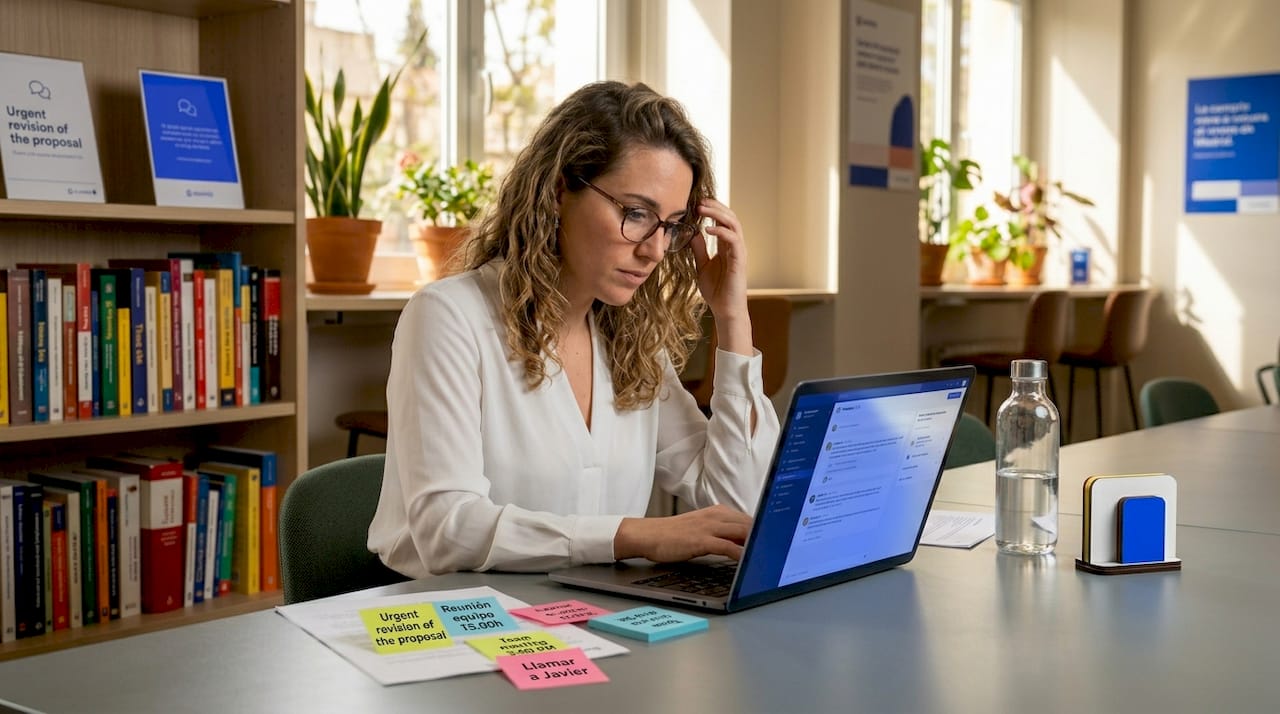
You know some Spanish. Maybe you completed a beginner course, spent time studying grammar charts, or even traveled to a Spanish-speaking country. But when it’s time to write a professional email, speak up during a meeting, or sit for a certification exam, something freezes. That gap between knowing Spanish and using it confidently is one of the most common frustrations for learners and professionals in Singapore. This guide gives you a practical, structured path forward. You’ll learn the core frameworks, the exact phrases that work in real workplace situations, and a clear strategy for measuring your progress with internationally recognized credentials.
Table of Contents
- The 3 C’s: Foundation for clear Spanish communication
- Essential workplace Spanish skills for success
- Turning theory into practice: Real-world Spanish conversations
- Benchmarking your progress: Exams and certifications
- Why mastering core skills beats memorizing fancy vocabulary
- Take your Spanish to the next level in Singapore
- Frequently asked questions
Key Takeaways
| Point | Details |
|---|---|
| Master the 3 C’s | Concise, clear, and credible communication is vital for effective Spanish in work and study. |
| Use professional softening | Politeness and conditional phrasing make requests and responses more effective in Spanish. |
| Focus on clarity over complexity | Simple, unambiguous Spanish is preferred in meetings and emails, not complex expressions. |
| Benchmark with DELE exam | Official assessments like the DELE help track progress and set learning milestones for Singapore learners. |
The 3 C’s: Foundation for clear Spanish communication
Now that you know why communication is so important, let’s break down the three core principles behind effective Spanish interaction.
Every skilled Spanish communicator, whether native or learned, builds their speaking and writing on a simple but powerful foundation. A widely used methodology for professional communication is to be concise, clear, and credible, known as the 3 C rule. These three principles cut across every context: emails, presentations, phone calls, and casual conversations.
Here’s what each C means in practice:
-
Conciso (Concise): Say only what’s needed. In professional Spanish, padding a sentence with unnecessary words signals poor communication, not sophistication. Instead of “Quería preguntarte si tendrías la posibilidad de enviarme el informe cuando tengas un momento libre,” try “¿Puedes enviarme el informe hoy?” Shorter. Cleaner. More respectful of the other person’s time.
-
Claro (Clear): Ambiguity is the enemy of effective communication. Use specific nouns, active verbs, and direct sentence structures. Instead of “Necesitamos mejorar esto,” say “Necesitamos reducir el tiempo de respuesta al cliente en un 20% antes del viernes.” The listener knows exactly what you mean and what’s expected.
-
Creíble (Credible): Your communication needs to earn trust. Use factual language, cite sources when necessary, and match your register (formal vs. informal) to the setting. Credibility in Spanish also comes from fluency of delivery. Hesitation and filler words like “este… pues… o sea” drain authority from your message.
“The key to effective communication is not just what you say, but how your listener receives it. The 3 C’s give every message a fighting chance of landing the way you intend.”
This framework isn’t abstract theory. It’s the filter you apply before you hit send on an email or open your mouth in a meeting. Learners who internalize the 3 C’s early tend to progress faster because they stop trying to translate every English thought into Spanish word-for-word, and start thinking in communication goals instead.
Pro Tip: After every Spanish conversation or written exercise, run a quick self-check. Was your message concise enough to be understood in under 30 seconds? Was it clear enough that the listener could repeat your main point back to you? Did your tone and word choice feel credible for the setting? This habit builds faster than any grammar drill. Explore the Spanish course options available in Singapore to practice these principles with certified instructors.
Essential workplace Spanish skills for success
Once the 3 C’s are natural, it’s time to focus on how these principles translate into practical language for the workplace.
Professional Spanish has its own conventions, and getting them right signals respect and competence. Key communication skills for workplace Spanish emphasize clear written communication including formal greetings, concise context, clear requests, and respectful closings, as well as meeting skills such as polite interruption, accurate summaries, and confirming action items.
Email conventions you need to know:
Formal Spanish emails open with structured, polished greetings. “Estimado/a Sr./Sra. [Apellido]” is the gold standard for first contact. “Me dirijo a usted para…” sets a respectful tone before stating your purpose. Closings like “Quedo a su disposición para cualquier consulta” and “Atentamente” signal professionalism. These aren’t just formalities. In Spanish-speaking business cultures, skipping them is noticed and can affect how seriously your message is taken.

Meeting skills that build presence:
Knowing how to participate in a meeting is one of the most underrated workplace skills. In Spanish, interrupting too abruptly feels rude, but staying silent can mean you’re overlooked. Use transition phrases like “Disculpe, me gustaría añadir algo” (Excuse me, I’d like to add something) or “Si me permiten…” (If you’ll allow me…) to enter conversations smoothly. Summarizing discussions with “Entonces, lo que hemos acordado es…” reinforces your reliability.
Direct vs. softened requests: A comparison
Softening requests is one of the areas where learners make the most avoidable errors. Spanish politeness norms rely heavily on conditional verb forms to soften requests, especially in formal and professional settings. Here’s how direct and softened forms compare:
| Situation | Direct form | Softened (conditional) form |
|---|---|---|
| Asking for a report | “Envíame el informe.” | “¿Podrías enviarme el informe?” |
| Requesting a meeting | “Reúnete conmigo mañana.” | “¿Podríamos reunirnos mañana?” |
| Asking for clarification | “Explícame esto.” | “¿Me podrías explicar esto?” |
| Requesting an extension | “Dame más tiempo.” | “¿Sería posible tener más tiempo?” |
The softened forms use “¿Podrías…?” (Could you…?), “¿Podríamos…?” (Could we…?), and “¿Sería posible…?” (Would it be possible…?). These constructions are not optional when you’re communicating with managers, clients, or external partners.
Pro Tip: Before your next meeting or important email, write out three to five phrases you expect to need, using the conditional forms from the table above. Say them out loud three times each. The goal is automatic recall, not translation. For structured speaking practice, explore Spanish speaking practice ideas designed for learners in Singapore.
Turning theory into practice: Real-world Spanish conversations
With core skills and key phrases in mind, let’s see how they work, successfully and unsuccessfully, in conversations you might encounter.
Reading about communication frameworks is one thing. Performing under pressure in a real exchange is another. The bridge between them is deliberate practice with realistic scenarios. Strong workplace Spanish doesn’t reward elaborate language. It rewards reducing ambiguity, making clear who does what, by when, and under what conditions.
Sample scenario: Following up on a project deadline
Imagine you need to follow up with a Spanish-speaking colleague about an overdue deliverable. Many learners default to vague messages like “¿Cómo va el proyecto?” (How’s the project going?). This is too open-ended and creates more back-and-forth. A stronger version: “Hola María, ¿puedes confirmarme si el informe estará listo para el jueves a las 3pm? Lo necesito para la reunión del viernes.” Specific. Time-bound. Actionable.
Common mistakes to avoid in professional Spanish conversations:
- Overcomplicating your sentences. Using subjunctive clauses and elaborate vocabulary when a simple sentence works makes you harder to understand, not more impressive.
- Being too vague about expectations. Saying “cuando puedas” (whenever you can) when you actually have a deadline creates confusion.
- Switching registers mid-conversation. Moving from formal “usted” to informal “tú” without cues from the other person can feel disrespectful.
- Skipping confirmation of understanding. Don’t assume your message landed. Use “¿Quedamos de acuerdo en eso?” (Are we agreed on that?) to close the loop.
- Neglecting cultural norms. Spanish workplace culture values relationship-building. Jumping straight to business without a brief personal opening can feel abrupt.
Clarity scores for sample sentences:
| Sample sentence | Clarity score (1-5) | Why |
|---|---|---|
| “Necesitamos mejorar las cosas.” | 2 | No specifics, no timeline, no owner |
| “El equipo debe revisar el contrato.” | 3 | Who exactly? By when? |
| “Ana revisará el contrato antes del martes.” | 5 | Named owner, specific deadline |
| “¿Puedes enviarme el informe hoy antes de las 5pm?” | 5 | Clear request, specific timeline |
| “Cuando tengas tiempo, míralo.” | 1 | Completely vague |
The pattern is obvious: clarity comes from naming people, setting deadlines, and specifying outcomes.
Pro Tip: Practice mini-conversations by writing a two-exchange script for a situation you’ll likely face at work this week. Record yourself speaking both sides. Play it back and ask: would a native speaker understand this immediately without follow-up questions? Use Spanish speaking activities to build this habit with structured exercises.
Benchmarking your progress: Exams and certifications
Equipped with practical and theoretical skills, the next step is to assess your progress. Singapore offers several recognized ways to do just that.
Knowing how to communicate well is one thing. Having a credential that proves it to employers, universities, or immigration authorities is another. The DELE (Diplomas de Español como Lengua Extranjera) is the most internationally recognized Spanish proficiency certification, issued by the Instituto Cervantes on behalf of Spain’s Ministry of Education.
Why DELE matters:
DELE certificates are recognized by institutions and employers in over 90 countries. They don’t expire, which means the credential you earn today stays valid for your entire career. For Singapore professionals working with Latin American clients, pursuing postgraduate studies in Spain, or considering relocation to a Spanish-speaking country, DELE is the clearest signal of verified competence.
What each level tests:
- A1/A2: Basic personal information, simple greetings, short written messages
- B1: Everyday topics, understanding longer texts, producing connected speech
- B2: Complex texts, spontaneous interaction with native speakers, clear written arguments
- C1: Nuanced expression, implicit meaning, sophisticated writing and discourse
- C2: Complete mastery, near-native fluency, academic and literary texts
Steps to register and prepare for DELE in Singapore:
- Identify your current level using a placement test or self-assessment grid.
- Review DELE exam availability through NUS Centre for Language Studies, which provides local registration guidance and preparation materials.
- Source past exam papers from the Instituto Cervantes official website for the most accurate practice.
- Work through each of the four skill areas: reading, listening, writing, and oral expression, dedicating structured time to each.
- Take a timed mock exam two to three weeks before your sitting date to simulate real test conditions.
DELE registrations in Singapore have grown steadily, reflecting a rising interest in formal language credentials among both students and working professionals. This trend mirrors a broader regional shift toward verifiable skills in competitive job markets.
Explore your options for structured preparation through the DELE exam pathway offered at Spanish Explorer, where instructors align course content directly with exam requirements.
Why mastering core skills beats memorizing fancy vocabulary
Having explored exams and success metrics, it’s worth challenging some persistent myths around language learning.
Here’s the uncomfortable truth that most language learners need to hear: spending hours memorizing rare vocabulary or perfecting subjunctive exceptions will not make you a better communicator. It might actually make you a worse one.
Native Spanish speakers don’t evaluate your competence by the complexity of your sentence structures. They evaluate it by how easily they can understand you and how naturally the conversation flows. Overloading your speech with vocabulary you can’t control fluently signals insecurity, not sophistication. It’s the linguistic equivalent of wearing a suit three sizes too large.
The learners we see make the fastest, most durable progress are those who commit to mastering a core set of patterns and then deploy them with absolute confidence. They know exactly how to soften a request, summarize a meeting point, write a clean email opening, and confirm shared understanding. These aren’t glamorous skills, but they’re the ones that create trust in real interactions.
Confidence in Spanish doesn’t come from knowing more words. It comes from knowing your tools so well that you reach for them without thinking. A surgeon who hesitates mid-procedure has a problem. A communicator who searches for words mid-sentence loses the listener’s confidence. The goal is automaticity: the ability to produce correct, appropriate language without conscious effort.
The contrarian advice we offer to every learner at Spanish Explorer is this: before you learn twenty new vocabulary words, master ten phrases so thoroughly that you can use them in any emotional state, under time pressure, and without preparation. That’s where real fluency lives. For a full picture of how to get there, explore our guide on Spanish classes for all levels and see how structured instruction accelerates this process.
Take your Spanish to the next level in Singapore
Inspired to build on your communication skills? Here’s how you can take practical steps to upgrade your Spanish in Singapore.
The skills in this article, the 3 C’s, workplace phrases, clarity frameworks, and exam preparation strategies, are most effectively built inside a structured learning environment with certified instruction and regular feedback. Reading about them is a start. Practicing them with an experienced teacher is where they become automatic.
At Spanish Explorer, we offer group Spanish courses for learners who want the energy and accountability of a classroom, private Spanish classes for professionals with specific goals or scheduling needs, and Spanish online classes for those who prefer flexibility without sacrificing quality. Every format is taught by certified, bilingual instructors whose curriculum aligns with DELE standards. Whether you’re preparing for an exam, improving your workplace Spanish, or starting from zero, there’s a learning path built for your goals.
Frequently asked questions
What are the most important Spanish communication skills for the workplace?
Polite email writing, clear meeting participation, and softening requests using conditional forms are the three skills that make the biggest difference in professional Spanish settings.
How can I make Spanish requests more polite?
Use conditional verb forms such as “¿Podrías…?” or “¿Podría usted…?” to soften any request and signal respect, especially in formal or professional contexts.
What is the 3 C rule in Spanish communication?
The 3 C rule is a framework that ensures all communication is concise, clear, and credible, helping speakers and writers make maximum impact with minimum words.
Where can I prepare for the DELE exam in Singapore?
Singapore-based learners can access DELE exam preparation through NUS Centre for Language Studies, as well as specialized Spanish language schools like Spanish Explorer that offer structured, exam-aligned courses.
Sorry, the comment form is closed at this time.