


TL;DR:
- Language immersion is an active, structured learning approach where learners acquire a new language through genuine communication and contextual use. It involves consistent, comprehensible input in the target language over time, emphasizing authentic interaction rather than passive exposure. Effective programs require quality instruction, ongoing practice, and alignment with individual goals to achieve fluency and cognitive benefits.
Language immersion gets talked about constantly in education circles, yet most people misunderstand what it actually means. It is not about moving abroad or sitting next to native speakers and hoping something sticks. What is language immersion, really? It is a structured approach where you learn through a language rather than about it. You receive instruction in the target language, use it to accomplish real communication goals, and build proficiency the same way you acquired your first language. This article breaks down how immersion works, what the different program models look like, and how to evaluate whether a program will actually deliver results.
Table of Contents
- Key Takeaways
- What language immersion actually means
- Types of language immersion programs
- Benefits of language immersion programs
- How to choose the right immersion program
- My take on what immersion really demands
- Start your Spanish immersion journey with Spanish Explorer
- FAQ
Key Takeaways
| Point | Details |
|---|---|
| Immersion is active, not passive | Simply being around a language does not produce fluency; structured, comprehensible engagement does. |
| Multiple program models exist | Programs range from 50/50 bilingual formats to dominant target-language instruction, each with different outcomes. |
| Cognitive and career benefits are real | Immersion builds bilingual proficiency, sharpens executive function, and opens professional opportunities. |
| Program continuity matters | Multi-year programs consistently outperform short-term exposure, so duration is a key selection factor. |
| Instructor quality is non-negotiable | Native or highly fluent instructors using comprehensible input are what separate effective programs from ineffective ones. |
What language immersion actually means
Language immersion means using a language as the vehicle for learning, not just the subject of study. Instead of a teacher explaining Spanish grammar rules in English, an immersion class might teach history, conduct conversations, or work through real-world scenarios entirely in Spanish. The language becomes the medium, not the lesson.
The theoretical backbone of immersion comes from linguist Stephen Krashen’s comprehensible input hypothesis. He argued that learners acquire language most effectively when they receive input that is slightly above their current ability level, what he called i+1. Comprehensible input works not through memorization but as an integrative signal that supports subconscious language acquisition. You understand enough to keep up, but you are constantly stretching.
This is what separates immersion from a traditional language class. In a conventional setting, you study grammar charts, memorize vocabulary, and translate sentences. In an immersion setting, academic subjects taught through the partner language give you naturalistic, contextual language use. The grammar gets absorbed because you need it to understand what is happening, not because you drilled it.
Three core principles define effective immersion:
- Comprehensibility: Input must be understandable in context. Too easy and you stop growing. Too difficult and you disengage entirely.
- Authenticity: Communication happens for real purposes, not just to pass a test. You ask questions, solve problems, and express opinions in the target language.
- Consistency: Short bursts of immersion produce weak results. Effective programs build habits over months and years.
Pro Tip: If a program claims to be immersive but conducts most instruction in your native language with occasional target-language phrases, it is not true immersion. Ask what percentage of class time is spent exclusively in the target language before enrolling.
Types of language immersion programs
Understanding the different program structures helps you set realistic expectations and choose what fits your goals. Immersion is not a single format. It is a spectrum.
The most discussed model in formal education is dual language immersion, sometimes called two-way immersion. These programs deliver instruction in both English and a partner language, targeting students who speak either language as their native tongue. During 2021 to 2022, 5.3 million English learners in the U.S. participated in programs supporting bilingualism and academic achievement. Spanish is by far the most common partner language in these programs, which is why what is Spanish language immersion has become one of the most searched questions among parents exploring schooling options.
Here is how the most common immersion models compare:
| Program type | Language split | Who it serves | Duration |
|---|---|---|---|
| Dual language (two-way) | 50/50 English and partner language | Mixed native speaker groups | Kindergarten through high school |
| One-way immersion | 90/10 to 50/50, partner language dominant | Students sharing one native language | Multi-year, often K through 8 |
| Maintenance bilingual | Varies | Heritage language speakers | Varies by school |
| Content-based adult immersion | Primarily target language | Adult learners | Course-length, typically ongoing |
Program models vary widely in instructional language time splits and year-by-year targets, so assuming all immersion programs are equivalent is a mistake that families make regularly.
For adult learners pursuing Spanish, what is immersive language learning often looks different from these school-based formats. It might mean private classes where the instructor speaks Spanish from minute one, conversation-based group sessions, or corporate training programs built around professional Spanish communication. The immersion principle stays the same: the language is the tool, not the topic. Learning through English alongside Spanish is also a pragmatic strategy used by skilled instructors in Singapore to make input comprehensible without abandoning the target language entirely.
Dual language programs typically start in kindergarten or first grade and continue through middle and high school, because continuity correlates directly with language outcomes. For adult learners, the equivalent principle means committing to structured, ongoing instruction rather than a one-time intensive weekend course.
Benefits of language immersion programs
The benefits of language immersion go well beyond speaking a second language. The research on outcomes is strong, and the practical payoffs are real.
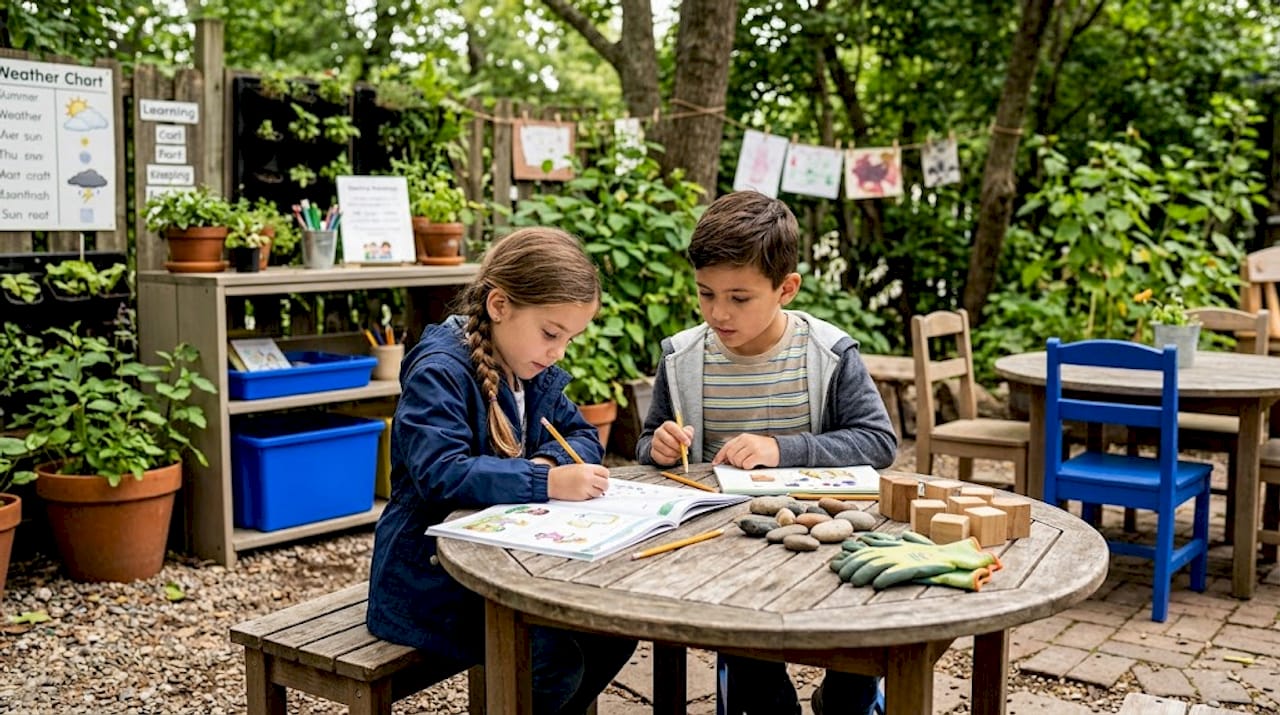
The primary goal of dual language immersion is additive bilingualism: reaching high proficiency in both languages without sacrificing the first. Well-implemented programs show clear evidence of academic achievement, bilingual proficiency, self-confidence, and better long-term earnings for participants. That last point matters for adult learners in Singapore, where Spanish opens doors across Latin American markets and multinational corporations.
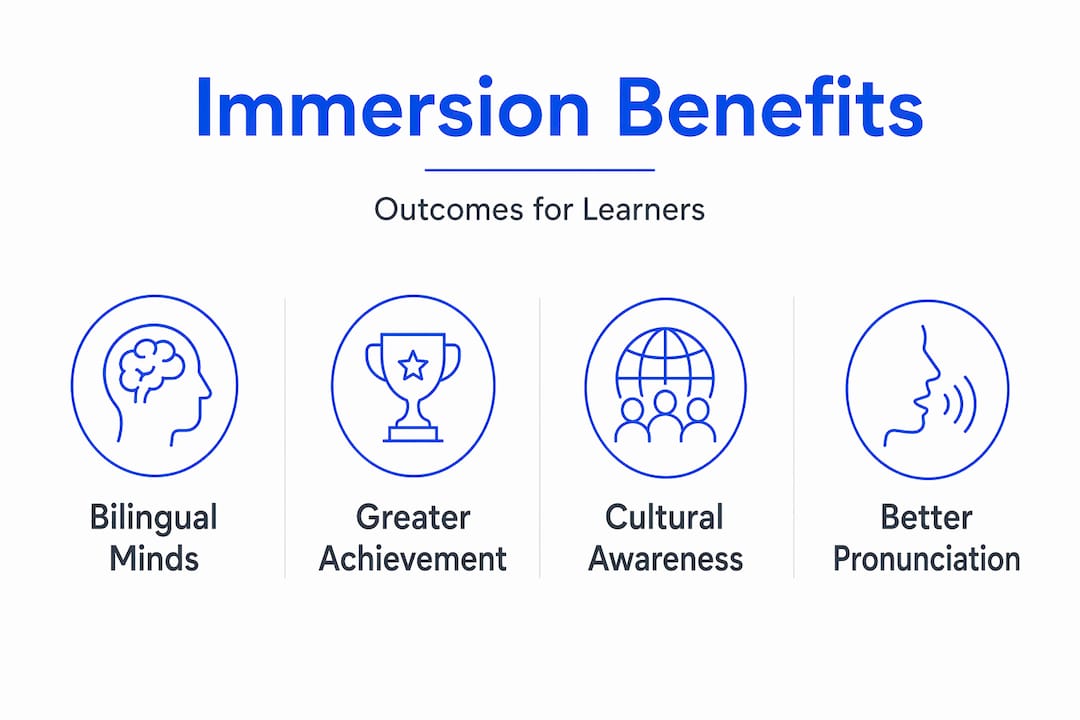
Cognitive benefits are equally documented. Bilingual individuals consistently show stronger executive function, meaning better ability to switch between tasks, filter distractions, and hold multiple pieces of information in working memory. These are skills that transfer across every professional and personal context.
The cultural dimension is often underestimated. Immersion in a language is inseparable from immersion in how its speakers think, communicate, and connect. You do not just learn to say things differently. You learn to mean things differently, which is a far more valuable outcome for real-world relationships and negotiations.
“Language immersion replicates natural language acquisition by embedding authentic language in context, allowing learners to develop pragmatic communication skills rather than isolated grammar knowledge.”
For adults considering Spanish specifically, the benefits of learning Spanish in a structured immersive environment include faster fluency gains, stronger retention, and the confidence to use the language outside the classroom from the early stages of learning.
How to choose the right immersion program
Choosing a language immersion program is not just about picking the one closest to you or the one with the most attractive brochure. There are specific factors that separate programs that produce results from those that produce frustration.
-
Check the actual language split. Ask exactly how much class time is conducted in the target language. A program advertising immersion but delivering 70% of instruction in English is not genuinely immersive. Look for programs where the target language dominates actual instruction time.
-
Evaluate instructor qualifications. Native or fluent Spanish teachers produce significantly better outcomes than instructors who learned the language academically but lack conversational fluency. The instructor’s ability to calibrate comprehensible input to your level in real time is critical.
-
Confirm program continuity. A six-week intensive can build a foundation, but language proficiency requires sustained practice. Ask whether the program has clear pathways beyond the introductory level. Understanding program continuity and transitions is vital for effective language outcomes, especially as instruction balance shifts over time.
-
Assess supplemental engagement opportunities. The best programs extend learning beyond class hours. This might include cultural events, conversation groups, online resources, or homework that involves real-world Spanish use. Spanish learning resources in Singapore can supplement formal instruction significantly for motivated learners.
-
Watch for the passive exposure trap. Many learners assume that immersion fails without comprehensibility and interaction. Simply watching Spanish TV shows or sitting in a Spanish-speaking environment does not constitute immersion if you are not actively processing and using the language. Programs that rely on exposure alone will disappoint you.
One more consideration that rarely gets discussed: alignment with your actual goals. A conversational Spanish program built around social communication is excellent for travelers and professionals who need to build rapport in Spanish. A business-focused program is better for corporate contexts. Choosing the right language school starts with being honest about what you actually need the language to do for you.
Pro Tip: Before committing to any program, ask to observe or trial a single session. You will learn more about the quality of instruction and the actual language ratio in one hour of observation than in any amount of marketing material.
My take on what immersion really demands
I have seen a consistent pattern in how people approach language immersion, and it is almost always the same story. Someone decides they want to learn Spanish, they sign up for something marketed as immersion, and six months later they are frustrated because they expected the language to absorb through proximity and good intentions.
What I have learned from watching hundreds of learners go through this process is that effective immersion demands deliberate habits, not just a good classroom. The location does not make the immersion. The structure does. I have met people who lived in Spanish-speaking countries for two years and still could not hold a conversation, and I have met Singapore-based professionals who reached solid conversational fluency in under a year through consistent, well-structured Spanish classes combined with intentional practice outside them.
The piece that most programs underemphasize is learner engagement between sessions. A class gives you the structured input. What you do with the language in the other 23 hours of the day determines how fast you actually progress. Music, podcasts, short conversations with native speakers online through tools like music and social practice, even thinking through daily tasks in Spanish. These habits are what convert exposure into acquisition.
My practical advice: treat immersion as an environment you build, not a box you check by enrolling in a program.
— Paul
Start your Spanish immersion journey with Spanish Explorer
If this article has clarified what language immersion actually involves, the next question is where to find a program that applies these principles properly. Spanish Explorer offers structured Spanish courses in Singapore designed for adult learners pursuing conversational fluency, business communication, or professional advancement.
Courses follow genuine immersion principles: instruction led by experienced, certified instructors who are fluent in Spanish and English, with strong emphasis on real-world communication from the first lesson. Whether you prefer the focused progress of private Spanish classes, the flexibility of online Spanish learning, or a tailored corporate training program for your team, Spanish Explorer has a format designed around your goals. Located above Tanjong Pagar MRT at 10 Anson Road, level 22, International Plaza, Singapore 079903, the school is accessible and built for professionals with real schedules. Browse the full range of Spanish language courses and find the program that fits where you are starting and where you want to go.
FAQ
What is language immersion in simple terms?
Language immersion is a learning method where you study through the target language rather than about it, using it as the medium for all instruction and communication. It replicates how people naturally acquire a first language by embedding learning in real, contextual use.
Is language immersion effective for adults?
Yes. Adults benefit from immersion because the structured, comprehensible input approach builds practical communication skills faster than grammar-focused study. Research consistently shows stronger fluency outcomes in programs that prioritize authentic language use over translation and memorization.
How is immersion different from traditional language classes?
Traditional language classes teach you grammar rules and vocabulary in your native language. Immersion programs conduct instruction in the target language itself, using subjects and real-world tasks as the context, which produces more natural and durable language acquisition.
What is Spanish language immersion specifically?
Spanish language immersion means learning through Spanish rather than learning Spanish as an isolated subject. This could look like a bilingual school program, a private class conducted entirely in Spanish, or a corporate training course built around professional Spanish communication scenarios.
How long does it take to become fluent through immersion?
Fluency timelines vary based on starting level, program quality, and practice outside class. However, program continuity strongly correlates with outcomes. Learners in sustained, well-structured immersion programs consistently outperform those in short-term or low-contact formats.
Sorry, the comment form is closed at this time.