 Spanish
TL;DR:
- A structured, step-by-step plan accelerates Spanish learning and builds confidence faster.
- Consistent weekly study routines, even small microlearning sessions, foster sustainable progress.
- Engaging with local communities and cultural exposure enhances real-world language use.
Starting Spanish from scratch can feel like standing at the edge of a maze with no map. Many beginners in Singapore spend weeks bouncing between apps, YouTube videos, and random vocabulary lists, only to feel like they haven’t moved forward at all. The problem isn’t effort. It’s the lack of structure. A clear, step-by-step plan removes the guesswork, keeps you on track, and helps you build real skills faster than you’d expect. This guide walks you through everything: what you need, how to schedule your time, what to study each week, and how to stay on course when things get tough.
Table of Contents
- What you need to start learning Spanish
- Setting a realistic study schedule for beginners
- Step-by-step plan for your first month
- Tracking progress and overcoming common challenges
- What most beginner guides miss about Spanish learning
- Structured Spanish courses for beginners in Singapore
- Frequently asked questions
Key Takeaways
| Point | Details |
|---|---|
| Start with the right materials | Choosing resources suited to Singapore learners lays a strong foundation for your Spanish journey. |
| Build a realistic study routine | Consistent weekly learning leads to better retention and faster progress. |
| Follow a structured plan | Step-by-step goals each week help beginners stay motivated and organized. |
| Track and adjust progress | Monitoring milestones and adapting routines prevents burnout and keeps learning fun. |
| Seek support when needed | Accessing teachers or group classes makes overcoming challenges much easier. |
What you need to start learning Spanish
Before you open a textbook or download an app, it helps to know exactly what you’re working with. The right setup makes a bigger difference than most beginners realize. Basic tools and resources accelerate Spanish learning for beginners, so choosing wisely from the start saves you time and frustration later.
Here’s what every beginner in Singapore should have ready:
- A reliable vocabulary reference, either a printed phrasebook or a digital app, to build your word bank from day one
- A grammar workbook or structured course guide aligned with A1 level (the entry point of the international CEFR scale)
- A notebook for writing practice, since handwriting new words helps lock them into memory
- Headphones for listening exercises, especially useful during your commute on the MRT
- Access to online class options if you prefer a guided format over solo study
When it comes to apps and platforms, Singapore learners have strong options. BBC Spanish tools offer structured audio lessons with clear pronunciation guides. Duolingo works well for daily habit-building. SpanishDict is excellent for grammar lookups and translations. For vocabulary, building a habit around daily beginner vocabulary lists gives you a consistent foundation.
Self-study materials versus class materials serve different purposes. Here’s a quick comparison:
| Feature | Self-study materials | Class materials |
|---|---|---|
| Flexibility | High, study anytime | Fixed schedule |
| Structure | Varies widely | Professionally designed |
| Feedback | None or limited | Immediate from instructor |
| Motivation | Self-driven | Group energy and accountability |
| Best for | Independent learners | Those who need guidance |
Neither approach is universally better. Many successful learners in Singapore combine both, using apps for daily practice and attending classes for structured feedback.
Pro Tip: Match your materials to how you naturally absorb information. If you learn by listening, prioritize audio resources and podcasts. If you’re a visual learner, use color-coded flashcards and grammar charts. Forcing yourself to use tools that don’t suit your style is one of the fastest ways to burn out.
Setting a realistic study schedule for beginners
With your resources ready, the next step is to organize your time effectively for steady progress. The biggest mistake beginners make isn’t studying too little. It’s studying inconsistently. Consistent, manageable study schedules lead to measurable progress, and that consistency matters far more than cramming long sessions on weekends.
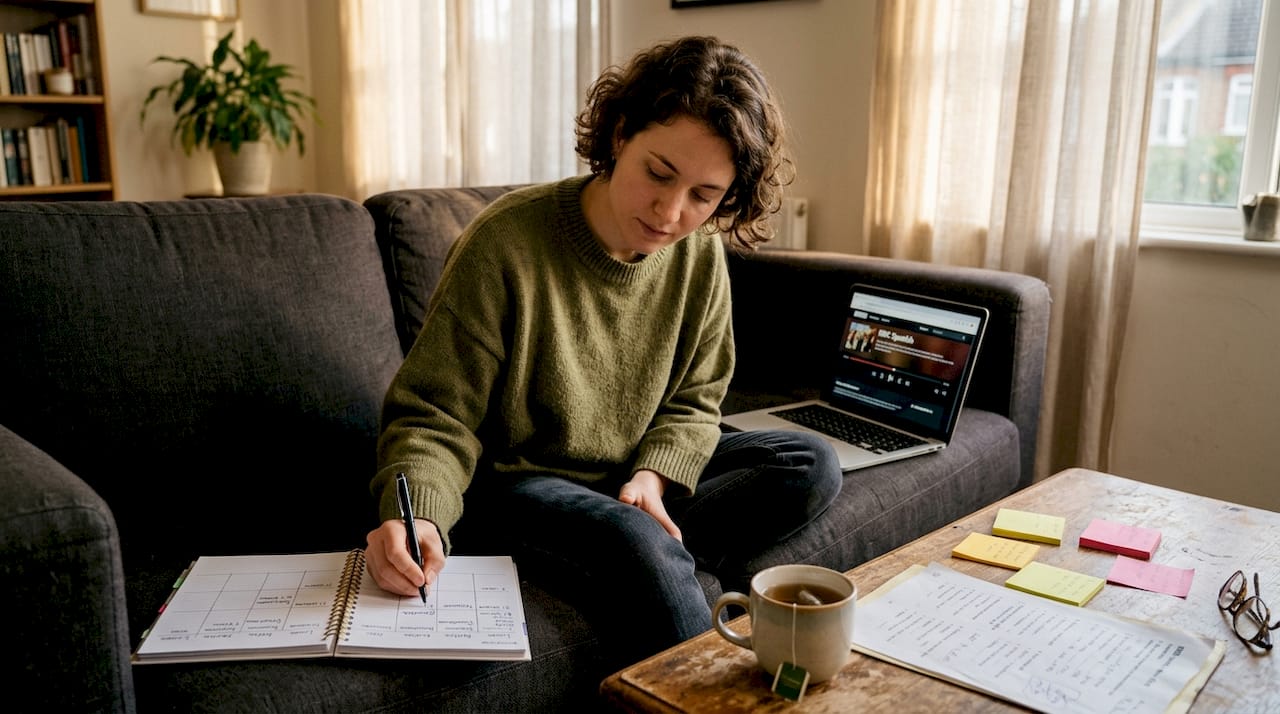
Here’s a sample weekly schedule for a beginner with a full-time job or school commitments:
| Day | Activity | Duration |
|---|---|---|
| Monday | Vocabulary review (new words) | 20 minutes |
| Tuesday | Grammar lesson or app session | 25 minutes |
| Wednesday | Listening practice or podcast | 20 minutes |
| Thursday | Writing practice (short sentences) | 20 minutes |
| Friday | Review week’s material | 15 minutes |
| Saturday | Speaking practice or class | 45 minutes |
| Sunday | Rest or light review | Optional |
This schedule totals roughly 2.5 to 3 hours per week, which is a sustainable starting point. You can scale up as you build the habit. Using a tool like Duolingo for your weekday sessions keeps things short and interactive without feeling like a chore.
Here’s how to build your schedule step by step:
- Identify your two or three most reliable time slots each week, such as lunch breaks or evenings after dinner
- Assign specific activities to each slot rather than vague goals like “study Spanish”
- Set a weekly target, such as 15 new words or one grammar concept, so you know what success looks like
- Review your Spanish study timeline every month to adjust the pace based on your progress
- Build in at least one speaking or listening session per week, even if it’s just shadowing a short audio clip
Pro Tip: On weeks when life gets busy, switch to microlearning. Five minutes of vocabulary review on your phone while waiting for the bus still counts. Protecting the habit, even in a smaller form, prevents you from losing momentum entirely.
Step-by-step plan for your first month
Now, let’s lay out a clear step-by-step plan so you know exactly what to tackle each week. The first month is about building a foundation, not becoming fluent. Think of it as laying bricks rather than building the whole house.
Week 1: Sounds and survival phrases
- Learn the Spanish alphabet and pronunciation rules, focusing on vowels and common consonants
- Memorize 20 to 30 high-frequency words using starter vocabulary lists
- Practice greetings, numbers 1 to 20, and basic courtesy phrases
- Listen to short native speaker audio daily to train your ear
Week 2: Basic sentence structure
- Learn subject pronouns (yo, tú, él, ella) and the verb “ser” (to be)
- Build simple sentences: “Yo soy estudiante” (I am a student)
- Expand vocabulary to 50 words total, focusing on people, places, and objects
- Use SpanishDict resources to check pronunciation and usage
Week 3: Everyday verbs and questions
- Introduce five to seven common verbs: hablar, comer, vivir, tener, querer
- Learn how to form basic questions: ¿Dónde? ¿Qué? ¿Cómo?
- Practice short dialogues, even if it’s just speaking to yourself
- Avoid the common mistake of memorizing grammar rules without using them in sentences
Week 4: Review and first real conversation
- Review all vocabulary and grammar from weeks one to three
- Attempt a short spoken or written exchange, even a simple self-introduction
- Identify two or three areas where you feel weakest and plan to address them in month two
- Consider joining beginner group courses to get structured feedback at this stage
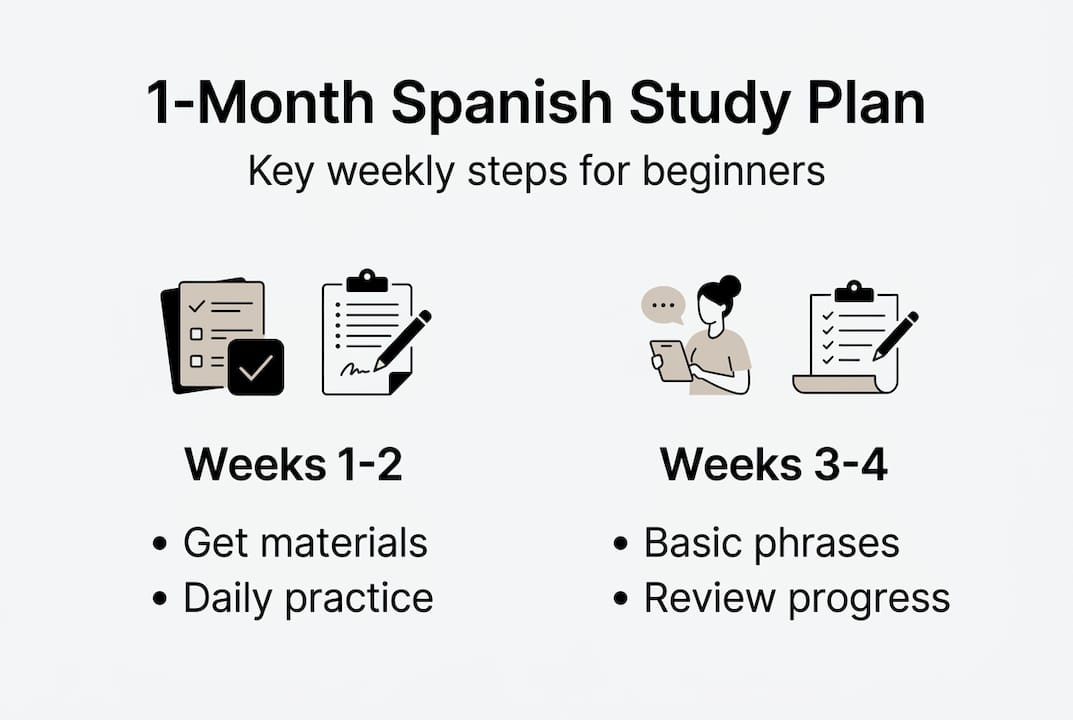
Structured plans improve retention for beginners, and following a week-by-week roadmap like this is one of the clearest ways to feel real progress within your first 30 days.
Pro Tip: Don’t skip week four’s review. Many beginners rush forward to new material before consolidating what they’ve learned. Reviewing is not wasted time. It’s how your brain moves information from short-term to long-term memory.
Tracking progress and overcoming common challenges
Once your first steps are underway, it’s vital to track how you’re doing and stay motivated through common beginner difficulties. Progress in language learning is rarely linear, and that’s completely normal. What matters is that you have a system to recognize when you’re growing and when you need to adjust.
Here are the most effective ways to track your progress:
- Count your active vocabulary every two weeks. If you started with 10 words and now know 80, that’s real growth
- Record yourself speaking once a week and compare recordings from week one to week four
- Complete a short quiz or self-test on grammar concepts you’ve covered
- Note how long it takes you to understand a simple Spanish sentence. Speed improves with practice
Identifying and responding to challenges is crucial for sustained learning, and knowing the most common hurdles helps you prepare for them before they derail you.
The three hurdles Singapore beginners face most often are motivation dips, pronunciation confusion, and grammar overload. Motivation tends to drop around week three when the novelty wears off. Pronunciation trips up learners who compare Spanish sounds to English or Mandarin patterns. Grammar overload happens when beginners try to learn too many rules at once instead of focusing on what they need right now.
“Language learning is not a sprint. It’s a series of small, consistent steps that compound over time. Every word you learn today is a brick in a wall you’ll be grateful for later.”
Pro Tip: If you feel stuck, reach out to qualified Spanish teachers for a session or two of targeted feedback. A professional can spot patterns in your mistakes that you’d never notice on your own, and that kind of insight can save you months of practicing the wrong habits.
What most beginner guides miss about Spanish learning
Most guides focus on tools and schedules, which are important. But they rarely talk about the psychological and cultural side of learning Spanish in Singapore specifically.
Singapore is a multilingual environment, and that’s actually a hidden advantage. Learners here are already comfortable switching between languages and picking up new sounds. The mistake is treating Spanish like an isolated academic subject rather than a living language you can use right now. Finding local Spanish-speaking communities, watching Spanish-language films, or even following Spanish social media accounts creates real-world exposure that no textbook can replicate.
Another overlooked factor is the mindset around mistakes. Many Singapore learners are academically trained to avoid errors, which makes speaking practice feel risky. But in language learning, mistakes are data. They show you exactly where your understanding breaks down. Following realistic learning timelines also helps manage expectations. Progress feels slow in the first month, then suddenly accelerates. Trusting the process, even when it doesn’t feel like it’s working, is what separates learners who succeed from those who quit.
Structured Spanish courses for beginners in Singapore
If this plan resonates with you, the next step is finding the right environment to put it into practice.

At Spanish Explorer, we offer structured Spanish courses designed specifically for beginners, with curriculum aligned to international DELE standards and taught by certified instructors fluent in both Spanish and English. If you prefer a more tailored pace, our private classes let you work one-on-one with an instructor on exactly the areas you need most. Not sure where to start? Book a trial class and experience the learning environment before committing. Located in Singapore’s central business district, we make it easy to fit quality Spanish learning into your schedule.
Frequently asked questions
How much time should I dedicate weekly to learning Spanish as a beginner?
Most experts recommend at least 3 to 5 hours weekly for steady progress, ideally spread across several days rather than one long session to improve retention.
What are the best tools or apps for beginner Spanish learners in Singapore?
Apps like Duolingo and SpanishDict, combined with structured online resources, give beginners a well-rounded mix of interactive practice and clear grammar guidance.
How can I measure my progress when starting Spanish?
Track vocabulary growth, conversational speed, and weekly milestone completions. Noticing sustained learning improvements through regular self-tests gives you concrete evidence of progress.
What should I do if I feel stuck or lose motivation?
Joining a study group or getting teacher feedback can quickly reset your momentum and give you a fresh perspective on where to focus next.
Are private classes better for beginner Spanish learners?
Personalized private lessons help beginners address specific weaknesses faster, making them a strong option for learners who want accelerated progress or have a specific goal in mind.
Recommended
- Learn Spanish Timeline: A Realistic Guide for Singapore Learners
- Is Spanish Hard To Learn: A Comprehensive Guide | Spanish Explorer
- How To Learn Spanish: 10 Effective Ways | Spanish Explorer
- Latin American Spanish or Spain Spanish: A Learner’s Guide
Start Learning Spanish Today
Book a trial class and see how quickly you can progress with a professionally trained native-speaker teacher guiding the way.
Book a Trial Class