 Spanish
If you’re an adult beginner searching for a real starting point, the fastest path is a small live class or a trial private lesson with a native or experienced bilingual teacher who follows a CEFR-aligned A1 curriculum. Group classes build speaking confidence through peer interaction. Private lessons move faster because the entire hour is yours. Either way, book something you can try before committing to a full block. That single decision, trial first, then commit, saves more wasted time and money than any other choice you’ll make as a beginner.
The reason this works is simple: beginners stall out not from lack of motivation but from unclear structure and too little speaking practice. A trial class with a real instructor tells you within 90 minutes whether the pacing, teaching style, and group size actually fit how you learn.
Key Takeaways
The fastest way to start learning Spanish as an adult beginner is to book a trial lesson with a CEFR-aligned course, then choose group, private, or online format based on your schedule and speaking-practice needs.
| Point | Details |
|---|---|
| Start with a trial | Book a trial private lesson or join a small A1 group class before committing to a full block. |
| Match format to goals | Choose group classes for conversation practice, private lessons for speed, and Zoom classes for schedule flexibility. |
| Check the checklist | Confirm teacher background, class size, CEFR alignment, and rescheduling policy before enrolling. |
| Expect 30 to 60 hours | Most A1 courses run for several weeks, depending on weekly cadence, with an appropriate amount of total instruction hours for beginner learners. |
| Spanish Explorer offers flexibility | Spanish Explorer runs group, private, online, and corporate courses from its Tanjong Pagar location with trial lessons available. |
Table of Contents
- Where To Find Beginning Spanish Classes Near Me
- What Does A Beginner Spanish Course Actually Cover?
- How Long Does It Take To Reach A1?
- How Do I Choose The Right Beginner Class?
- What Does A Beginner Course Typically Cost?
- What Sets Spanish Explorer Apart For Adult Beginners?
- What Do Students Say About Local Language Schools?
- What Most Advice On Starting Spanish Gets Wrong
- Try A Beginner Spanish Class Without The Guesswork
- Sources
- FAQ
Where To Find Beginning Spanish Classes Near Me
Local language schools, community centers, and online academies all offer entry points for absolute beginners, but they aren’t interchangeable. A community center conversation group and a structured A1 course with formal assessments serve different goals, and knowing which one you need before you enroll prevents months of drifting.
Group classes work best if your main goal is conversational fluency and you learn well around other people. You get built-in speaking partners, a lower per-hour cost than private tutoring, and a set schedule that keeps you accountable. The tradeoff is pace: the class moves at the group’s average speed, not yours.

Private classes suit learners who want speed, a flexible calendar, or a narrow focus, like business Spanish for an upcoming trip or client meetings. Every minute of the lesson addresses your specific gaps. It costs more per hour, but many professionals find that the faster progress offsets the price difference.
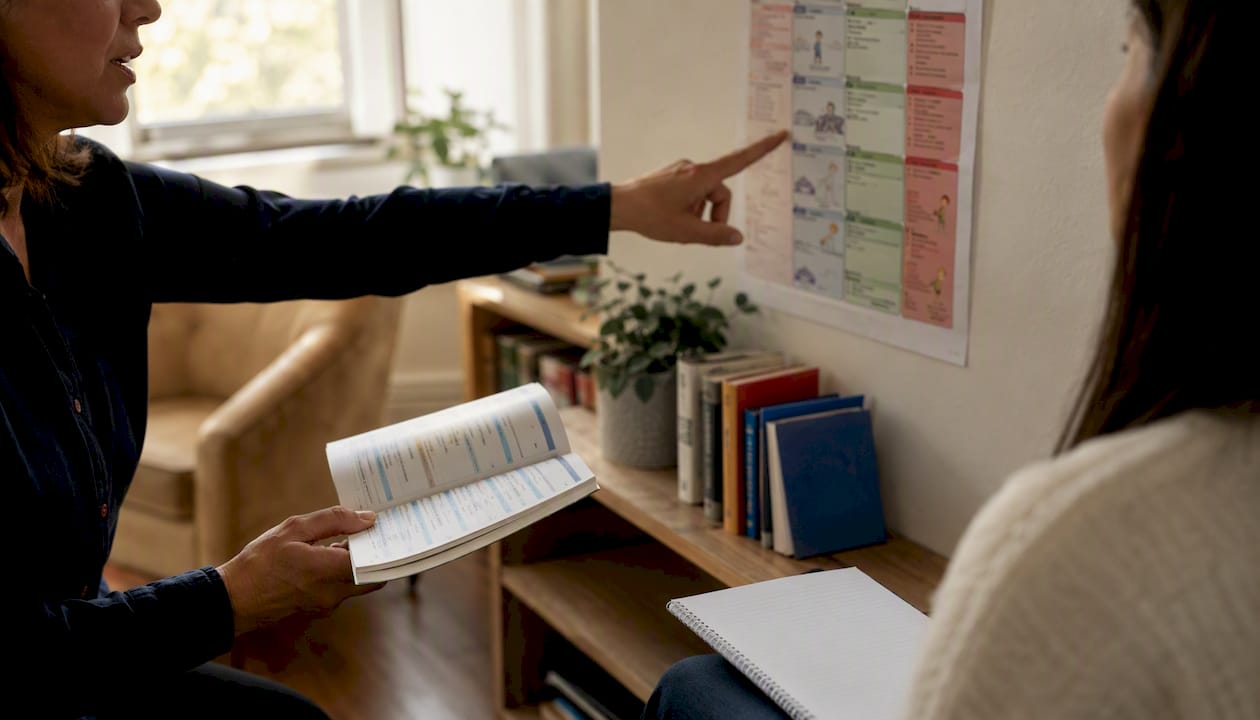
Live online classes via Zoom have become one of the more practical formats for working adults. You skip the commute, keep a consistent weekly slot, and still get real-time interaction with a teacher, which separates this from passive video courses. Small-group live formats that emphasize guided speaking practice tend to produce faster gains than self-paced apps because every session forces you to actually talk.
| Format | Best For | Typical Pace |
|---|---|---|
| Group class | Conversational goals, peer motivation, lower cost | Moderate, set by group |
| Private lesson | Fast progress, business Spanish, flexible timing | Fast, fully personalized |
| Live online (Zoom) | Busy schedules, no commute, real-time interaction | Moderate to fast, teacher-led |
Pro Tip: Book one trial private lesson before joining a group block, even if you plan to learn in a group long-term. It reveals your actual starting level and saves you from sitting through review material you don’t need.
If you want a deeper breakdown of which setup matches your goals, this guide on choosing the right class format walks through the tradeoffs in more detail.
What Does A Beginner Spanish Course Actually Cover?
A true A1 course covers four skill areas: speaking, listening, reading, and writing, and a well-built beginner curriculum touches all four every week, not just grammar drills.
Speaking practice starts with greetings, introductions, and basic questions (¿Cómo te llamas? ¿De dónde eres?). Listening work usually pairs short audio clips with comprehension checks. Reading introduces simple menus, signs, and short dialogues. Writing starts with filling in basic forms and simple sentences using present-tense verbs.
Expect these recurring topics in an A1 syllabus:
- Greetings, introductions, and polite expressions
- Numbers, dates, and telling time
- Present tense conjugation, including the distinction between ser and estar
- Everyday vocabulary: food, family, directions, shopping
- Basic question formation and short conversational exchanges
By the end of a genuine A1 course, you should be able to introduce yourself, ask and answer simple personal questions, order food, and follow basic conversation on familiar topics. Instituto Cervantes runs its levels in Spanish from day one specifically to push students toward this kind of practical output early, rather than saving speaking practice for later stages. CEFR-aligned programs typically build A1 into sublevels with checkpoints, so you’re formally assessed before moving up rather than guessing whether you’re ready, a structure outlined by NTU’s language center.
How Long Does It Take To Reach A1?
Total contact hours matter more than calendar time. Most structured A1 programs run with a number of instruction hours typically sufficient for beginners, often split into modular blocks rather than one long course.
Some providers package this as a ten-unit curriculum with 90-minute sessions covering grammar fundamentals alongside practical conversation, a format used by schools like Berges Institute. At that pace, a learner attending two sessions weekly can realistically finish A1 in roughly two to three months.
Two common timelines for adult learners:
- Faster track: 6 to 12 weeks at 2 to 3 hours of class per week, plus short daily review
- Steadier track: 12 to 24 weeks at 1 to 2 hours per week, for learners balancing a full work schedule
Consistency beats intensity here. A short 15 to 20 minute daily practice session, reviewing vocabulary, listening to a podcast, repeating phrases out loud, reinforces what the weekly class teaches far more effectively than cramming one long session. This mirrors what language researchers consistently find: regular, shorter practice intervals outperform sporadic marathon sessions for retention, a pattern reflected in how CEFR-based programs structure progression. If you want more detail on how A1 connects to later proficiency milestones, this breakdown of Spanish proficiency levels for adults lays out the full path.
How Do I Choose The Right Beginner Class?
Run through this checklist before you hand over payment for any course block.
- Confirm the teacher’s background. Ask directly whether the instructor is a native speaker or has significant experience teaching adult beginners. Teaching skill and language fluency are not the same thing, and you want both.
- Ask about class size. A group larger than eight or ten adults means less speaking time per person. Smaller live groups consistently show better participation and retention than oversized classes or prerecorded courses.
- Verify the syllabus is CEFR-aligned. A real A1 curriculum should map to recognized progression standards, not an improvised lesson plan.
- Book a trial lesson first. Any provider confident in their teaching should offer this. It’s the single best predictor of whether you’ll actually enjoy the course.
- Check the rescheduling and cancellation policy. Life happens. Know upfront what flexibility you have if you miss a session.
When you contact a school, ask these questions directly:
- “Can I try a single lesson before committing to a full block?”
- “What’s the maximum class size for this course?”
- “Is the curriculum aligned to CEFR levels, and how do you assess progress?”
- “What happens if I need to reschedule a private lesson?”
Red flags worth walking away from: no trial option offered, vague answers about the syllabus, class sizes over 12 to 15 for a beginner group, or an instructor who can’t clearly explain their teaching experience. Native or experienced bilingual instruction genuinely matters at the beginner stage, and it’s worth reading why native teachers make a measurable difference before you enroll anywhere.
What Does A Beginner Course Typically Cost?
Pricing for beginner Spanish generally falls into three shapes: a low-cost or free trial lesson, a block package (commonly six to twelve weeks for group classes), and hourly rates for private tutoring, which run higher per session but compress your timeline.
What moves the price up or down: instructor experience, class size, whether the format is in-person or online, and how many total hours the block includes. A private lesson with a highly experienced teacher costs more per hour than a group seat, but you’re paying for undivided attention rather than a shared room. Online Zoom classes often land in a similar price range to in-person group classes since the teaching quality and time investment are the same, even though you skip travel costs entirely.
Some public libraries and community programs run free or low-cost conversational sessions, which can supplement a structured course but rarely replace one on their own, since these community sessions usually skip formal assessment and structured grammar progression.
Before booking any package, confirm three things: what materials are included, whether there’s a trial option, and what the cancellation policy looks like. Evening and weekend schedules are standard for adult group classes, and corporate training programs typically run on a separate, more flexible schedule built around a company’s own calendar.
What Sets Spanish Explorer Apart For Adult Beginners?
Spanish Explorer builds its beginner courses around a curriculum aligned to international proficiency standards, taught by instructors who are native or fluently bilingual in Spanish and English, which matters enormously when you’re still translating in your head during early lessons.
- Group, private, online, and corporate class formats, so you’re not forced into one shape that doesn’t fit your schedule
- Small class sizes that keep speaking time high for every student, not just the confident ones
- A central training location at 10 Anson Road, Level 22, International Plaza, directly above Tanjong Pagar MRT, for anyone who wants in-person classes without a difficult commute
- Trial lesson availability before you commit to a full block
- Instructors fluent in both languages, so complex grammar points get explained clearly rather than lost in translation
Beginners make the fastest progress when instruction happens in a language they can still follow, with a teacher who can explain the tricky bits in English before pushing them back into Spanish. That balance, immersion without confusion, is what separates a course that builds real confidence from one that just recites vocabulary lists.
Pro Tip: If you’re deciding between formats, ask about a trial private assessment first. It tells the school exactly where to place you, so you skip material you already know.
Curious what actually distinguishes one adult Spanish program from another in Singapore? This comparison of why learners choose Spanish Explorer breaks down the specifics further, and you can meet the instructors directly on the teacher profiles page.
What Do Students Say About Local Language Schools?
Reputation matters more in language learning than in almost any other adult education category, because a bad teacher fit doesn’t just waste money, it can kill your motivation to continue entirely.
When researching a school, look past the star rating and read what students actually describe: Do reviewers mention feeling comfortable speaking early on? Do they describe the teacher as patient with mistakes, or rushed? Adult beginners consistently report that schools offering a trial lesson before enrollment feel less risky, precisely because you’re not trusting a five-star average, you’re trusting your own 90-minute experience. A pattern worth checking across any school you’re considering: does the group size stay small enough that quieter students still get called on? That single detail, more than almost any other, predicts whether a beginner sticks with the course past the first month.
What Most Advice On Starting Spanish Gets Wrong
Most guides treat “beginning Spanish classes” as a single product you shop for on price. That’s backwards. The real decision is a sequencing problem: what order should speaking practice, grammar exposure, and assessment happen in, and how much of each does your specific schedule actually allow?
The conventional wisdom, “just find the cheapest group class near you”, ignores that class size and teacher experience predict outcomes far more reliably than price. A $15-per-hour group of eighteen students will teach you less in three months than a well-run trial lesson followed by a properly sized group of six. Cost matters, but it’s the third or fourth filter, not the first.
What the research on CEFR progression and immersion teaching actually supports is this: beginners advance fastest when instruction is structured, assessed at checkpoints, and heavy on live speaking rather than passive listening. That’s not a controversial claim, but it’s routinely ignored by learners who default to whatever app or class is most convenient rather than most effective. If you take one thing from this article, prioritize the trial lesson and the class size question over everything else. Everything downstream, your pace, your confidence, your actual fluency at the three-month mark, traces back to those two decisions.
Try A Beginner Spanish Class Without The Guesswork
Spanish Explorer gives adult beginners a direct path into structured Spanish, without forcing you to choose between convenience and quality. You get native and bilingual instructors, small class sizes that keep speaking time high, and a curriculum built around clear progression rather than improvised lesson plans, whether you’re learning for travel, personal growth, or business use.
If your goal is conversational fluency, the group classes run on evening and weekend schedules designed around working adults. If you need faster, personalized progress, especially for business Spanish, private lessons adapt entirely to your pace and goals. Prefer to learn from home or the office? The live online Zoom classes offer the same small-group interaction without the commute. Every format includes trial lesson access, so you can confirm the fit before booking a full block. Start with a trial class and find out within one session whether this is the right way for you to learn.
Sources
- Spanish classes. Instituto Cervantes New York.
- CEFR – Nanyang Technological University (NTU)
- Beginner Spanish Classes Online (Live) – Spanish in Atlanta
FAQ
Where Can I Learn Spanish As A Beginner?
Options include local language schools, community centers, and live online classes via Zoom. A structured, CEFR-aligned course with a trial lesson gives you the clearest and fastest starting point compared to informal or self-paced options.
What Is The Best Way For A Beginner To Learn Spanish?
Small live classes or private lessons that emphasize speaking practice from the first session tend to build confidence faster than self-study apps, since immersion-based teaching forces active use of the language early.
How Long Does It Realistically Take To Learn Spanish?
Reaching A1 typically takes 30 to 60 total instruction hours, which usually means 6 to 12 weeks at 2 to 3 hours per week, or 12 to 24 weeks at a slower pace of 1 to 2 hours weekly.
What Is The Easiest Way For An Older Adult To Learn Spanish?
A small group or private class with a patient, experienced instructor and a slower, structured pace works better for older adult learners than app-based self-study, since live correction and consistent speaking practice build accuracy faster than solo review.
Should I Try A Class Before Booking A Full Course?
Yes. A trial lesson lets you confirm the teacher’s style, class size, and pacing fit your needs before you commit to a block, and most reputable schools, including Spanish Explorer, offer this option.
Recommended
Start Learning Spanish Today
Book a trial class and see how quickly you can progress with a professionally trained native-speaker teacher guiding the way.
Book a Trial Class