 Spanish
The top picks for self-study are clear: Madrigal’s Magic Key to Spanish (best overall for beginners), Practice Makes Perfect series (best grammar workbook), Pimsleur Spanish (best audio-first), Lonely Planet Spanish Phrasebook (best for travel), and Barron’s Spanish Now! Level 1 (best beginner comprehensive). For grammar depth, add 501 Spanish Verbs. For a progressive, structured climb, Easy Spanish Step-By-Step by Barbara Bregstein earns a spot at A2–B1.
Quick buying cues at a glance:
- Madrigal’s Magic Key to Spanish — paperback widely available; no audio bundle, pairs well with Pimsleur
- Practice Makes Perfect — paperback, eBook, and all-in-one premium edition with answer key
- Pimsleur Spanish — audio-only (app, CD, or download); no print component
- Barron’s Spanish Now! Level 1 — Ninth Edition with online audio, 624 pages, answer key included
- 501 Spanish Verbs — paperback or eBook; standalone reference
- Easy Spanish Step-By-Step — paperback; exercises with answer key
- Lonely Planet Spanish Phrasebook — pocket paperback or eBook
Pro Tip: If you are starting from zero, buy Madrigal’s and Pimsleur together. One handles the visual grammar logic; the other trains your ear from day one. Running them in parallel cuts the time it takes to produce your first real sentence.
Key Takeaways
The most effective approach to learning Spanish through self-study combines a CEFR-aligned textbook, native-speaker audio, and at least one weekly speaking session.
| Point | Details |
|---|---|
| Match book to goal and level | Use the CEFR mapping to pick a book that starts where you are, not where you want to be. |
| Audio is non-negotiable for beginners | Pair any print textbook with Pimsleur or a native-speaker audio course from day one. |
| Answer keys separate self-study books from classroom books | Only buy a workbook that includes a full answer key; otherwise you cannot self-correct. |
| Follow a 12-week plan, not a cover-to-cover read | Work exercises, check answers, record yourself, and add a speaking session by week four. |
| Combine textbook study with live practice | Private lessons or a structured group course convert grammar knowledge into real conversation. |
Table of Contents
- Which book fits your level and goal?
- Detailed reviews of the top Spanish learning books
- How to choose the right textbook for your level and goal
- How to use a textbook effectively for self-study
- Formats, editions, and where to buy
- How we selected these textbooks
- What actually works for adult self-learners
- Ready to go beyond the textbook?
- Sources
- FAQ
Which book fits your level and goal?
The table below maps each title to the learner profile it actually serves. Use it to shortlist two books maximum before you buy.
| Title | Best for (goal) | CEFR level | Format | Includes | Typical price | Pros | Cons |
|---|---|---|---|---|---|---|---|
| Madrigal’s Magic Key to Spanish | Intuitive grammar for beginners | A1–A2 | Textbook | Exercises, no audio | $15–$20 print | Unique visual method, highly readable | No audio; older publication |
| Practice Makes Perfect (series) | Grammar drilling and workbook practice | A1–B2 (by volume) | Workbook | Exercises, answer key | $15–$20 per volume | Modular, self-paced, answer key | Dry format; needs a conversational complement |
| Easy Spanish Step-By-Step | Progressive grammar with reading practice | A2–B1 | Textbook/workbook | Exercises, answer key | $18 print | Clear sequencing, strong for self-study | Less conversational focus |
| Pimsleur Spanish | Pronunciation and spoken fluency | A1–B1 | Audio course | Audio lessons (30 min each) | $20–$150+ (app/bundle) | Native-speaker audio, spaced repetition | No reading or writing component |
| Lonely Planet Spanish Phrasebook | Travel survival language | A1 (travel-focused) | Phrasebook | Vocabulary lists | $10–$15 | Portable, practical, fast-access | Not a grammar course |
| 501 Spanish Verbs | Verb conjugation mastery | A2–C1 | Reference | Conjugation tables | $15–$20 print | Exhaustive, reliable reference | Reference only; no exercises |
| Barron’s Spanish Now! Level 1 | Comprehensive beginner self-study | A1–A2 | Textbook | Exercises, answer key, online audio | $25 | Broad coverage, self-study friendly | Dense; can feel slow for some learners |
A few edition notes worth flagging:
- Barron’s Spanish Now! Level 1, Ninth Edition is the current version to buy; earlier editions lack the online audio component that makes self-assessment practical.
- Pimsleur works best as a subscription app rather than a CD set; the app version includes spaced-repetition review and is updated more regularly.
- Practice Makes Perfect: Complete Spanish All-in-One bundles multiple grammar topics into a single premium volume, which is the better buy if you plan to use the series as your core workbook.
Detailed reviews of the top Spanish learning books
1. Madrigal’s Magic Key to Spanish
Margarita Madrigal’s 1953 classic remains one of the most recommended books for self-study learners precisely because it does something most textbooks avoid: it teaches you to recognize the thousands of English words that transfer directly into Spanish. The visual grammar explanations are genuinely clever, not just a gimmick. You see the pattern, you internalize it, and you move on.
Best for: Complete beginners (A1) who learn visually and want fast early wins.
Pros: Highly readable, motivating, unique method.
Cons: No audio; the publication date shows in some cultural references.
Usage tip: Work one chapter per study session (roughly 30 minutes). After each chapter, say every example sentence aloud before moving to the next.
2. Practice Makes Perfect (series)
McGraw Hill’s Practice Makes Perfect is the workbook that serious self-learners keep returning to because it does one thing extremely well: it gives you a grammar point, explains it briefly, and then drills it with exercises that have a full answer key. No guessing whether you got it right. The all-in-one premium edition covers everything from basic verb conjugation to subjunctive mood in a single volume.
Best for: Learners at any level (A1–B2) who want structured grammar practice.
Pros: Modular, self-paced, answer key throughout.
Cons: The format is dry. You will need a conversational resource alongside it.
Pro Tip: Use Practice Makes Perfect as your Monday/Wednesday grammar drill, then spend Friday on a conversation exchange or audio lesson. The grammar sticks faster when it has somewhere to go.
3. Easy Spanish Step-By-Step (Barbara Bregstein)
Bregstein’s book is the closest thing to a private tutor in print form. It sequences grammar the way a good teacher would: present tense before past, regular verbs before irregular, reading passages that grow in complexity as your grammar grows. The answer key covers every exercise, so you can self-correct without guessing.
Best for: A2–B1 learners who want a structured, progressive climb through grammar and reading.
Pros: Excellent sequencing, strong self-study design, answer key.
Cons: Less focus on spoken conversation; pairs well with an audio resource.
Usage tip: Read each grammar explanation twice before attempting the exercises. The second read usually reveals a nuance you missed.
4. Pimsleur Spanish (audio course)
Pimsleur is not a textbook. It is a spoken-language training system built on spaced repetition and native-speaker audio, and for pronunciation, nothing in print comes close. Each 30-minute lesson introduces new vocabulary and grammar through listening and speaking, not reading. The risk of skipping audio at the beginner stage is real: pronunciation habits formed from reading alone are hard to correct later.
Best for: A1–B1 learners who want spoken fluency and accurate pronunciation from the start.
Pros: Native-speaker audio, proven spaced-repetition method, works during commutes.
Cons: No reading or writing component; expensive as a full bundle.
Usage tip: Pair Pimsleur with a grammar workbook. Use Pimsleur for your morning commute and a textbook for your evening study block.
For learners focused on pronunciation accuracy, this linguist’s guide to pronunciation for Spanish speakers offers a useful parallel perspective on how sound systems transfer between languages.
5. Lonely Planet Spanish Phrasebook
This is not a language course. It is a survival tool. If your goal is a two-week trip to Mexico or Spain and you need to order food, ask for directions, and handle basic transactions, the Lonely Planet phrasebook delivers exactly that in a pocket-sized format. The vocabulary lists are organized by situation, not by grammar rule.
Best for: A1 travel learners who need practical phrases fast.
Pros: Portable, organized by real-life situation, affordable.
Cons: No grammar instruction; will not build lasting language skills on its own.
Usage tip: Use it as a supplement, not a course. Pair it with Pimsleur or Madrigal’s if you want the trip to actually improve your Spanish.
6. 501 Spanish Verbs
Every intermediate learner hits the same wall: irregular verbs. 501 Spanish Verbs is the reference that knocks that wall down. It lists 501 fully conjugated verbs across all tenses and moods, with an index of 1,000+ additional verbs cross-referenced to their conjugation models. It is not a course, but it belongs on every serious learner’s desk from A2 onward.
Best for: A2–C1 learners who need a reliable verb conjugation reference.
Pros: Exhaustive, accurate, easy to navigate.
Cons: Reference only; no exercises or explanations of when to use each tense.
Pro Tip: When you encounter an unfamiliar verb form in your reading or listening, look it up in 501 Spanish Verbs immediately. Passive recognition of a conjugation pattern is the first step to active use.
7. Barron’s Spanish Now! Level 1 (Ninth Edition)
At 624 pages, Barron’s Spanish Now! Level 1 is the most comprehensive single-volume beginner textbook on this list. It covers vocabulary, grammar, reading, writing, and listening in a structured sequence, with an answer key and online audio included in the Ninth Edition. For a self-learner who wants one book to cover the full A1–A2 range without buying multiple titles, this is the most complete option available.
Best for: Beginner self-learners (A1–A2) who want comprehensive coverage in one volume.
Pros: Broad skill coverage, answer key, online audio, well-organized.
Cons: The sheer size can feel daunting; some learners find the pacing slow.
Usage tip: Do not try to read it cover to cover. Work through one unit per week, complete all exercises, and check your answers before moving on.
How to choose the right textbook for your level and goal
The single biggest mistake self-learners make is buying a book designed for a classroom. University library guides draw a clear line between classroom-first series and self-study resources: classroom texts assume an instructor will lead speaking practice, assign homework, and correct errors in real time. Without that, you are left with a book that expects support it will never receive.
CEFR level mapping
| CEFR level | Focus | Recommended book types |
|---|---|---|
| A1 (beginner) | Input-heavy: vocabulary, basic grammar, listening | Madrigal’s, Barron’s Spanish Now!, Pimsleur Level 1 |
| A2 (elementary) | Grammar patterns, reading short texts, basic conversation | Easy Spanish Step-By-Step, Practice Makes Perfect (basic volumes) |
| B1 (intermediate) | Output practice, verb tenses, longer reading | Practice Makes Perfect (advanced volumes), 501 Spanish Verbs as reference |
| B2–C1 (upper-intermediate/advanced) | Complex grammar, idiomatic use, writing | 501 Spanish Verbs, advanced Practice Makes Perfect volumes |
Key selection criteria
Audio availability is the most important factor for beginners. If a book has no audio component, pair it with Pimsleur or Teach Yourself Complete Spanish, which covers A1–B1 with several hours of native-speaker audio and online tools.
Answer keys are non-negotiable for self-study. A workbook without answers is a classroom tool, not a self-study resource.
CEFR alignment tells you where a book starts and where it ends. A book that covers A1–A2 will not take you to B1, no matter how thoroughly you work through it.
Edition recency matters for audio. Older editions of Barron’s Spanish Now!, for example, do not include the online audio that the Ninth Edition provides.
Pro Tip: Avoid any textbook that lists “instructor resources” as a selling point. That phrase signals the book was designed for a classroom, not a solo learner. The University of Washington library guide on Spanish textbooks is a useful reference for spotting the distinction.
How to use a textbook effectively for self-study
A textbook plus a disciplined weekly plan plus speaking practice produces consistent, measurable improvement. The textbook alone does not.
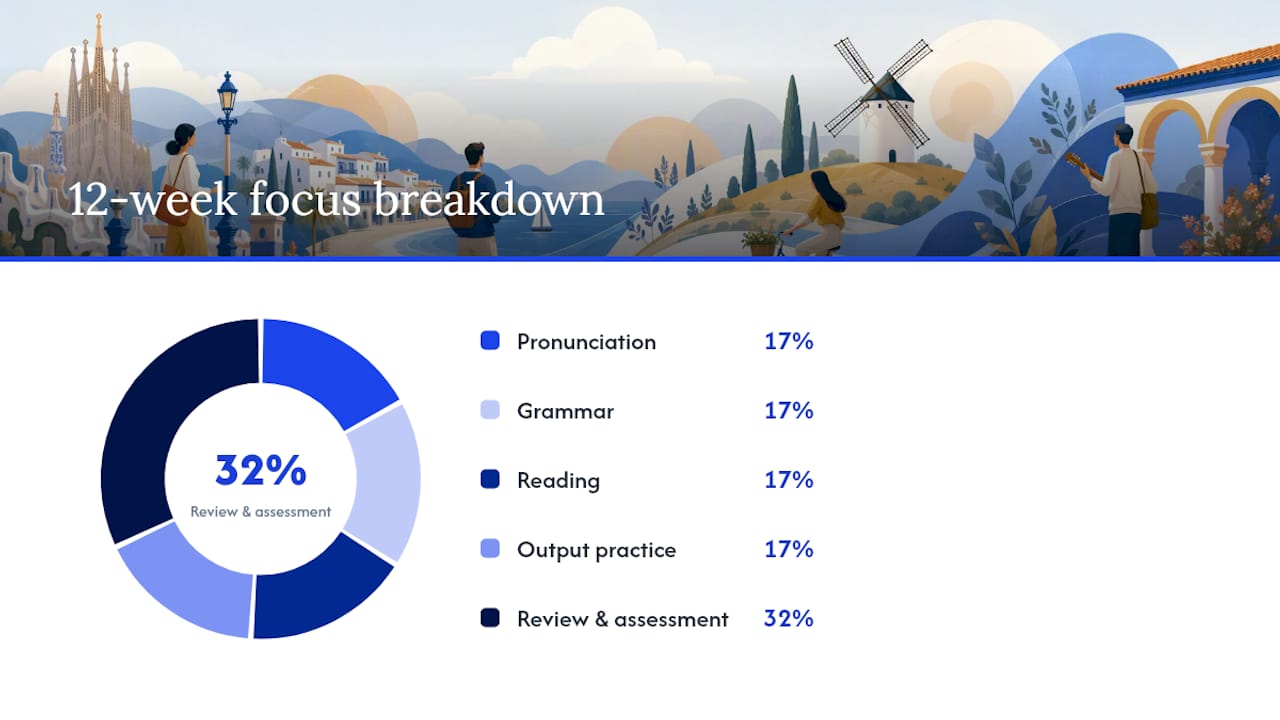
Here is a 12-week plan that works with any of the recommended books above:
- Week 1–2: Work through the first 10–15% of your chosen textbook. Focus on pronunciation and the most common 100–200 words. Use Pimsleur or a native-speaker audio resource in parallel.
- Week 3–4: Complete grammar chapters on present tense verbs. Do all exercises. Check every answer. Record yourself saying 5 sentences from each chapter and compare to the audio model.
- Week 5–6: Introduce reading practice. Use short passages from your textbook or a parallel-text reader. Look up every unknown verb in 501 Spanish Verbs.
- Week 7–8: Begin output practice. Write 3–5 sentences per day using grammar you have studied. Find a conversation partner or tutor for one 30-minute session per week.
- Week 9–10: Review all grammar chapters covered so far using spaced repetition. Revisit exercises you got wrong in weeks 1–6. Add effective revision techniques to your routine.
- Week 11–12: Complete a full mock self-assessment. Can you describe your daily routine in Spanish? Can you ask and answer 10 common questions? If yes, you are at A2. Plan your next textbook.
Milestone checks:
- End of Week 4: 200 vocabulary items recognized in context
- End of Week 8: Present and past tense used correctly in writing
- End of Week 12: 10-minute spoken exchange without stopping to translate
Pro Tip: Shadowing is the fastest pronunciation fix available to a self-learner. Play a native-speaker audio clip, pause it every sentence, and repeat it back at the same speed and rhythm. Do this for 10 minutes per day and your accent will shift noticeably within 30 days.
Audio integration is where most self-study beginners fail. Choosing a textbook with native-speaker audio, or pairing a print book with an audio-first course like Pimsleur, prevents pronunciation habits that are genuinely hard to correct later. For learners who want to track how pronunciation develops over time, student outcome data from pronunciation-focused programs shows the difference structured audio practice makes.
Building an efficient workflow for learning Spanish online alongside your textbook routine will also help you stay consistent between study sessions.
Formats, editions, and where to buy
Print vs. eBook vs. audio bundle
Print textbooks work well for grammar-heavy study because you can annotate, tab pages, and work exercises by hand. eBooks are lighter and often cheaper, but writing exercises in a digital format is awkward. Audio bundles, where they exist, are worth the premium for beginners.
- Best in print: Barron’s Spanish Now!, Easy Spanish Step-By-Step, 501 Spanish Verbs
- Fine as eBook: Practice Makes Perfect (the answer key works just as well digitally)
- Audio-only: Pimsleur (app is the most practical format)
- Either format: Lonely Planet Spanish Phrasebook, Madrigal’s Magic Key to Spanish
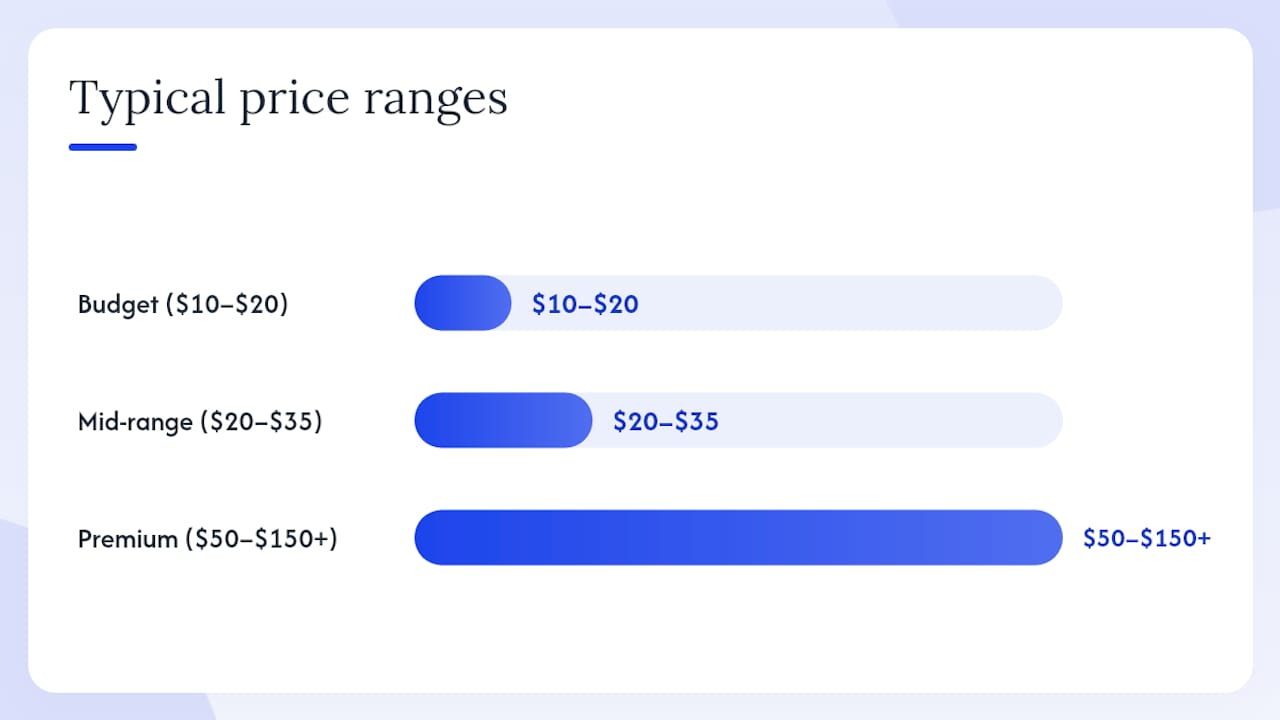
Typical price ranges
- Budget ($10–$20): Madrigal’s, Lonely Planet Phrasebook, 501 Spanish Verbs, individual Practice Makes Perfect volumes
- Mid-range ($20–$35): Barron’s Spanish Now! Ninth Edition, Easy Spanish Step-By-Step, Practice Makes Perfect All-in-One
- Premium ($50–$150+): Pimsleur full course bundle or annual app subscription
For learners who want a free starting point, Beginning Spanish: ¡Empecemos por aquí! is available as an open textbook at no cost, though it follows a classroom-style sequence.
Where to buy: Amazon, Barnes & Noble, and publisher websites (Simon & Schuster, McGraw Hill) all carry current editions. Always verify the edition number before purchasing, especially for Barron’s Spanish Now!, where audio availability differs by edition.
Pro Tip: Buy the most recent edition of any textbook that includes audio. For Barron’s Spanish Now!, that means the Ninth Edition specifically. Earlier editions are cheaper but lack the online audio that makes self-assessment work.
How we selected these textbooks
Every title on this list was evaluated against the same criteria:
- CEFR alignment: Does the book state or clearly imply which proficiency level it targets?
- Self-study friendliness: Does it include an answer key, self-check exercises, and clear instructions that work without an instructor?
- Audio availability: Does the current edition include native-speaker audio, or does it pair with a reliable audio source?
- Publisher and author reputation: Is the title from an established language-learning publisher (Barron’s/Simon & Schuster, McGraw Hill, Simon & Schuster) with a track record of edition updates?
- Buyer and popularity signals: Reader-choice and purchase-based roundups consistently surface Madrigal’s and the Practice Makes Perfect series as top picks, which reflects real monetary commitment from learners, not just anonymous votes.
- Edition recency: Titles with outdated audio or no recent revision were deprioritized unless the core content remains uniquely strong (Madrigal’s is the one exception, for its method).
Classroom-first textbooks, including academic series that list instructor resources and adaptive digital platforms as primary features, were excluded from the self-study shortlist. As university library guides note, those books assume speaking practice will be led by a teacher, which makes them a poor fit for independent learners.
These recommendations reflect the same pedagogical standards that Spanish Explorer’s certified instructors apply when advising adult learners on self-study materials. The selection prioritizes books that work without classroom support, include audio, and map clearly to CEFR levels.
What actually works for adult self-learners
Most adult learners who struggle with a textbook are not using the wrong book. They are using the right book the wrong way: reading it like a novel instead of working it like a training program.
The textbooks on this list are tools, not content. Madrigal’s does not teach you Spanish by being read. Barron’s Spanish Now! does not build fluency by sitting on your shelf. What produces results is the combination of a structured book, a consistent weekly schedule, and at least one speaking session per week where you use what you have studied.
The learners who make the fastest progress are the ones who treat their textbook as the input half of a two-part system. The output half, speaking and writing in real contexts, is where the language actually becomes yours. A private lesson or a structured group class once a week is often enough to convert textbook knowledge into usable language. Without that output practice, even the best grammar workbook produces passive knowledge that stalls at the reading stage.
One more thing: do not wait until you finish a textbook to start speaking. Start in week one, even if it is just five sentences. The discomfort of early speaking is the signal that learning is happening.
Ready to go beyond the textbook?
A textbook gives you the foundation. A certified instructor gives you the feedback that makes it stick. Spanish Explorer offers adult group classes, private lessons, and online Zoom sessions taught by native-speaking, certified instructors in Singapore. Whether you are at A1 with Madrigal’s in hand or at B1 looking to push toward fluency, a Spanish course adds the speaking practice that no textbook can replace. Prefer one-to-one coaching? Private Spanish lessons let you work at your own pace with a teacher who adapts to your textbook and your goals.
Sources
- Spanish Now! Level 1, Ninth Edition: with Online Audio – Simon & Schuster / Barron’s
- Learn Spanish: Spanish Textbooks — University of Washington library guide
- The Best Book to Learn Spanish (Reader’s Choice) — Fluent Travel
- Practice Makes Perfect: Complete Spanish All-in-One — McGraw Hill Education product page
FAQ
What is the best Spanish textbook for self-study?
Madrigal’s Magic Key to Spanish is the most recommended starting point for complete beginners, while Barron’s Spanish Now! Level 1 (Ninth Edition) offers the most comprehensive single-volume coverage with audio and an answer key.
What is the 80/20 rule for Spanish?
The principle holds that roughly 20% of Spanish vocabulary covers 80% of everyday conversation. Focusing first on the 1,000–2,000 most common words, as most beginner textbooks do, gets you functional faster than trying to master the full language at once.
What is the most popular Spanish book for learners?
Reader-choice and purchase-based roundups consistently place Madrigal’s Magic Key to Spanish and the Practice Makes Perfect series among the top picks, reflecting real buyer commitment rather than just survey responses.
Can a Spanish textbook help you become fluent?
A textbook builds the grammar and vocabulary foundation, but fluency requires speaking practice that no book provides on its own. Pairing a textbook with audio, a conversation partner, or structured classes produces far better results than textbook study alone.
Recommended
Start Learning Spanish Today
Book a trial class and see how quickly you can progress with a professionally trained native-speaker teacher guiding the way.
Book a Trial Class