 Spanish
Empresa (company), reunión (meeting), contrato (contract), factura (invoice), cliente (client), and contratar (to hire) will get you through most of your first week working in Spanish. Learn those six today. Add firmar (to sign), plazo (deadline), presupuesto (budget), and pendiente (pending), and you can follow most of an email chain or a short meeting without panicking.
Here’s the good news: research on business Spanish vocabulary consistently points to the same idea. A focused active core of 20 to 30 words and phrases, practiced in context, does more for your confidence than memorizing 300 words you’ll never use. You don’t need fluency to run a meeting or answer an email. You need the right 30 words, drilled until they’re automatic.
- Reunión de las 3 (“the 3 o’clock meeting”)
- ¿Podemos agendar una llamada? (“Can we schedule a call?”)
- Adjunto encontrará… (“Please find attached…”)
Save this list and grab the printable one-page cheat sheet below, which groups everything by category so you can drill it on your commute.
Key Takeaways
A working core of 20 to 30 business Spanish words, practiced through roleplay rather than memorized as a static list, is what actually lets professionals use the language in real meetings and emails.
| Point | Details |
|---|---|
| Start with a small core | Master 20 to 30 high-frequency words (empresa, reunión, contrato, factura) before expanding. |
| Register beats vocabulary size | Default to usted and formal email openings until invited to switch to tú. |
| Watch job-title traps | Banquero means bank executive, bancario means bank employee, per Fundéu’s guidance. |
| Practice out loud, not just on paper | Roleplay and shadowing convert passive recognition into active speaking ability. |
| Get real-time correction | Com’s group, private, and corporate Spanish classes give professionals structured practice and feedback beyond self-study. |
Table of Contents
- Business Spanish Vocabulary at a Glance: 20+ Essential Words
- Core Business Nouns, Verbs, and Adjectives
- Job Titles and How Companies Describe Their Structure
- Meetings and Presentations: Phrases That Keep You in Control
- Email and Formal Letter Phrases You Can Reuse Today
- Contracts and HR Vocabulary Worth Recognizing
- Finance and Accounting Terms You’ll See in Reports
- Sales and Negotiation Phrases That Close Deals
- Telephone and Video Call Phrases That Save Awkward Silences
- Industry-Specific Vocabulary: Tourism, Teaching, and Trade
- Formality, Regional Variation, and Common Pitfalls
- How to Actually Practice Business Spanish
- Where to Get Targeted Practice
- An Instructor’s Note on What Actually Sticks
- Take Your Business Spanish Further
- Sources
- FAQ
Business Spanish Vocabulary at a Glance: 20+ Essential Words
Print this, tape it above your desk, and use it before your next call. The list below groups terms the way you’ll actually need them: nouns first, then verbs, then the short phrases that glue a sentence together.
Nouns
- La empresa — the company
- La reunión — the meeting
- El contrato — the contract
- La factura — the invoice
- El cliente / la clienta — the client
- El plazo — the deadline
- El presupuesto — the budget
- La propuesta — the proposal
Verbs
- Contratar — to hire
- Firmar — to sign
- Negociar — to negotiate
- Enviar — to send
- Reunirse — to meet
- Facturar — to invoice
- Cancelar — to cancel
Set phrases for real moments
- Buenos días a todos, empecemos. (“Good morning everyone, let’s begin.”) — opening a meeting, formal register
- Adjunto la factura correspondiente al mes de enero. (“Attached is the invoice for January.”) — email, neutral/formal
- Quedo a la espera de su respuesta. (“I look forward to your reply.”) — formal closing line for email
Register matters here more than people expect. Business Spanish guidance from Preply notes that written Spanish tends to stay formal even between colleagues who’d speak casually in person, so when in doubt, write the way you’d speak to someone’s boss.
Pro Tip: Group your flashcards by function, not alphabetically. “Words for email” and “words for meetings” stick better than a random A to Z list, because your brain retrieves them the same way it will need to use them.
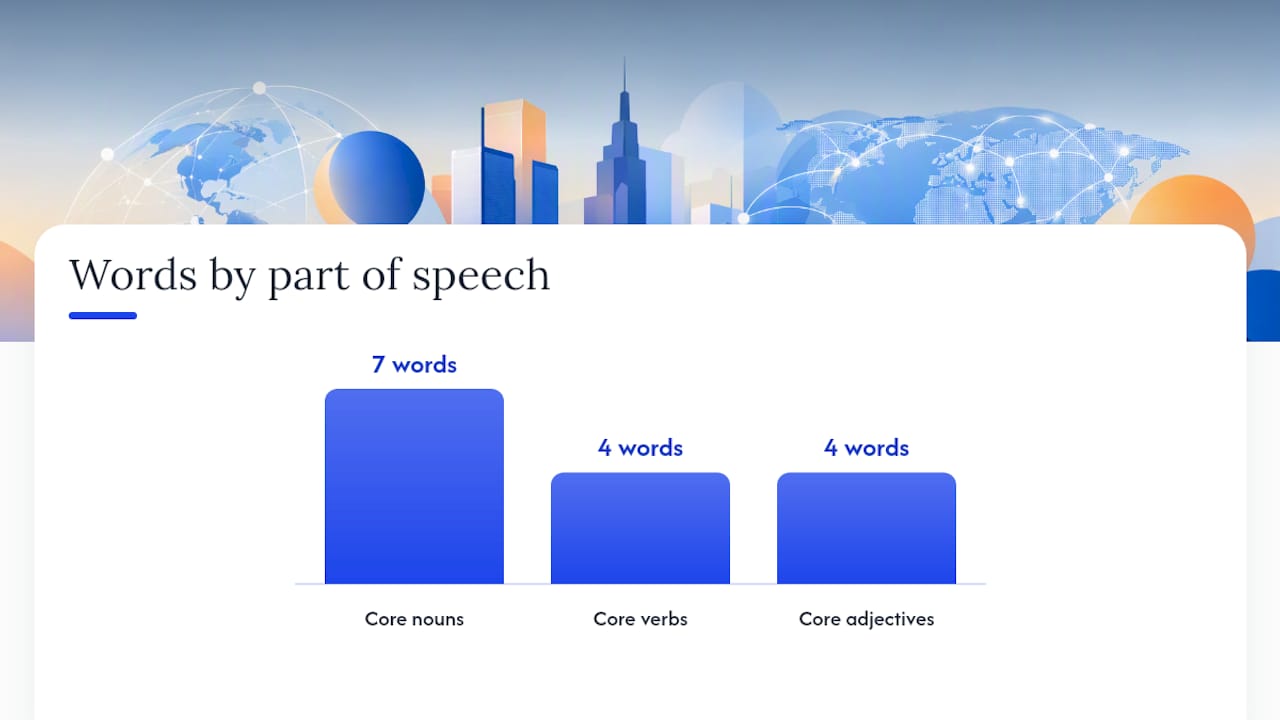
Core Business Nouns, Verbs, and Adjectives
Every professional vocabulary rests on a small set of building blocks. Master these and you can construct almost any basic work sentence.
Nouns you’ll use constantly
- La oficina — the office
- El proyecto — the project
- El informe — the report
- La sucursal — the branch (of a company)
- El equipo — the team
- La sede — the headquarters
- El acuerdo — the agreement
Verbs that carry a business sentence
- Gestionar — to manage. Ella gestiona el proyecto desde Madrid. (“She manages the project from Madrid.”)
- Cumplir — to meet/fulfill (a deadline or requirement). No cumplimos el plazo esta vez. (“We didn’t meet the deadline this time.”)
- Revisar — to review. ¿Puedes revisar el contrato antes del viernes? (“Can you review the contract before Friday?”)
- Aprobar — to approve. El director aprobó el presupuesto. (“The director approved the budget.”)
Adjectives that show up in almost every meeting
- Urgente — urgent
- Pendiente — pending
- Rentable — profitable
- Viable — viable
On pronunciation: the double r in words like rentable and urgente trips up a lot of English speakers, since it’s a rolled sound with no real equivalent. Stress usually falls on the second to last syllable in Spanish, so presupuesto is pre.su.PUES.to, not pre.SU.pues.to. Get that wrong in a meeting and you’ll still be understood, but nailing it makes you sound like you’ve done this before.
Pro Tip: Record yourself saying the five hardest words on your list, then compare against a native speaker clip. Your ear will catch mistakes your mouth can’t feel. For a broader foundation before layering on business terms, a daily-use Spanish vocabulary list fills in the gaps.
Job Titles and How Companies Describe Their Structure
Introducing colleagues correctly matters more in Spanish than in English, because titles change form based on gender. El director becomes la directora; el gerente becomes la gerenta in most of Latin America, though la gerente is common in Spain.
- El director / la directora — director
- El gerente / la gerenta — manager
- El/la CEO (often kept in English, or el director ejecutivo / la directora ejecutiva)
- El/la jefe de recursos humanos — head of HR
- El/la contador(a) — accountant
- El/la socio(a) — partner
- El departamento — department, la junta directiva — the board
Introducing someone: Les presento a la señora García, nuestra directora de ventas. (“Let me introduce Ms. García, our sales director.”)
Pro Tip: When you’re not sure of someone’s gender or prefer a neutral option, many companies now default to the article “la” with the profession’s base form, or simply state the role without gendering it: “la persona a cargo de ventas.”
Meetings and Presentations: Phrases That Keep You in Control
Running a meeting in Spanish comes down to a handful of transition phrases, not vocabulary depth.
Opening: Buenos días, gracias por venir. Empecemos con el primer punto. (“Good morning, thanks for coming. Let’s start with the first item.”)
Turn-taking: ¿Puedo añadir algo? (“May I add something?”) / Perdona, ¿puedes repetir eso? (“Sorry, can you repeat that?”)
Agreeing and closing: Estamos de acuerdo entonces. (“We’re in agreement then.”) / ¿Cuáles son los próximos pasos? (“What are the next steps?”)
Here’s a short exchange showing the phrases in action:
A: Bueno, pasemos al segundo punto: el presupuesto de marketing.
B: Antes de continuar, ¿podemos confirmar el plazo de entrega?
A: Claro. El plazo es el 15 de marzo. ¿Todos de acuerdo?
Pro Tip: Meetings in Spain often open more directly and move faster to the agenda than meetings in Mexico or Colombia, where a few lines of small talk before business is standard. Read the room before jumping straight to “punto uno.” For deeper meeting-specific phrasing, our guide to essential Spanish for meetings expands on this list.
Email and Formal Letter Phrases You Can Reuse Today
Subject lines set the tone before anyone opens your message. Use Consulta sobre… (inquiry about), Seguimiento: (follow-up:), or Recordatorio de pago (payment reminder) depending on the goal.
Formal opening: Estimado/a Sr./Sra. [Apellido]: Semi-formal opening: Hola [Nombre], espero que estés bien.
Formal closing: Quedo a la espera de sus noticias. Saludos cordiales, Semi-formal closing: Cualquier duda, dime. Un saludo,
Three templates worth saving:
- Meeting request: Estimado/a [Nombre]: Me gustaría agendar una reunión para tratar [tema]. ¿Tiene disponibilidad esta semana?
- Follow-up: Le escribo para dar seguimiento a nuestra conversación del [fecha]. ¿Hay alguna novedad?
- Invoice reminder: Le recordamos que la factura n.º [número] vence el [fecha]. Agradecemos su pronta gestión.
Default to usted with anyone outside your immediate team, especially in writing, and switch to tú only once the other person does. Soften requests with podría instead of a flat imperative: ¿Podría enviarme el informe? reads far better than Envíame el informe. Our guide to professional Spanish phrases for work has more templates if you send a lot of client email.
Pro Tip: Keep one email template document open while you work. Swap in names and dates rather than composing from scratch every time.
Contracts and HR Vocabulary Worth Recognizing
Contracts and HR documents use a narrow, repeatable vocabulary once you know the core dozen terms.
- El contrato indefinido — permanent contract
- El período de prueba — probation period
- La renuncia — resignation
- Las prestaciones / los beneficios — benefits
- La indemnización — severance pay
- El aviso previo — notice period
Two fragments you’ll actually see: “El empleado gozará de un período de prueba de tres meses” and “La renuncia deberá presentarse con 30 días de aviso previo.”
Pro Tip: Watch for false friends. “Aplicar” usually means “to apply” a rule or method, not “to apply for a job” (that’s “postularse” or “solicitar”). Get this wrong on a résumé cover note and it reads oddly to a native speaker.
Finance and Accounting Terms You’ll See in Reports
Finance vocabulary in Spanish is compact once you separate the document terms from the spoken ones.
- El balance — balance sheet
- Los ingresos — revenue
- Los gastos — expenses
- El saldo — account balance
- El IVA — VAT/sales tax (the term and rate vary by country, so always confirm locally)
- El vencimiento — due date
Invoice phrasing tends to follow a fixed pattern: “Total a pagar antes del vencimiento” (“Total due before the due date”) is nearly universal across Spanish-speaking markets. Documents also lean on abbreviations like IVA, N.º (number), and c/u (each). If you deal with banking terms specifically, banking vocabulary guides map out ATM prompts and teller phrases that overlap heavily with invoice language, since both rely on the same small set of transaction verbs.
Sales and Negotiation Phrases That Close Deals
Selling in Spanish rewards indirect phrasing more than English does, especially in the opening stages of a negotiation.
- Pitching: Nos gustaría presentarle una propuesta que… (“We’d like to present a proposal that…”)
- Making an offer: Podemos ofrecerle un descuento del 10% si… (“We can offer a 10% discount if…”)
- Pushing back: Entiendo su posición, pero permítame explicar… (“I understand your position, but let me explain…”)
- Closing: ¿Le parece bien si avanzamos con estos términos? (“Does it work for you if we move forward on these terms?”)
Pro Tip: In much of Latin America, a direct “no” mid-negotiation can sound harsher than intended. Softer phrasing like “lo consultaré con mi equipo” buys you room without closing the door.
Telephone and Video Call Phrases That Save Awkward Silences
Calling to schedule: “Le llamo para coordinar una llamada la próxima semana. ¿Qué día le viene bien?” Leaving a voicemail: “Le devuelvo la llamada en cuanto pueda, gracias.”
Tech terms worth knowing cold: silenciar (mute), activar el micrófono (unmute), la conexión (connection), compartir pantalla (share screen).
Turn-taking on video calls matters more than in person, since overlap reads as rude. Say “adelante, tú primero” to hand the floor over cleanly, and start on time. Spanish-speaking colleagues generally notice punctuality on calls even where in-person meetings run a few minutes late.
Pro Tip: Write “silenciar” and “compartir pantalla” on a sticky note near your webcam until they’re automatic. You’ll need them in the first thirty seconds of nearly every call.
Industry-Specific Vocabulary: Tourism, Teaching, and Trade
Tourism: el huésped (guest), la reserva (booking), la tarifa (rate), la recepción (front desk), el itinerario (itinerary), la temporada alta (high season). “La tarifa incluye desayuno.” / “¿Tiene alguna reserva a nombre de García?”
English teaching: el alumno / la alumna (student), la lección (lesson), la evaluación (assessment), el nivel (level), el material didáctico (teaching materials), la matrícula (enrollment). “El alumno subió de nivel este trimestre.” / “La matrícula vence a fin de mes.”
Trade and import/export: la aduana (customs), el arancel (tariff), el envío (shipment), la mercancía (goods), el flete (freight), el contenedor (container). “La mercancía pasó por aduana sin problemas.” / “El flete se cotiza por contenedor.”

Regional swaps to know: ordenador (Spain) versus computadora (Latin America), and coger (Spain, “to take/grab”) which means something vulgar in much of Latin America, where tomar or agarrar is safer.
Formality, Regional Variation, and Common Pitfalls
Register decisions trip up learners more than vocabulary gaps do. Default to usted in writing and with anyone senior or external; move to tú only once invited. Formal email openings (Estimado/a…) stay formal even in companies where spoken conversation is casual.
Job titles carry a well-documented trap: Fundéu’s guidance draws a firm line between banquero (a bank executive or owner) and bancario (a rank-and-file bank employee). Call a teller a banquero and you’ll get a puzzled look.
| Aspect | Spain | Latin America |
|---|---|---|
| Computer | ordenador | computadora |
| Meeting opener | Gets to business fast | Often a few lines of small talk first |
| “To take/grab” | coger (neutral) | tomar / agarrar (safer, coger is vulgar in many countries) |
Pro Tip: When you’re not sure which regional variant your counterpart uses, mirror their own word choice back to them once you hear it. It signals attentiveness without requiring you to memorize every regional map in advance.
How to Actually Practice Business Spanish
Vocabulary lists don’t stick until you use them under mild pressure. Here’s a four-step plan that works:
- Select ruthlessly. Pick the 20 to 30 words you’ll use this month, not the 300 you might use someday.
- Practice with spaced repetition. Tools like Anki or Quizlet resurface words right before you’d otherwise forget them, which beats rereading a static list.
- Roleplay out loud. Script a two-minute meeting or call and say it aloud, even alone. Speaking activates recall differently than reading.
- Use it for real. Send one actual email in Spanish this week, even a short one.
Shadowing (repeating audio a beat behind a native speaker) trains your ear and mouth together, and it’s worth doing with real recordings, not just text. Speaking-activity ideas offer structured ways to build this into a weekly habit rather than a one-off effort.
Pro Tip: Ask a colleague or tutor to send you one voice note a week using this month’s vocabulary. Replying forces retrieval, which is where real learning happens. Track progress simply: keep a running count of how many templates you’ve used in real emails, not how many words you’ve reviewed.
Where to Get Targeted Practice
Self-study with spaced repetition gets you recognition. Real progress in speaking comes from talking to someone who corrects you in real time. A private tutor or a focused business Spanish course can turn a passive list into active fluency in a fraction of the time solo study takes, since a single one-hour roleplay session with a tutor often surfaces more corrections than weeks of flashcards alone. If you’re weighing a private session against a group format, our private class page breaks down what tailored coaching looks like for working professionals.
An Instructor’s Note on What Actually Sticks
The learners who progress fastest aren’t the ones with the biggest vocabulary lists. They’re the ones who force themselves to say the wrong thing out loud in a low-stakes roleplay before saying it in a real meeting. Mistakes made in practice cost nothing; the same mistake in front of a client costs your confidence for the rest of the call.
One habit worth stealing: before any real meeting or email in Spanish, write out the three phrases you’ll actually need and say them aloud once. That thirty seconds of rehearsal does more than another hour of passive review.
Take Your Business Spanish Further
Reading a vocabulary list gets you recognition. Speaking it back under pressure, in a real meeting or on a call with a client, is a different skill, and it’s the one that actually gets tested at work. Com builds that skill through structured group classes, private coaching, and corporate training designed around the situations you actually face: emails, negotiations, presentations, and calls.

Classes run online over Zoom or in person at 10 Anson Road, Level 22, International Plaza, right above Tanjong Pagar MRT, so scheduling around a work calendar isn’t the obstacle it might be with a traditional course. If your team needs this at scale, our corporate and business language programs are built for exactly that. For individual professionals who want fast, targeted correction, book a private class or check the Spanish course options to find the format that fits your schedule and start practicing this month’s vocabulary with a real instructor.
Sources
FAQ
What are the most important business Spanish words to learn first?
Start with empresa (company), reunión (meeting), contrato (contract), factura (invoice), cliente (client), and contratar (to hire). These six cover most day-to-day workplace situations.
Should I use usted or tú in business emails?
Default to usted in formal writing, especially with clients or senior contacts, and switch to tú only if the other person initiates it first.
What’s the difference between banquero and bancario?
Banquero refers to a bank executive or owner, while bancario describes a regular bank employee. Fundéu notes that mixing them up reads as a professional misstep.
How many words do I really need to work comfortably in Spanish?
A focused core of 20 to 30 words and phrases, practiced in context, covers most meetings, emails, and basic financial conversations for a working professional.
Is a self-study list enough, or do I need a tutor?
A vocabulary list builds recognition, but speaking under real conditions requires feedback. A private tutor or a focused course, like the ones Com offers online or in person, accelerates the shift from recognizing words to using them confidently.
Recommended
Start Learning Spanish Today
Book a trial class and see how quickly you can progress with a professionally trained native-speaker teacher guiding the way.
Book a Trial Class