 Spanish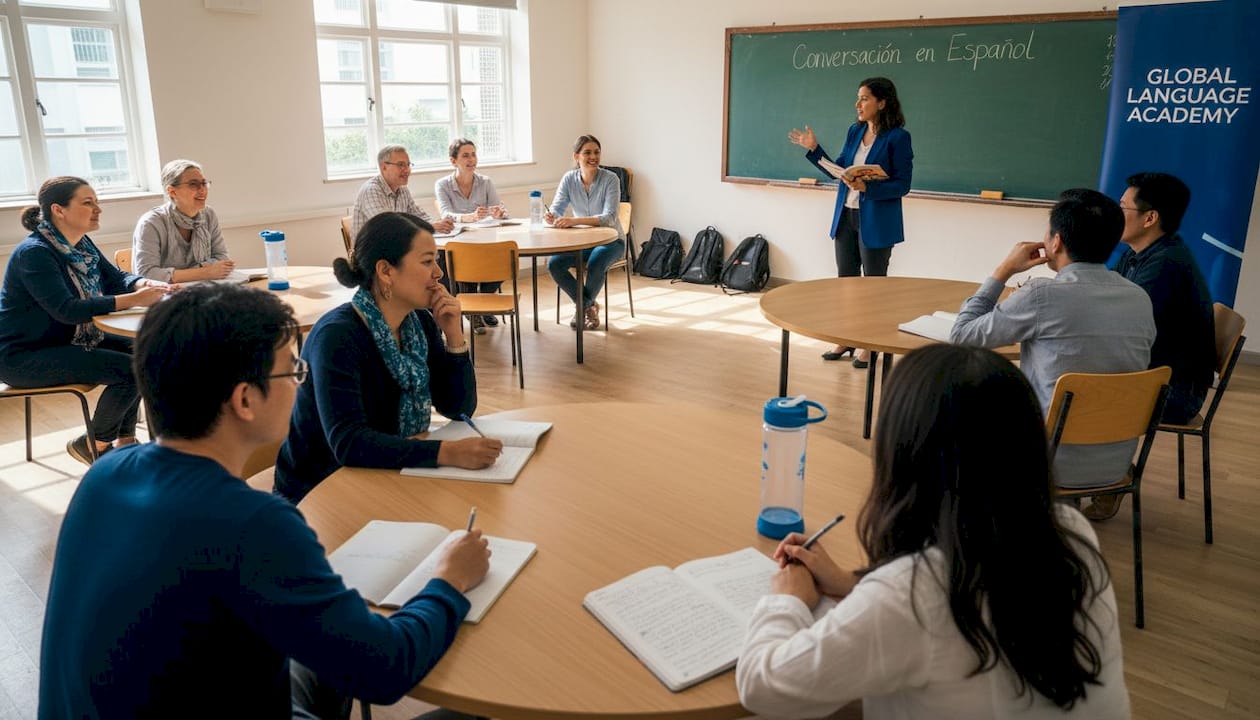
TL;DR:
- Choosing the right Spanish school in Singapore depends on accreditation, course structure, and exam preparation quality.
- Structured programs aligned with CEFR levels and recognized certifications like DELE or the Instituto Cervantes Seal ensure measurable progress.
Signing up for Spanish classes sounds simple until you realize just how different schools can be. Some offer casual conversational sessions with no real structure, while others run curriculum aligned to internationally recognized standards and prepare you for formal proficiency exams. That gap matters enormously, especially if your goal goes beyond ordering tapas on a vacation. Whether you want to advance your career, pursue academic opportunities in Spanish-speaking countries, or earn a credential that employers actually recognize, choosing the right school is the decision that shapes everything else. This guide gives you the framework to make that call with confidence.
Table of Contents
- Why learn Spanish in Singapore?
- Types of Spanish language schools in Singapore
- Preparing for Spanish proficiency certifications: DELE and SIELE
- What to expect in a structured Spanish language course
- What most Spanish learners in Singapore get wrong
- Explore recommended Spanish language schools and courses in Singapore
- Frequently asked questions
Key Takeaways
| Point | Details |
|---|---|
| Choose accredited schools | Institutions with quality seals and certifications deliver better learning outcomes and credibility. |
| Focus on exam prep | For professional or academic advancement, pick a school that offers DELE or SIELE preparation and mock exams. |
| Match course to your goals | Select programs aligned with your personal, work, or study ambitions to maximize motivation and results. |
| Use official resources | Leverage authentic course materials, textbooks, and mock exams from recognized schools for the best progress. |
| Consider class format | Evaluate whether group, private, or online classes fit your learning style and time commitments. |
Why learn Spanish in Singapore?
Spanish is not just the language of sunsets in Barcelona or street food in Mexico City. It is the second most spoken language in the world by native speakers, with more than 500 million people using it daily across 20 countries. In Singapore, a global business hub with strong trade ties to Latin America and Spain, Spanish fluency opens doors that other language skills simply cannot.
The business case is real. Singapore’s exports to Latin American markets have grown steadily over the past decade, and multinational companies based here actively seek employees who can negotiate deals, build relationships, and navigate regulations across Spanish-speaking regions. If you work in banking, logistics, pharmaceuticals, or technology, Spanish can become a genuine career differentiator.
Beyond business, the Spanish language benefits extend into academic life. Spanish literature, film, and culture hold enormous influence globally. Universities in Spain and Latin America increasingly attract international students, and having certified Spanish skills strengthens any application.
“Learning Spanish in Singapore is not a niche interest. It is a strategic investment in a world where Spanish-speaking markets are among the fastest-growing economic forces.”
Accreditation matters here too. Not every school delivers the same outcomes. Spanish World Singapore holds the Instituto Cervantes Accreditation Quality Seal for teaching excellence, a benchmark that signals rigorous standards in instructor quality and curriculum design. Schools with this level of credential are better positioned to prepare you for real-world use and formal certification.
Types of Spanish language schools in Singapore
Singapore’s Spanish learning landscape is more varied than most people expect. You have private language centers, university extension programs, online platforms, and blended learning options, each with its own strengths and trade-offs.
Private language schools are the most popular choice for adult learners. They tend to offer flexible scheduling, multiple proficiency levels, and smaller class sizes that allow for more instructor attention. The best ones structure their curriculum around the Common European Framework of Reference for Languages (CEFR), the globally recognized system that defines proficiency from A1 (beginner) to C2 (mastery).

University programs offer Spanish as part of broader language or humanities modules. These suit students enrolled in degree programs but are generally not practical for working adults looking for standalone courses.
Online and hybrid options have grown significantly since 2020. They work well for self-motivated learners who need schedule flexibility, but they often lack the structured feedback and exam-prep depth that serious learners need.
Here is a quick comparison to help you match a school type to your situation:
| School type | Best for | Accreditation potential | Exam prep quality |
|---|---|---|---|
| Private language center | Working adults, structured goals | High (look for quality seals) | Strong if curriculum-aligned |
| University program | Current students, academic credit | Moderate | Moderate |
| Online platform | Flexible learners, self-paced study | Low to moderate | Variable |
| Corporate training | Teams, workplace communication | Moderate | Moderate |
The Spanish course options available at reputable schools typically span all CEFR levels, so you are not forced to start from scratch or plateau early. When evaluating any school, check whether teachers are certified native or near-native speakers and whether the curriculum includes formal exam preparation materials.
Look at Spanish class formats carefully. Group classes build conversational confidence and community. Private classes accelerate progress for learners with specific timelines or gaps. Many strong programs offer both.
Pro Tip: Flashy websites and unlimited “free trial” promotions are not indicators of quality. Look specifically for accreditation seals, certified instructor credentials, and whether the school offers resources tied to official proficiency exams. A school that cannot tell you clearly which CEFR level each course corresponds to is a warning sign.
The Instituto Cervantes Quality Seal is currently one of the strongest markers of teaching excellence in Singapore. It is awarded only after evaluation of teaching methods, instructor qualifications, and learning materials.
Preparing for Spanish proficiency certifications: DELE and SIELE
If your goal is a credential that employers, universities, or immigration authorities recognize, you need to understand the two main certification options: DELE and SIELE.
DELE stands for Diplomas de Español como Lengua Extranjera. It is the most established and widely recognized Spanish proficiency certification in the world. DELE is the primary Spanish certification in Singapore, aligned to CEFR levels A1 through C2, and it is administered at NUS Centre for Language Studies. Employers in Europe, universities in Spain and Latin America, and professional licensing bodies in multiple countries accept DELE as official proof of language ability.
SIELE is a newer, fully digital exam developed jointly by major universities in Mexico, Spain, Argentina, and Colombia. It is modular, meaning candidates can take individual sections rather than a full-level exam. This makes it useful for learners who want to certify specific skills, such as reading comprehension or oral expression, without committing to a complete level assessment.
Here is how the two exams compare side by side:
| Feature | DELE | SIELE |
|---|---|---|
| Format | Paper-based | Digital |
| Levels | Fixed (A1 to C2) | Global score or modular |
| Recognition | Very high, global | Growing, strong in Latin America |
| Exam availability | Several times per year | Flexible, on-demand at some centers |
| Best for | Academic, immigration, professional | Workplace, modular certification |
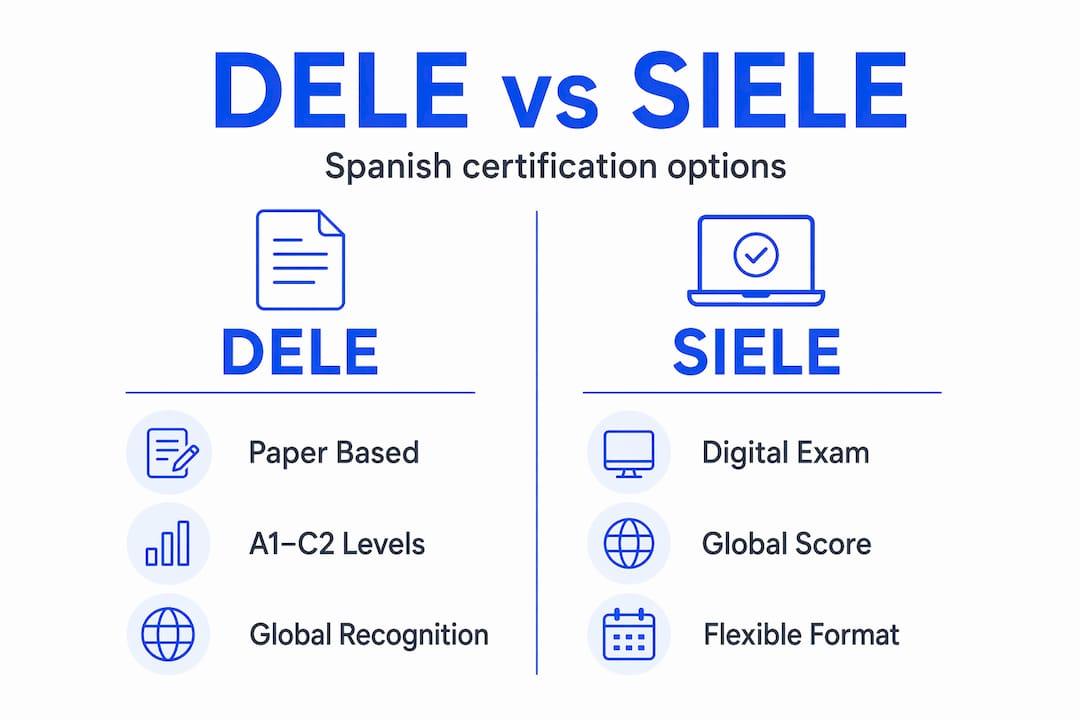
For most learners in Singapore targeting career advancement or academic enrollment, DELE remains the stronger choice. Explore the full breakdown in this DELE versus SIELE comparison and review specific DELE exam details before registering.
Here is a practical preparation sequence to follow once you commit to the DELE:
- Assess your current level. Take a placement test at an accredited school to confirm which CEFR level is realistic for your next exam sitting.
- Enroll in a level-aligned course. Match your course to the exam level you are targeting, not the level above it.
- Begin structured prep 8 to 12 weeks before your exam date. This is the recommended preparation window alongside mock exams and official books like Edelsa Preparación DELE.
- Take at least two full mock exams. Timed practice under realistic conditions reduces exam anxiety and reveals weak areas early.
- Review the official exam syllabus. The Spanish exam syllabus outlines exactly what skills and vocabulary each level tests.
Pro Tip: Many learners underestimate the listening and writing sections of the DELE. Both require consistent weekly practice, not just cramming in the final two weeks. Schools that integrate these skills into every class session, rather than treating them as exam extras, produce significantly better results.
What to expect in a structured Spanish language course
Walking into your first structured Spanish class can feel both exciting and slightly intimidating. Knowing what a quality program looks like from the inside helps you set realistic expectations and get the most out of every session.
A well-designed course is built around the CEFR framework from the ground up. Each level has clearly defined learning outcomes covering speaking, listening, reading, and writing. You will not just memorize vocabulary lists. You will practice grammar in context, engage in guided conversation exercises, analyze authentic texts, and receive regular feedback on your oral and written output.
Typical features of a strong Spanish language course in Singapore include:
- Clear level structure. Courses map directly to A1, A2, B1, B2, C1, or C2. You should always know exactly where you are on that scale.
- Small to medium group sizes. Classes of 8 to 15 students allow for meaningful speaking practice without losing the energy of a group dynamic.
- Certified, bilingual instructors. Teachers who are fluent in both Spanish and English can explain grammar and cultural nuances clearly without leaving students lost.
- Authentic learning materials. Quality programs use real Spanish media, official textbooks, and exam-style tasks rather than outdated photocopied worksheets.
- Regular assessment. Quizzes, speaking evaluations, and written assignments give you and your instructor a clear picture of your progress.
- Exam preparation integration. If you are working toward DELE, your coursework should align with exam task types from the beginning, not just in the final weeks.
Exams are held several times a year, so planning your course timeline around registration deadlines is important. Most learners find that consistent weekly classes over four to six months per level, combined with daily independent practice, produce steady and durable results.
Maximize your speaking confidence between classes with these Spanish speaking practice ideas designed specifically for learners in Singapore. Pair that with the right tools from a curated list of best Spanish resources to keep momentum outside the classroom.
Pro Tip: The single biggest predictor of success in a Spanish course is not raw talent or how much time you spend studying. It is the quality of structured feedback you receive. A school that provides personalized feedback on speaking and writing, and not just marks on a quiz, accelerates your progress dramatically.
What most Spanish learners in Singapore get wrong
After years of working with adult learners across every proficiency level, we see the same patterns repeat. And they almost never involve lack of effort.
The most common mistake is rushing. A learner finishes A2 and immediately pushes to enroll in B2 because they want to get certified quickly. What follows is frustration. The gaps in their foundation become obstacles at every step. Spanish grammar builds on itself in very specific ways. Skipping levels does not save time. It creates debt you will pay back later, with interest.
The second mistake is treating accreditation as fine print. Many learners choose a school based on location, price, or a friend’s casual recommendation without ever checking whether the teachers are certified or whether the curriculum is professionally designed. The result is often a pleasant experience that produces very little measurable language ability.
Price sensitivity is real, but choosing the cheapest option often means sacrificing exactly the things that produce results: structured curriculum, certified instructors, exam-aligned materials, and honest progress assessments. A course that costs less but leaves you unprepared for the DELE is not a bargain.
The learners who make the fastest and most durable progress share three traits. They commit to steady weekly practice rather than sporadic intense study. They actively seek out a learning community for accountability and conversation. And they stay honest about their current level, focusing on mastering it fully before moving forward. Understanding your fluency goals and building a realistic timeline around them is far more valuable than chasing speed.
The best schools in Singapore understand this and design their programs accordingly. They are not racing you through levels. They are building you into a confident, capable Spanish speaker who can perform when it matters.
Explore recommended Spanish language schools and courses in Singapore
You now have a clear picture of what separates quality Spanish education from generic language classes. The next step is putting that knowledge into action.
Spanish Explorer offers group and private Spanish courses structured around the CEFR framework and taught by certified bilingual instructors. Whether you are starting at A1, preparing for your B2 DELE, or looking for focused private Spanish classes that fit a demanding schedule, the programs are designed to deliver real, measurable results. If certification is your goal, dedicated DELE exam preparation resources and structured prep courses give you the tools and confidence to perform on exam day. Located in Singapore’s central business district, Spanish Explorer makes professional-grade Spanish education genuinely accessible.
Frequently asked questions
What is the most recognized Spanish proficiency certification in Singapore?
DELE is the most widely recognized certification, accepted by universities, employers, and immigration authorities globally. It is aligned to CEFR A1 to C2 and administered in Singapore at the NUS Centre for Language Studies.
How long does it take to prepare for the DELE exam?
Most learners need 8 to 12 weeks of focused preparation including mock exams and study materials like Edelsa Preparación DELE to be ready for exam day.
Are there accredited Spanish language schools in Singapore?
Yes. For example, Spanish World Singapore holds the Instituto Cervantes Accreditation Quality Seal, which signals verified teaching excellence and curriculum standards.
Can I take Spanish courses online in Singapore?
Yes, many schools and learning centers offer fully online or blended Spanish courses for adults, though the depth of exam preparation and instructor feedback can vary significantly between providers.
What are the differences between DELE and SIELE exams?
DELE is paper-based, level-specific, and globally recognized across academic and professional contexts. SIELE is fully digital and modular, making it more flexible but currently less universally recognized than DELE for academic and immigration purposes.
Recommended
- Best Spanish learning resources in Singapore for every learner
- Which type of Spanish class is right for you? Singapore guide
- Spanish Class in Singapore: Learn Spanish Language with Spanish Explorer – Spanish Language School
- Top 4 lingo.edu.sg Alternatives 2026
Start Learning Spanish Today
Book a trial class and see how quickly you can progress with a professionally trained native-speaker teacher guiding the way.
Book a Trial Class