 Spanish
TL;DR:
- Spanish is the official language in 21 countries worldwide, with over 636 million speakers globally. The United States has the second-largest Spanish-speaking population after Mexico, supported by institutional backing and international organizations. Regional dialects and indigenous languages influence business communication, so learners should choose their course focus accordingly.
Which countries have Spanish as an official language?
Spanish is the official language of 21 sovereign countries plus Puerto Rico, a U.S. territory, making it one of the most geographically widespread languages on earth. With 636 million total speakers worldwide, including native and second-language users, Spanish ranks as the world’s second most spoken native language after Mandarin Chinese.
Here is the complete list of countries where Spanish is spoken officially:
- North America: Mexico (the world’s largest Spanish-speaking nation by population)
- Central America: Guatemala, Honduras, El Salvador, Nicaragua, Costa Rica, Panama
- Caribbean: Cuba, Dominican Republic, Puerto Rico (U.S. territory)
- South America: Colombia, Venezuela, Ecuador, Peru, Bolivia, Chile, Argentina, Uruguay, Paraguay
- Europe: Spain
- Africa: Equatorial Guinea
Beyond these 21 countries, Spanish has a massive unofficial presence elsewhere. The United States is the clearest example: about 65 million people speak Spanish there, including roughly 45 million native speakers, making it the world’s second-largest Spanish-speaking population after Mexico. Belize, Andorra, and Gibraltar also have large Spanish-speaking communities despite no national official status.
Why Spanish matters as a global institutional language
Spanish is not just widely spoken. It carries formal institutional weight that few other languages match. Spanish is one of the six official languages of the United Nations, and it functions as a working language across major international bodies including the World Trade Organization and the Organization of American States.
The Spanish Ministry of Foreign Affairs treats Spanish promotion as a strategic pillar of Spain’s international cooperation, with 13 bilateral memorandums of understanding signed with Ibero-American countries to strengthen Spanish in diplomacy and international legal relations. That kind of state-level investment signals something important for learners: the language has institutional backing that keeps it stable and growing.
Ethnologue classifies Spanish as an “Institutional” language, meaning it is supported by formal education systems and government structures across multiple continents. For adult learners in Singapore, that classification matters practically. It means the Spanish you learn in a structured course translates directly into real-world use across a vast network of countries and organizations.
Key institutional roles Spanish holds globally:
- Official language of the United Nations and major multilateral bodies
- Promoted internationally by the Instituto Cervantes, with branches across many countries
- Supported by the Global Observatory of Spanish, a strategic body led by the Cervantes Institute
- Recognized as one of the official languages of the European Union
- A critical language for business across Latin America, important emerging consumer markets
What adult learners should know before starting Spanish
The 21 countries where Spanish is spoken officially are not linguistically identical. Regional dialects, vocabulary, and accents vary considerably, and that variation matters for business communication. Rioplatense Spanish in Argentina and Uruguay sounds and reads differently from Mexican Spanish or Castilian Spanish from Spain. None is “wrong,” but knowing which variety you are targeting helps you choose the right course and instructor.
Pro Tip: If your professional goals involve Latin American markets, prioritize a course that uses Latin American Spanish as its base. If your work connects you to Spain or European institutions, Castilian Spanish is the natural fit. Spanish Explorer’s certified instructors can help you identify the right variety from your first lesson.
Several countries add another layer of complexity through co-official indigenous languages. Bolivia recognizes Spanish alongside dozens of indigenous languages. Paraguay uses both Spanish and Guaraní officially, and both are genuinely in daily use. Peru’s Quechua and Aymara hold co-official status in selected regions. For business learners, this means that understanding bilingual dynamics and code-switching is not a niche skill. It is a practical requirement in many markets.
Key considerations for learners starting out:
- Choose a course aligned with international standards to build transferable proficiency
- Understand that U.S. Spanish is heavily bilingual, with frequent code-switching between English and Spanish in professional settings
- Recognize that written business Spanish tends to be more standardized across regions than spoken Spanish
- Start with conversational fluency before layering in business-specific vocabulary
Spanish Explorer offers group and private Spanish courses in Singapore designed specifically for adult learners, with flexible scheduling and certified instructors fluent in both Spanish and English.
How to keep improving after your first Spanish course
Starting is the easy part. Maintaining momentum after your initial course is where most adult learners stall. The good news is that Spanish has more immersive resources available than almost any other language, precisely because so many countries have Spanish as a spoken language.
Pro Tip: Mix passive and active practice. Watch Spanish-language news from different regions, such as CNN en Español or BBC Mundo, to train your ear across accents. Then use what you hear in your next class or conversation session.
Practical ways to sustain and advance your Spanish:
- Join a group class to maintain regular speaking practice with peers at your level
- Use private lessons to work on business-specific vocabulary and presentation skills
- Watch Spanish-language media from your target market region to absorb natural speech patterns
- Practice with language learning resources that reinforce vocabulary in context
- Take advantage of online Zoom classes when travel or work schedules make in-person sessions difficult
Spanish Explorer’s online Spanish classes via Zoom are built for exactly this stage: busy Singapore professionals who need consistency without sacrificing flexibility. Corporate training options are also available for teams preparing to engage Spanish-speaking markets.
Regions within countries where Spanish is predominantly spoken
Even within officially Spanish-speaking countries, the language does not spread evenly. In Spain, Castilian Spanish dominates nationally, but Catalonia, the Basque Country, and Galicia have their own co-official regional languages. In everyday life, many residents in Barcelona speak Catalan as their primary language and Spanish as a second. In the Basque Country, Basque (Euskara) is a completely unrelated language that coexists with Spanish.
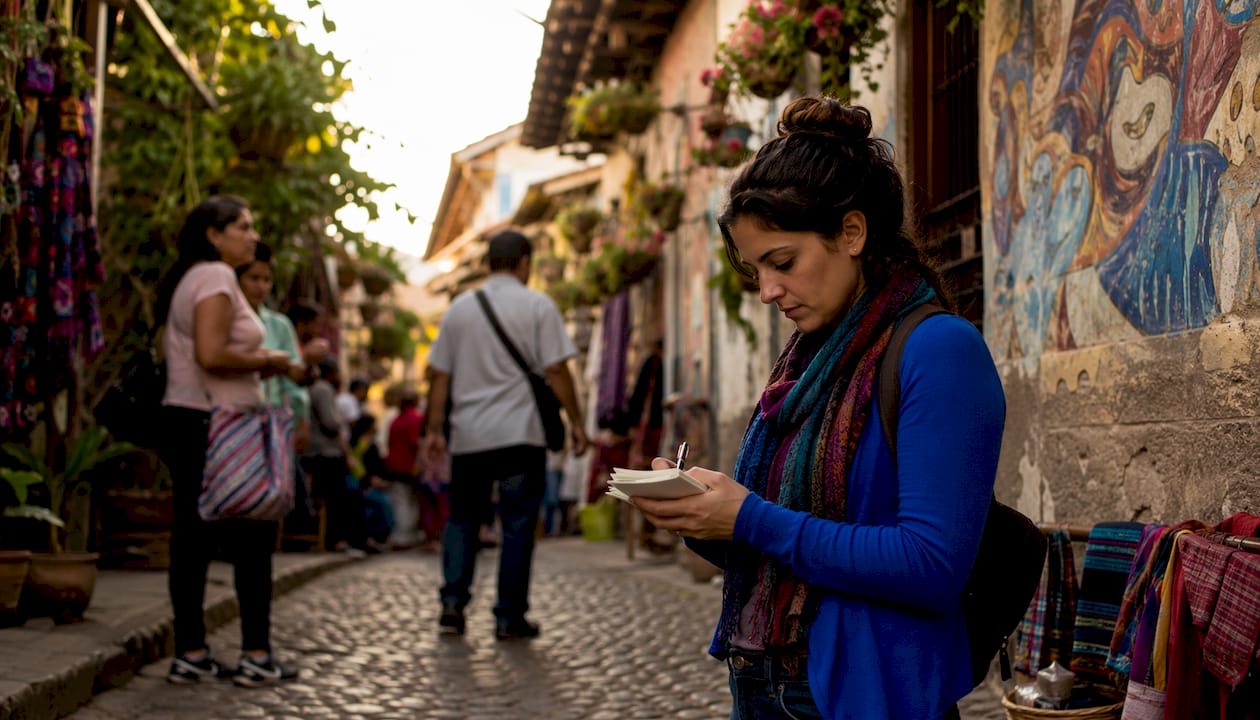
In Latin America, urban centers like Mexico City, Bogotá, Lima, and Buenos Aires are overwhelmingly Spanish-speaking. Rural and highland areas in countries like Bolivia, Peru, Ecuador, and Guatemala have much higher concentrations of indigenous language speakers. For business travelers, this is rarely an issue since commercial activity concentrates in cities. But for learners aiming at cultural depth, it is worth knowing.
Equatorial Guinea stands apart as Africa’s only Spanish-speaking country, where 87.7% of the population is fluent in Spanish. Spanish functions as the primary language in government and business there, even though most families speak Bantu languages at home.
How Spanish-speaking populations compare by country and continent
Latin America accounts for the vast majority of the world’s Spanish speakers. Mexico alone has over 130 million native speakers, making it the single largest Spanish-speaking country by a wide margin. Colombia follows with around 52 million native speakers, then Spain with approximately 47 million.
| Country / Region | Total Spanish Speakers |
|---|---|
| Mexico | The largest Spanish-speaking population |
| United States | The second-largest Spanish-speaking population globally |
| Colombia | A major Spanish-speaking country in Latin America |
| Spain | The original homeland of the Spanish language |
| Argentina | A leading Spanish-speaking country in South America |
| Peru | A significant Spanish-speaking nation with diverse indigenous languages |
| Venezuela | An important Spanish-speaking country in South America |
| European Union (total) | Contains a substantial number of Spanish speakers across member states |
The United States sits in second place globally, ahead of Colombia and Spain, a position driven by decades of immigration from Latin America. Europe’s Spanish-speaking population is concentrated in Spain, though the broader EU counts nearly 46 million Spanish speakers across all member states.
Africa’s Spanish-speaking population is small by comparison, centered almost entirely in Equatorial Guinea. Asia’s presence is minimal, with the Philippines retaining a Spanish-based creole called Chavacano spoken by around 689,000 people, a legacy of over three centuries of Spanish colonial rule.
Key Takeaways
Spanish is officially spoken in 21 countries across four continents, with over 636 million total speakers globally, making it one of the most institutionally supported and professionally valuable languages an adult learner can pursue.
| Point | Details |
|---|---|
| 21 official countries | Spanish is the official language of 21 sovereign nations plus Puerto Rico, spanning the Americas, Europe, and Africa. |
| 636 million total speakers | Spanish has over 636 million speakers worldwide, with native speakers exceeding 500 million by 2025. |
| U.S. is second largest | The United States has about 65 million Spanish speakers, the world’s second-largest Spanish-speaking population after Mexico. |
| Institutional language | Ethnologue classifies Spanish as “Institutional,” backed by formal education systems and government structures globally. |
| Regional variation matters | Dialects, co-official indigenous languages, and bilingual code-switching vary by country and affect business communication. |
FAQ
How many countries have Spanish as an official language?
Spanish is the official language of 21 sovereign countries plus Puerto Rico, a U.S. territory, spread across the Americas, Europe, and Africa.
Which country has the most Spanish speakers?
Mexico has the largest Spanish-speaking population, with over 130 million native speakers, followed by the United States with about 65 million total Spanish speakers.
Is Spanish spoken in Africa?
Yes. Equatorial Guinea is the only African country where Spanish is an official language, with approximately 87.7% of its population fluent in Spanish.
Why should adult learners in Singapore study Spanish?
Spanish opens access to 21 officially Spanish-speaking countries and a global community of over 636 million speakers, making it highly valuable for business and conversational use across Latin America, Europe, and beyond. Spanish Explorer offers adult Spanish courses in Singapore tailored to professional and conversational goals.
Does regional dialect affect business Spanish?
Regional accents and vocabulary differ across countries, but written business Spanish is largely standardized. Understanding the dialect of your target market, whether Latin American or Castilian, gives you a practical edge in professional settings.
Recommended
Start Learning Spanish Today
Book a trial class and see how quickly you can progress with a professionally trained native-speaker teacher guiding the way.
Book a Trial Class