 Spanish
The DELE B1 speaking test is a four-task oral exam that assesses your ability to communicate naturally in Spanish at an intermediate level, and the single most important thing you can do to pass is to practice all four tasks under timed, exam-like conditions before test day. Examiners are not looking for perfection. They want to hear you speak fluently, interact naturally, and use vocabulary that fits the situation.
Here is what you need to hold in your head from the start:
- Task 1: A 2–3 minute prepared monologue on a given topic
- Task 2: A 3–4 minute conversation with the examiner about your Task 1 topic
- Task 3: A photo description followed by a short follow-up conversation
- Task 4: A role-play or simulated dialogue with the examiner
- Top scoring focus: Fluency, natural interaction, and appropriate vocabulary range
In the final weeks before the exam, concentrate on two things: running full timed mock tests of all four tasks back to back, and recording yourself so you can hear exactly where your fluency breaks down.
Key Takeaways
The DELE B1 speaking test rewards consistent, timed practice across all four tasks far more than last-minute grammar review.
| Point | Details |
|---|---|
| Four-task oral format | Tasks 1–4 cover monologue, conversation, photo description, and role-play, totaling roughly 15–16 minutes. |
| Interaction is scored | Examiners assess five dimensions; fluency and natural interaction carry significant weight alongside accuracy. |
| Use official materials | Download Instituto Cervantes sample papers and audio files to practice to the exact exam timing. |
| 6–8 week study plan | Build from untimed structure practice to full timed mock tests, with tutor feedback in the final two weeks. |
| Spanish Explorer | Offers DELE B1 prep in group, private, and online formats with certified instructors and mock speaking sessions. |
Table of Contents
- What does the DELE B1 speaking test look like?
- How does each task work, and what should you say?
- What topics come up, and which phrases actually help?
- What do strong and weak answers actually look like?
- How do examiners actually grade your performance?
- What does a realistic 6–8 week study plan look like?
- Where can you find official practice materials?
- How do you stay calm and speak confidently on test day?
- What most candidates get wrong about oral exam preparation
- Spanish Explorer’s DELE B1 preparation courses
- Sources
- FAQ
What does the DELE B1 speaking test look like?
The oral expression and interaction test sits within a grouped exam session alongside the listening component. The speaking section itself runs approximately 15–16 minutes, not counting the preparation time given before Tasks 1 and 2. According to the official DELE B1 guide, the test is divided into four tasks, each targeting a distinct communicative competence mapped to the MCER (Marco Común Europeo de Referencia) descriptors.
| Task | Format |
|---|---|
| Task 1 | Prepared monologue / presentation |
| Task 2 | Conversation with examiner on Task 1 topic |
| Task 3 | Photo description + follow-up questions |
| Task 4 | Role-play / simulated dialogue |
You receive preparation time before Tasks 1 and 2 to read the prompt and organize your ideas. Use every second of it.
Examiners assess five dimensions across all four tasks:
- Fluency and coherence: Can you sustain speech without long pauses or constant self-correction?
- Lexical range: Do you use vocabulary that goes beyond the most basic words?
- Grammatical accuracy: Are your sentences structurally correct often enough to communicate clearly?
- Interaction: Do you respond to the examiner naturally, ask for clarification when needed, and keep the exchange moving?
- Pronunciation: Is your speech intelligible, even with a non-native accent?
Scoring threshold: Passing the DELE B1 requires meeting minimum score thresholds across grouped skill areas, not just in speaking alone. A strong oral performance can offset a weaker written score within the same group, which is why investing in speaking practice pays double dividends.
How does each task work, and what should you say?
Task 1: The prepared monologue
You get a written prompt, usually a short text or a set of bullet points on a topic, and roughly 6–7 minutes to prepare. Then you speak for 2–3 minutes without the examiner interrupting. The candidate material from Instituto Cervantes confirms this structure and provides the exact wording candidates see in the exam room.
Structure your talk in three parts: a brief introduction that names the topic and your angle, two or three developed points with examples or personal experience, and a short conclusion. Do not try to cover everything in the prompt. Pick the points you can speak about most naturally and develop them properly.
A planning template that works well under pressure:
- Intro (20 seconds): “Voy a hablar sobre… En mi opinión, este tema es importante porque…”
- Point 1 (40–50 seconds): State the idea, give an example, connect to real life
- Point 2 (40–50 seconds): Same structure, different angle
- Optional Point 3 (30 seconds): Only if time allows
- Conclusion (20 seconds): “En resumen, creo que…”
Task 2: The follow-up conversation
Immediately after your monologue, the examiner asks questions about what you said. This lasts 3–4 minutes. The goal is not to repeat your monologue but to expand, defend your opinions, and respond to new angles the examiner introduces.
The examiner will not try to trick you. They want to see whether you can interact, not just recite. When you do not understand a question, ask: “¿Podría repetir la pregunta, por favor?” That is not a weakness. It is exactly the kind of interaction that earns marks.
Task 3: Photo description and conversation
You receive a photograph and describe what you see, then answer follow-up questions. Spend the first 30–40 seconds describing the image systematically: who is in it, where they are, what they are doing, and what the mood or context suggests. Then move to interpretation: why might this situation be happening? What does it remind you of?
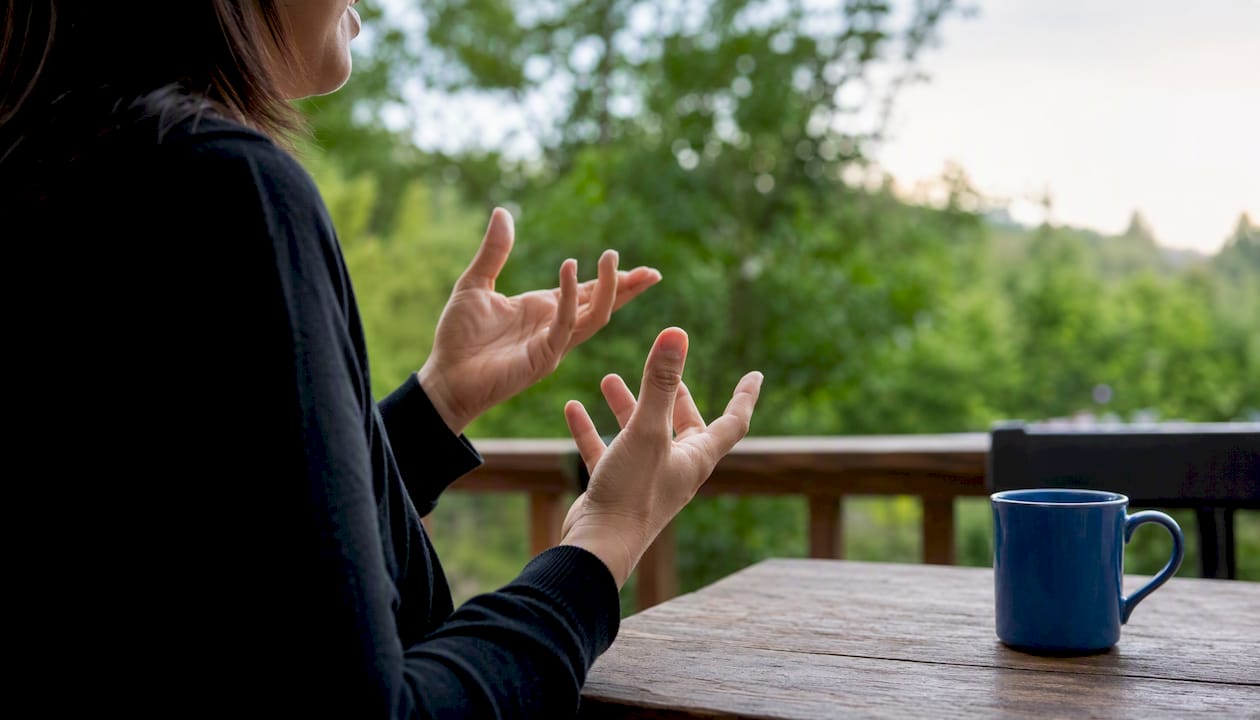
Useful sequencing phrases: En primer plano…, Al fondo…, Parece que…, Lo que me llama la atención es…
The follow-up conversation typically connects the photo to a broader topic, so be ready to give opinions, not just descriptions.
Task 4: The role-play
You and the examiner act out a scenario, such as booking a hotel, resolving a complaint, or planning a trip together. The key skill here is negotiation. You need to propose, respond, ask for information, and reach some kind of agreement or resolution.
Possible scenario types: making a reservation, discussing a problem with a product or service, planning an event, asking for advice in a shop or office.
Strategic phrases for role-plays: ¿Qué le parece si…?, Preferiría…, ¿Podría decirme…?, Entiendo, pero en ese caso…
Pro Tip: Record yourself doing a full four-task run, then listen back without stopping. You will notice filler words, repeated vocabulary, and pauses you did not realize were there. Fix one specific issue per session, not everything at once.
What topics come up, and which phrases actually help?
B1 topics stay close to everyday life. The prompts you will see most often fall into these categories: daily routines and habits, health and lifestyle, travel and transportation, work and study, free time and hobbies, family and relationships, and expressing opinions on social issues.
Functional phrase bank by communicative purpose:
Giving opinions:
- En mi opinión… / Desde mi punto de vista…
- Creo que… / Pienso que… / Me parece que…
- Lo que más me importa es…
Agreeing and disagreeing:
- Estoy de acuerdo contigo porque…
- Entiendo tu punto, pero yo creo que…
- No estoy del todo de acuerdo porque…
Linking and sequencing:
- En primer lugar… / Además… / Por otro lado… / Sin embargo… / Por eso…
- Para terminar… / En resumen…
Hedging and softening:
- Depende de… / No estoy seguro/a, pero…
- Creo que podría ser… / Es posible que…
Future expressions:
- Voy a… / Espero… / Me gustaría… / Tengo pensado…
Asking for clarification:
- ¿Podría repetir la pregunta? / ¿Qué quiere decir con…?
For pronunciation, pay attention to the difference between b and v (identical in Spanish), the soft d between vowels (ciudad, nada), and word stress on the penultimate syllable as the default. Intelligibility matters far more than a perfect accent.
Pro Tip: Build a personal vocabulary list of 10–15 words per topic area and practice using them in full sentences, not just memorizing definitions. The examiner notices when vocabulary is varied and contextually appropriate.
What do strong and weak answers actually look like?
Task 1 model answer (topic: health and lifestyle)
Why this scores at B1: The candidate uses a clear three-part structure, varied connectors (además, por ejemplo, en resumen), and personal examples without over-rehearsed phrasing. Vocabulary is appropriate and occasionally precise (rendimiento, equilibrada). Sentences are mostly accurate. No long pauses.
Revision tip: If this feels too long, cut the second example and end at la dieta. If you want to push toward B2, add a contrasting view: “Sin embargo, algunas personas no tienen tiempo ni dinero para cuidarse.”
Task 3 model answer (photo description)
Why this scores well: Systematic description (foreground, background, time of day), inference (parece ser, como si fuera), and a personal connection to the broader topic. The candidate does not just list objects but interprets the scene.
Adaptation tip: Swap the market for any public space photo. The structure (describe, infer, connect to a broader theme) works for parks, offices, restaurants, or transport hubs.
Task 4 model answer (role-play: hotel complaint)
Why this works: The candidate initiates, negotiates, asks for alternatives, and closes with a reasonable request. No single sentence is overly complex, but the interaction feels natural and purposeful.
How do examiners actually grade your performance?
The five scoring dimensions are not weighted equally in practice, but fluency and interaction tend to be the most visible. A candidate who speaks accurately but in short, disconnected bursts will score lower than one who makes occasional grammar errors but sustains natural conversation.
| Dimension | Low-scoring behavior | High-scoring behavior |
|---|---|---|
| Fluency / coherence | Long pauses, frequent self-correction, fragmented sentences | Sustained speech with natural rhythm and logical flow |
| Lexical range | Repeating the same 20 words, using only basic vocabulary | Varied vocabulary appropriate to the topic |
| Grammatical accuracy | Consistent errors that obscure meaning | Mostly accurate with minor errors that do not impede communication |
| Interaction | Short yes/no answers, no follow-up, ignores examiner cues | Responds fully, asks for clarification, develops the exchange |
| Pronunciation | Sounds that make comprehension difficult | Intelligible speech, even with a non-native accent |
The italki DELE B1 exam guide notes that passing requires meeting minimum thresholds across grouped skills, so a very weak performance in one area can pull down your overall result even if other areas are strong.
Common mistakes that cost marks:
- Giving one-sentence answers in Task 2 and Task 4 instead of developing the point
- Using the same connector (y, pero) for every transition
- Memorizing a fixed introduction and forcing it onto every topic, which sounds robotic
- Staying silent when confused instead of asking for clarification
- Rushing through Task 1 in under 90 seconds
Self-assessment rubric for practice sessions:
After each recorded practice run, score yourself on a simple 1–3 scale per dimension. A score of 1 means the issue actively disrupted communication. A score of 3 means the examiner would not notice a problem. Aim to move every dimension to at least a 2 before test day.
What does a realistic 6–8 week study plan look like?
A structured timeline makes the difference between vague preparation and measurable improvement. Here is a progressive plan built around the four tasks.
-
Weeks 1–2 (Foundation): Study the official task formats using the Instituto Cervantes sample materials. Do one untimed Task 1 monologue per day on a different B1 topic. Record every session. Focus on completing the full structure (intro, points, conclusion) without stopping.
-
Weeks 3–4 (Fluency building): Switch to timed practice. Task 1 must finish within 3 minutes. Add Task 3 photo descriptions: set a timer for 5 minutes and describe a new photo each session. Review your recordings and identify your top two recurring errors. Fix one per week.
-
Weeks 5–6 (Interaction practice): Find a language partner or tutor for Task 2 and Task 4 practice. Run the role-play scenarios from the phrase bank above. Practice asking for clarification and extending your answers beyond the first sentence. Use the B1 level speaking exercises from Spanish Explorer’s practice guide for additional drill ideas.
-
Week 7 (Mock tests): Run at least two complete four-task mock tests under exam conditions. Use the official audio timing from the Instituto Cervantes sample papers. Score yourself with the self-assessment rubric from the previous section. Have a tutor or partner act as the examiner for Tasks 2 and 4.
-
Week 8 (Consolidation): No new material. Review your weakest dimension from the mock tests and drill it specifically. Run one final full mock test three days before the exam. Rest the day before.
Where can you find official practice materials?
The best starting point is always the official source. Instituto Cervantes publishes sample exam papers and audio files through its exam centers. These are the closest thing to the real test you will find anywhere, and you should use the audio files to practice to the actual timing rather than guessing at it.
- Official DELE B1 candidate material: Download the Task 1 and Task 2 candidate PDF directly from Instituto Cervantes. It contains the exact instructions candidates see in the exam room, which makes it the most realistic preparation tool available.
- Official exam guide: The DELE B1 guía del examen explains every task’s purpose, the assessment criteria, and the MCER descriptors used by examiners.
- Instituto Cervantes official site: The central hub for DELE diploma information, MCER alignment, and links to exam registration and center locations.
- SIELE: If you are still deciding between exam formats, SIELE is a digital alternative to DELE that some learners prefer for its flexible online delivery. The content and format differ from DELE, so check the comparison before committing.
- Tutor-led mock orals: Self-study gets you far, but a tutor who knows the DELE format can give you the kind of specific, real-time feedback that recordings alone cannot. Spanish Explorer’s DELE exam preparation courses include structured mock speaking sessions with certified instructors.
For self-study versus tutor-led practice: use official materials and self-recording for the first four to five weeks, then switch to at least two tutor-led mock tests in the final two weeks. That sequence gives you the volume of practice you need plus the calibrated feedback that tells you whether you are actually at B1 level.
How do you stay calm and speak confidently on test day?
Anxiety in oral exams is almost always about uncertainty, not ability. The more familiar the format feels, the less your nerves will interfere. That is why mock tests under real conditions matter more than any other single preparation activity.
A few specific strategies that work:
Slow down your breathing before you speak. Three slow breaths before Task 1 begins will lower your heart rate noticeably. It takes five seconds and costs nothing.
Treat silence as normal. A two-second pause while you gather your thoughts is not a failure. Examiners expect it. What they do not want is for you to fill every pause with “um, um, um” or to abandon a sentence halfway through. If you lose your thread, use a filler phrase: “A ver… lo que quería decir es que…”
Anchor to your structure. When anxiety spikes, people forget what they planned to say. Having a fixed three-part structure for Task 1 (intro, two points, conclusion) means you always know where you are in the talk, even if the specific words escape you momentarily.
Reframe the examiner’s role. The examiner is not trying to catch you out. Their job is to give you opportunities to demonstrate your Spanish. When they ask a follow-up question, they are giving you more time to score points, not testing whether you missed something.
Practice in uncomfortable conditions. Do at least one mock test when you are tired, or in a slightly noisy environment. If you can speak clearly under those conditions, a quiet exam room will feel easy by comparison.
What most candidates get wrong about oral exam preparation
Most candidates preparing for the DELE B1 oral exam spend the majority of their study time on grammar and vocabulary lists, then treat speaking practice as an afterthought in the final week. That is exactly backwards.
The speaking test rewards sustained, interactive output. You can know every grammar rule in the book and still score poorly if you have never practiced speaking for three minutes without stopping, or if you freeze when the examiner goes off-script in Task 2. The candidates who perform best are not necessarily the most accurate. They are the ones who have spoken so many timed monologues and role-plays that the format itself holds no surprises.
There is also a common misconception about what “practicing speaking” means. Watching Spanish TV, listening to podcasts, and reading grammar explanations are all useful, but none of them is speaking practice. Speaking practice means opening your mouth, producing Spanish under time pressure, and then listening back critically. Everything else is preparation for practice, not practice itself.
The one habit that produces the biggest improvement in the shortest time: record a full Task 1 monologue every single day for two weeks on a different topic, then listen back immediately and identify one specific thing to fix the next day. Not five things. One.
Spanish Explorer’s DELE B1 preparation courses
Spanish Explorer gives you a direct path from where you are now to a confident performance on test day. The school’s DELE exam preparation courses are built around the actual four-task format, with certified native Spanish-speaking instructors who know exactly what examiners are looking for and can give you the kind of specific, calibrated feedback that self-study cannot replicate.
You can choose from group classes that give you a realistic conversation partner for Task 2 and Task 4 practice, private lessons for intensive one-to-one mock orals tailored to your specific weak points, or online Zoom sessions if you prefer to prepare from home. All formats follow a curriculum aligned to CEFR and DELE standards. The instructors are fluent in both Spanish and English, so explanations of examiner expectations are always clear.
The most useful next step: book a trial class or a mock speaking session with one of Spanish Explorer’s DELE instructors. One session with structured examiner feedback will show you more precisely where you stand than weeks of unguided self-recording.
Sources
- DELE B1 – Prueba de expresión e interacción orales Material del candidato (Instituto Cervantes)
- DELE Sample examination papers and audio materials (Instituto Cervantes, Albuquerque centre)
- Instituto Cervantes (official site)
FAQ
What are the four tasks in the DELE B1 oral exam?
The DELE B1 speaking test includes a prepared monologue (Task 1), a follow-up conversation with the examiner on the same topic (Task 2), a photo description with questions (Task 3), and a role-play or simulated dialogue (Task 4), as confirmed by the official DELE B1 guide.
How long is the DELE B1 speaking test?
The oral section runs approximately 15–16 minutes of active speaking time, with Task 1 lasting 2–3 minutes, Task 2 lasting 3–4 minutes, and Tasks 3 and 4 each running roughly 4–5 minutes.
What do examiners look for in the DELE B1 oral exam?
Examiners assess five dimensions: fluency and coherence, lexical range, grammatical accuracy, interaction, and pronunciation. Natural interaction and sustained speech tend to be the most visible factors in the final score.
How should I practice for the DELE B1 speaking test?
Run timed monologues on B1 topics daily, record yourself, and identify one specific issue to fix per session. Add tutor-led mock orals in the final two weeks for calibrated feedback. Spanish Explorer’s DELE preparation courses include structured mock speaking sessions with certified instructors.
Where can I find official DELE B1 speaking practice materials?
Instituto Cervantes publishes free sample exam papers and audio files through its exam centers. The candidate material PDF for Tasks 1 and 2 is also available directly from the Instituto Cervantes exam site and contains the exact instructions used in the real exam.
Recommended
Start Learning Spanish Today
Book a trial class and see how quickly you can progress with a professionally trained native-speaker teacher guiding the way.
Book a Trial Class