 Spanish
Start by taking a full, timed diagnostic at the DELE level you intend to sit. That single action determines everything else: whether you need 8 weeks of exam technique or several months of language building first, and which skills deserve the bulk of your practice time. Prioritize official Instituto Cervantes materials and get real feedback on writing and speaking before you commit to a test date.
TL;DR:
- Candidates need at least 180 to 250 guided study hours to raise a full CEFR level before exam-specific practice.
- Conduct a full, timed diagnostic test in real conditions, focusing on uneven scores across skills to tailor the preparation plan.
- Practice reading with score-based error tracking and timed micro-sets using journalistic texts to improve inference and speed.
- Rotate listening practice across different accents and review transcripts to familiarize with regional vocabulary and pacing.
- Prioritize official Instituto Cervantes materials for practice and consider professional correction for writing and speaking skills to increase success chances.
Table of Contents
- How to Create a DELE Preparation Plan Step by Step
- How Do You Run a DELE Diagnostic Test Correctly?
- Reading Strategy: Time Budgets and Error Tracking
- Listening Strategy: Accents, Speed, and Active Recall
- Writing Strategy: Templates and Correction Workflow
- Speaking Strategy: Rehearsal Without Memorization
- When Should You Take a Full Mock Exam?
- What Are the Best Resources for DELE Preparation?
- A Real Pathway: Diagnostic to Exam-Ready
- What Actually Separates Candidates Who Pass
- Ready to Put This Plan Into Action?
- Where to Verify Official DELE Information
- Sources
- FAQ
How to Create a DELE Preparation Plan Step by Step
A working plan starts with one full timed past paper, scored honestly by group: reading plus writing as one block, listening plus speaking as another. Most candidates score unevenly across the two, and that gap tells you where the hours go.
The decision that matters most: are you missing exam technique, or are you missing language? If your diagnostic score sits close to passing , but you ran out of time or misread the instructions, you need exam training, not more grammar study. If you’re guessing at half the reading texts, you need to raise your level before touching a past paper again.
Three timeline templates cover most candidates:
- 8-week focused plan: for candidates who already have the target level and need to sharpen technique and timing, at 1 to 1.5 hours a day.
- 10 to 14 week hybrid plan: for candidates one notch below target, mixing language reinforcement with exam drills.
- Multi-month plan: for candidates building a full CEFR level before starting exam-specific work at all.
Split weekly hours roughly evenly between the receptive pair (reading, listening) and the productive pair (writing, speaking), but weight productive skills higher once you’re within six weeks of the exam, since those need external correction and take longer to improve.
How Do You Run a DELE Diagnostic Test Correctly?
A diagnostic only tells you something useful if you run it like the real thing: full length, no dictionary, no pausing the audio, and speaking recorded aloud rather than rehearsed in your head. Sit for it in one block, at the time of day your actual exam will run, if you can.
Score by group rather than by task. A candidate who aces reading but stalls on speaking has a completely different plan than one who’s weak across the board.
The reference numbers that shape your timeline: raising a full CEFR level typically takes 180 to 250 guided study hours, while exam-specific preparation for someone already at the target level runs 4 to 14 weeks depending on how rusty their technique is.
Use this checklist before locking your exam date:
- Diagnostic score close to passing in both groups? Book the date now.
- One group weak, one strong? Add 2 to 4 weeks focused on the weaker group.
- Both groups well below target? Postpone and budget for a full CEFR step.
Reading Strategy: Time Budgets and Error Tracking
DELE reading tasks reward speed and inference, not word-for-word translation. Train yourself to scan for the writer’s intent and tone in the first pass, then hunt for specific answers on the second.
- Time each reading task separately during practice, not just the whole section, so you know exactly where you lose minutes.
- Run short timed micro-sets, three or four short texts back to back, rather than one long text every session.
- Pull practice texts from newspaper opinion columns and journalistic features, which mirror the register DELE actually tests.
- Log every wrong answer by cause: vocabulary gap, misread question, or rushed timing. Patterns show up fast.
Pro Tip: Keep a single running spreadsheet of your reading errors by cause. After three or four sessions, one category almost always dominates, and that’s where your next two weeks of practice should go.
Listening Strategy: Accents, Speed, and Active Recall
DELE listening audio draws from speakers across Spain and Latin America, and candidates who only trained on one accent get caught off guard by unfamiliar vowel sounds or regional vocabulary on exam day.
- Rotate practice audio across at least three accents weekly, not just the accent your teacher happens to speak.
- Read the questions before playing the audio; question-first listening trains you to listen for specific information instead of trying to catch every word.
- Review transcripts after each session and log unfamiliar words into a running vocabulary list.
- Use official past audios from Instituto Cervantes at least twice a week to stay calibrated to real exam pacing.
- Avoid the common mistake of freezing on one missed answer. Move on and catch up on the replay.
Writing Strategy: Templates and Correction Workflow
Writing tasks reward structure as much as vocabulary. Build a simple template for each common text type, formal email, opinion essay, narrative, with a bank of connectors ready to drop in for contrast, sequence, and cause and effect.
- Draft templates for the two or three task types most likely to appear at your level, and rehearse filling them under time pressure.
- Write one timed piece per week minimum, then get it corrected rather than filing it away uncorrected.
- Score your own drafts against the same criteria examiners use: register, cohesion, and whether you actually completed the task.
- Watch your word count. Undeveloped, short responses lose marks even when the grammar is clean.
Pro Tip: A private lesson focused purely on written corrections is often the fastest way to close a writing gap, since self-study handles receptive skills well but rarely fixes productive ones alone.
Speaking Strategy: Rehearsal Without Memorization
Use your preparation time to sketch a bullet-point skeleton, not a script. Examiners notice recited speech immediately, and reciting memorized answers tends to cost candidates marks rather than earn them.
- Practice under the actual time limits every single session, not just when you feel ready.
- Record yourself and play it back specifically for filler words, pacing, and whether you used discourse markers naturally.
- Rehearse with a partner or, better, a stranger who can throw unexpected follow-up questions the way an examiner will.
- Run a full oral simulation weekly, and pick one specific weakness (fluency, connectors, task response) to fix each time rather than trying to fix everything at once.
Pro Tip: Ask your practice partner to interrupt with a follow-up question you didn’t prepare for. That’s the moment real DELE speaking tests actually get hard.
When Should You Take a Full Mock Exam?
Run three full mocks across your plan: one at the start to confirm the diagnostic, one at the midpoint to check progress, and one final simulation about two weeks before test day.
- After each mock, sort every wrong answer into a group (reading, listening, writing, speaking) and convert the recurring error types into three to five targeted drills for the following week.
- Take at least one mock in a single sitting, full length, to expose the fatigue that shows up only in the exam’s final section.
- In the final two weeks, stop introducing new material entirely. Review error logs, confirm exam logistics, and protect your sleep.
Full simulations aren’t optional busywork. Late-stage fatigue only shows up when you sit the entire test in one sitting, which is exactly the kind of problem partial practice never reveals until exam day.
What Are the Best Resources for DELE Preparation?
Official Instituto Cervantes sample exams should anchor your timed practice, since non-official materials can mislead candidates about actual timing and task formats.
- Use Instituto Cervantes past papers for every timed mock and for calibrating your sense of difficulty.
- Pull supplemental reading from press opinion pieces and supplemental listening from podcasts featuring varied accents.
- Build a running connector list and a targeted grammar reference for whatever error pattern your logs keep surfacing.
- Get affordable examiner-style correction through a private lesson or class focused specifically on writing and speaking feedback.
- Learning how to use past papers strategically rather than just working through them cover to cover makes a measurable difference in how much you actually improve.
A Real Pathway: Diagnostic to Exam-Ready
Spanish Explorer runs adult courses aligned with international DELE standards, taught by certified instructors fluent in Spanish and English.
- Group, private, and corporate class formats let you match the plan above to your actual schedule and level.
- Private lessons are built for the correction workflow writing and speaking require.
- The school’s DELE guidance covers specific levels including A2 and B1 preparation detail.
What Actually Separates Candidates Who Pass
Consistency beats intensity every time. Candidates who log errors weekly and act on the pattern improve faster than candidates who cram vocabulary lists the night before. Skip the diagnostic and you’re guessing at your own plan; skip feedback on writing and speaking and you’re guessing at your own score. Pick one timeline template above and commit to it this week.
*— Paul
Ready to Put This Plan Into Action?
Reading a plan and running one are different things, and the fastest way to close that gap is a proper starting point: a real diagnostic, matched to a class format that fits how you actually learn. Spanish Explorer offers instructors who provide the kind of writing and speaking correction a study plan on its own can’t provide.

If you already know your level, an 8-week DELE package can get you exam-ready fast. If you’re not sure yet, book a trial class or explore private lessons built around targeted correction. Classes run both in person and online over Zoom, so a working schedule doesn’t have to get in the way of a real study plan. Check the course options and pick the format that matches the timeline you just chose.
Where to Verify Official DELE Information
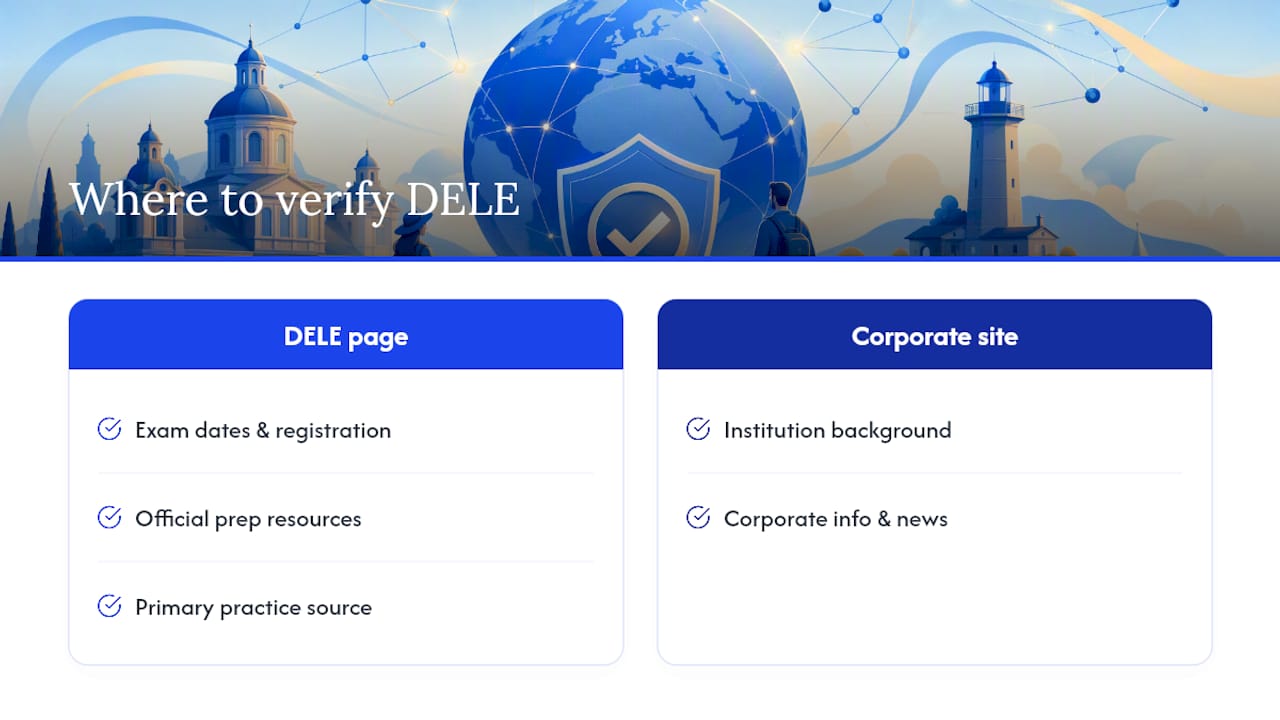
Confirm exam dates and registration directly through Instituto Cervantes’ official DELE page, and use their exam preparation resources as your primary practice source. For general background on the institution itself, see Instituto Cervantes’ corporate site.
Sources
- Guided learning hours (Cambridge English support)
- Examenes
- DELE Exam Guide (italki blog)
- How to prepare for the DELE exam in 2 months (ApórelDELE)
FAQ
What’s the best way to prepare for the DELE exam?
Take a full timed diagnostic at your target level first, then follow either an 8-week technique-focused plan if you already have the level, or a longer plan that builds language ability before exam training if you don’t.
How many hours do I need to prepare for DELE?
If you need to raise a full CEFR level, budget 180 to 250 guided study hours plus 4 to 14 weeks of exam-specific practice; if you already have the level, 8 weeks at roughly 1 to 1.5 hours a day is often enough.
Is DELE harder than SIELE?
DELE and SIELE test similar skills but differ in format. DELE is a fixed paper-based or computer-based exam tied to a specific level and date, while SIELE is modular and computer-based with faster results, so difficulty often comes down to which format suits your test-taking style better.
Is DELE B2 difficult?
DELE B2 demands solid independent use of Spanish across all four skills, and most candidates who struggle are underprepared in writing or speaking rather than reading or listening, which is why targeted correction on those two skills matters most at this level.
Where can I find official DELE practice materials?
Instituto Cervantes publishes official sample exams for every level, and these should be the backbone of your timed practice rather than unofficial guides that can misrepresent actual timing and task formats.
Recommended
Start Learning Spanish Today
Book a trial class and see how quickly you can progress with a professionally trained native-speaker teacher guiding the way.
Book a Trial Class