 Spanish
TL;DR:
- Learning Spanish from scratch involves building conversational skills through vocabulary, grammar, and speaking practice from day one. Reaching A1 level requires about 80 to 100 hours of focused study, with daily practice over six to seven months. Early fluency is best achieved by combining input with active output and maintaining consistent, manageable study routines.
Learning Spanish from the beginning means building real conversational ability through vocabulary, grammar basics, and speaking practice from day one. Adult beginners who follow a structured approach can reach A1 level, the first milestone on the Common European Framework of Reference (CEFR) scale, in roughly 80–100 hours of focused study. That is an achievable target, not a distant dream. The key is combining all four skills, speaking, listening, reading, and writing, rather than drilling grammar in isolation. Setting clear goals before you start gives you a direction and keeps motivation strong when progress feels slow.
How to learn Spanish from the beginning: time and daily habits
The single biggest mistake beginners make is studying in long, infrequent bursts. Consistent daily practice beats a four-hour weekend session every time.
How much time does A1 level actually take?
Reaching A1 level requires 80–100 hours of study. At 30 minutes per day, you get there in roughly six to seven months. That pace is sustainable for most working adults. Pushing to one to two hours daily compresses the timeline, and research shows that 550–700 hours of total study brings most English speakers to B2 fluency. The A1 milestone is just the first step, but reaching it quickly builds the confidence to keep going.
A simple daily study routine for beginners
Structure your sessions so each one covers more than one skill. A 30-minute session might look like this:
- Vocabulary review (10 minutes): Use spaced repetition flashcards to review 10–15 new words from a core category such as greetings, numbers, or food.
- Grammar focus (10 minutes): Study one rule, such as noun gender or present tense verb endings, then write three example sentences.
- Listening or speaking (10 minutes): Listen to a short graded audio clip, or speak your example sentences out loud and record yourself.
Rotating these three activities keeps sessions varied and prevents the fatigue that comes from doing the same thing every day.
Pro Tip: Track your hours in a simple spreadsheet. Seeing your total climb toward 100 hours is a powerful motivator, and it shows you exactly how close you are to your first real milestone.
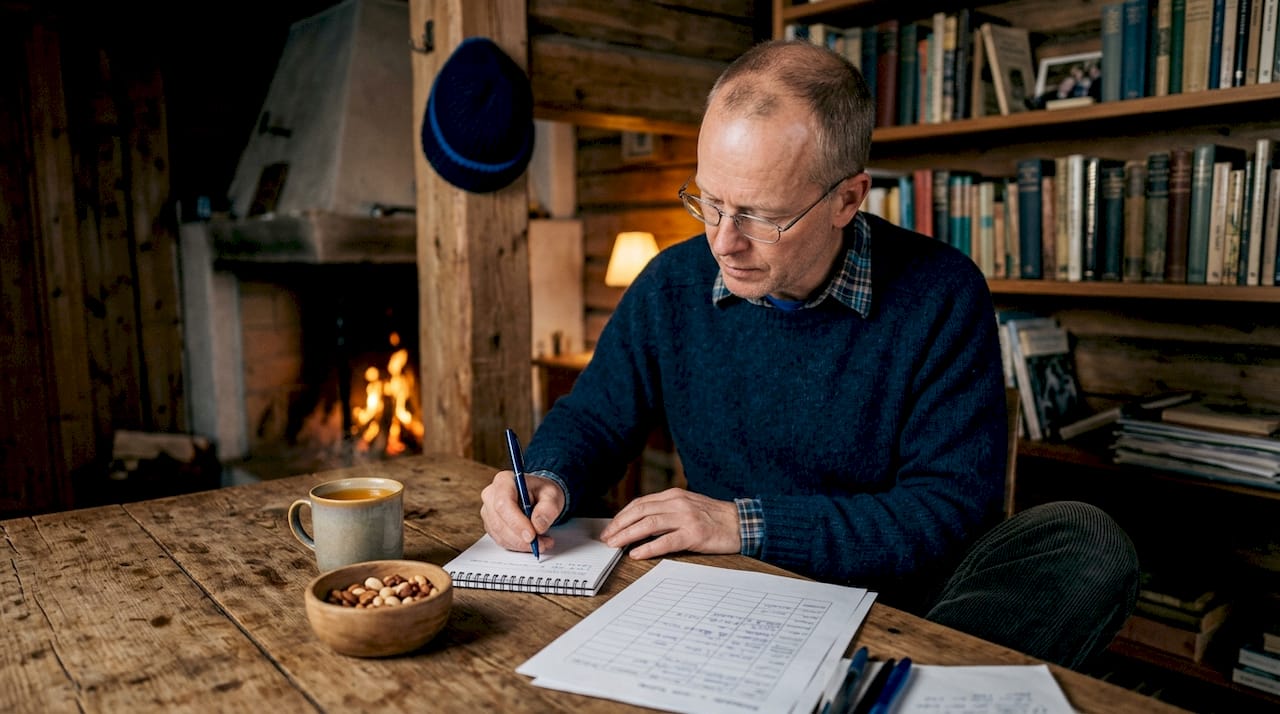
Following a daily Spanish practice routine built around short, consistent sessions is the fastest path to early fluency.
What vocabulary and grammar do beginners need first?
Beginners often try to learn everything at once. The smarter approach is to focus on the words and structures that appear most often in real conversation.
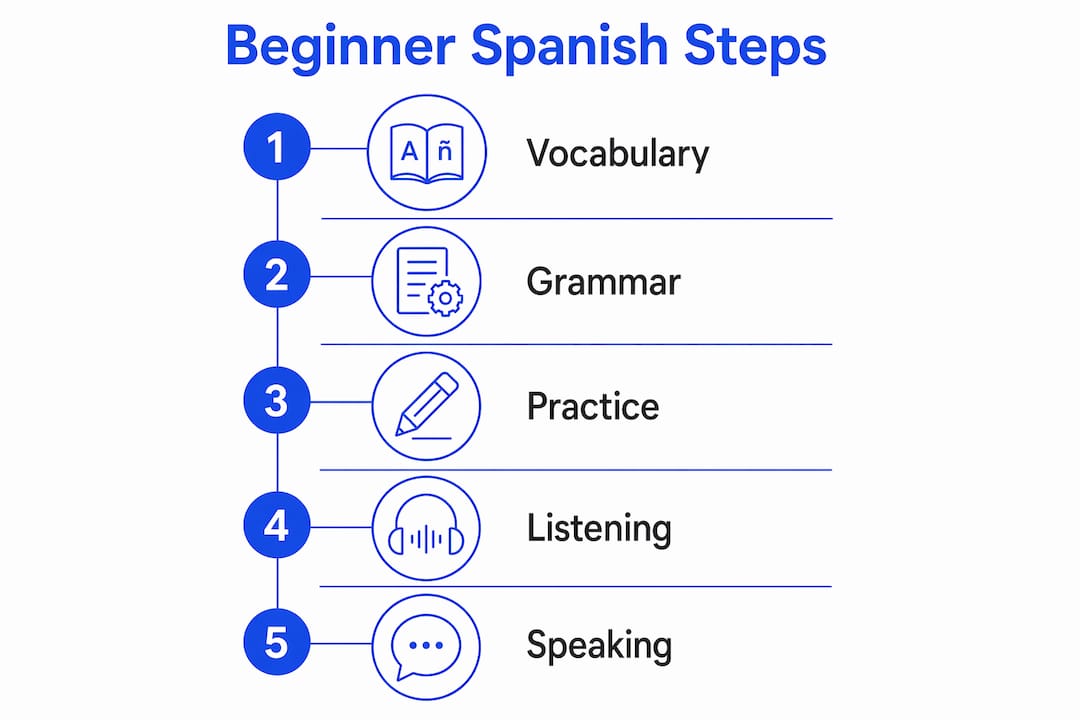
Core vocabulary for A1 learners
The A1 vocabulary foundation covers roughly 500–700 words across 12 core categories. Those categories include greetings, numbers, colors, family, food, time, places, transportation, body parts, clothing, weather, and basic emotions. Mastering these categories gives you enough material to handle simple everyday conversations.
The four verbs every beginner must prioritize are:
- Ser (to be, for permanent traits): used for identity, origin, and description. “Soy americano” means “I am American.”
- Estar (to be, for states and locations): used for feelings and position. “Estoy cansado” means “I am tired.”
- Tener (to have): used for possession and age. “Tengo 30 años” means “I am 30 years old.”
- Ir (to go): used for movement and future plans. “Voy al trabajo” means “I am going to work.”
These four verbs appear in nearly every basic sentence. Learning them well pays off immediately.
Essential grammar concepts at A1 level
| Grammar concept | What it means | Quick example |
|---|---|---|
| Noun gender | Every noun is masculine or feminine | “el libro” (the book, masc.) vs. “la mesa” (the table, fem.) |
| Definite articles | “El” and “la” replace “the” | “el hombre,” “la mujer” |
| Present tense | Regular verb endings for -ar, -er, -ir | “hablar” becomes “hablo, hablas, habla” |
| Question words | Who, what, where, when, how | “Qué,” “dónde,” “cuándo,” “cómo” |
Grammar rules stick faster when you learn them through real sentences rather than abstract tables. A beginner Spanish study plan that sequences grammar topics in order of frequency saves you from wasting time on rules you will not use for months.
Most beginners fail by over-relying on grammar drills. Contextual reading and listening build vocabulary faster than isolated memorization. Read short texts, listen to simple audio, and let grammar patterns emerge naturally alongside deliberate study.
Pro Tip: Learn phrases as complete units, not just individual words. “¿Cómo te llamas?” (What is your name?) is more useful on day one than knowing the word “llamar” in isolation.
How do you practice speaking and listening as a beginner?
Speaking early is the single most effective thing a beginner can do. Most learners wait until they feel “ready.” That moment rarely comes on its own.
Why speaking from day one matters
Starting to speak at A1 level, even with frequent mistakes, bridges the gap between passive knowledge and active use. Mistakes are not failures. They are the feedback your brain needs to correct and reinforce patterns. Every error you make in conversation is one you are less likely to repeat.
“Avoid waiting to feel ‘ready’ before speaking. Early conversations catalyze faster fluency development. The discomfort of making mistakes in real time is exactly what accelerates learning.” — Language acquisition research consistently supports this principle.
Practical ways to practice speaking and listening
The most effective learning method combines comprehensible input with active output. Here is how to build both into your routine:
- Talk to yourself: Narrate simple actions in Spanish as you go about your day. “Estoy haciendo café” (I am making coffee) is a real sentence you can practice right now.
- Use graded audio: Podcasts and audio programs designed for beginners use controlled vocabulary and slow speech. They train your ear without overwhelming you.
- Find a language partner: Weekly conversation exchanges with a native speaker give you real feedback on pronunciation and rhythm. One-on-one speaking practice with a native speaker is the fastest method to develop natural fluency.
- Record yourself: Play back recordings to catch pronunciation habits you cannot hear in the moment.
- Work with a tutor: A qualified instructor corrects errors in real time and adjusts to your pace. This is especially valuable in the first three months.
Passive listening alone does not build speaking ability. You need to produce language, not just consume it. A guide on how to communicate in Spanish covers both receptive and productive skills in practical detail.
How should beginners choose and organize their learning resources?
Resource overload is a real problem. Beginners often collect apps, books, podcasts, and courses without finishing any of them. The fix is to choose fewer resources and use them deeply.
Comparing resource types for beginner learners
| Resource type | Best for | Limitation |
|---|---|---|
| Structured courses | Grammar sequence, speaking feedback | Requires schedule commitment |
| Vocabulary apps | Daily word practice, spaced repetition | Limited speaking practice |
| Graded readers | Vocabulary in context, reading fluency | Passive skill only |
| Podcasts for beginners | Listening comprehension, pronunciation | No output or correction |
| Private tutoring | Speaking practice, personalized feedback | Higher time and cost investment |
No single resource covers everything. The goal is to combine one resource from each major skill area: vocabulary, grammar, listening, and speaking.
How to build a beginner resource shortlist
Follow this sequence to avoid overloading yourself:
- Pick one structured course or textbook to anchor your grammar and vocabulary sequence. This is your primary resource.
- Add one vocabulary tool for daily word practice. Spaced repetition systems work well because they surface words just before you forget them.
- Choose one listening source at beginner level. Graded readers offering vocabulary slightly above your current level push acquisition without overwhelming you.
- Schedule one speaking session per week with a tutor or language partner. This is the output practice that ties everything together.
Resist the urge to add more until you have used your current resources consistently for at least four weeks. Depth beats breadth at the beginner stage.
Key Takeaways
Reaching A1 Spanish requires roughly 80–100 hours of structured study, combining vocabulary, grammar, and speaking practice from the very first session.
| Point | Details |
|---|---|
| Start with 80–100 study hours | A1 level is achievable in six to seven months with 30 minutes of daily practice. |
| Master 500–700 core words | Focus on 12 key vocabulary categories and four essential verbs: ser, estar, tener, ir. |
| Speak from day one | Early speaking, even with mistakes, builds fluency faster than passive study alone. |
| Combine input and output | Pair listening and reading with speaking and writing for balanced skill development. |
| Limit your resources | Use one tool per skill area and stick with it for at least four weeks before adding more. |
What I have learned about starting Spanish as an adult
The most common mistake I see adult beginners make is treating Spanish like a subject to study rather than a skill to practice. They spend weeks perfecting verb conjugation tables before saying a single sentence out loud. Grammar knowledge without speaking practice is like knowing every rule of swimming without getting in the water.
The learners who progress fastest are not the ones with the best memory or the most apps. They are the ones who define their motivation clearly and protect their daily practice time. Motivation is not a feeling that arrives on its own. It is a decision you reinforce by showing up consistently, even on days when you only have 15 minutes.
One thing I tell every beginner: your first 100 hours of Spanish will feel uncomfortable. You will forget words you learned yesterday. You will stumble through sentences you practiced. That discomfort is not a sign that you are failing. It is proof that your brain is working hard to build new patterns. Fluency requires transitioning from passive recognition to active speaking, and that transition only happens through repeated, imperfect practice.
Start speaking in week one. Make mistakes loudly. Correct them and move on.
— Paul
Spanish Explorer’s beginner Spanish courses in Singapore
Spanish Explorer offers group classes, private lessons, and online Zoom sessions designed specifically for adult beginners focused on conversational and business Spanish. Every course is taught by certified, bilingual instructors who understand the challenges English speakers face when building Spanish from scratch.
Whether you prefer the energy of a small group or the pace of a private Spanish class tailored to your schedule, Spanish Explorer has a format that fits your life. Classes are held at 10 Anson Road, Level 22, International Plaza, Singapore 079903, directly above Tanjong Pagar MRT, and online via Zoom for maximum flexibility. Browse the full range of beginner Spanish courses and book a trial class to get started.
FAQ
How many hours does it take to learn basic Spanish?
Absolute beginners need approximately 80–100 hours of study to reach A1 level. At 30 minutes per day, that takes around six to seven months.
What Spanish vocabulary should a beginner learn first?
Start with 500–700 words across 12 core categories including greetings, numbers, food, and family. Prioritize the verbs ser, estar, tener, and ir above all others.
Should beginners focus on grammar or speaking first?
Both matter from the start, but speaking should never wait. Early conversation practice, even with errors, builds fluency faster than grammar study alone.
What is the CEFR and why does it matter for beginners?
The CEFR is the Common European Framework of Reference for Languages. It defines six proficiency levels from A1 (beginner) to C2 (mastery) and gives learners clear, measurable goals to work toward.
Can adults learn Spanish effectively without living in a Spanish-speaking country?
Yes. Consistent daily practice, graded listening materials, and regular speaking sessions with a tutor or language partner replicate the core conditions of immersion without relocating.
Recommended
Start Learning Spanish Today
Book a trial class and see how quickly you can progress with a professionally trained native-speaker teacher guiding the way.
Book a Trial Class