 Spanish
Smaller classes produce real, measurable gains in student behavior, engagement, and belonging, and modest academic gains when teachers actually change how they teach. A systematic review of class-size research finds effects are strongest in early grades and reading, weaker or mixed in math and with older students. The catch: smaller rosters alone don’t move test scores. What happens inside the room does.
TL;DR:
- Smaller class sizes enable teachers to reallocate time toward more interaction, personalized support, and community building, benefiting both student behavior and engagement.
- Academic gains are strongest in early grades and reading, but effects diminish in higher grades and subjects like math, especially without instructional redesign.
- The benefits depend on how teachers utilize the extra time, such as rotating small groups and conducting quick formative checks, not merely on reducing the number of students.
- Broad, system-wide reductions in class size offer limited value without targeted focus on lower engagement or at-risk classes, due to cost and resource constraints.
- Parents and educators should evaluate what happens inside smaller classes, rather than just their size, to ensure the intended engagement and support benefits are realized.
Table of Contents
- The Real Small Class Size Benefits, Backed by Research
- How Class Size Actually Drives Better Outcomes
- Where the Evidence Gets Complicated
- What Parents and Educators Can Actually Do
- Balancing Expectations and Practical Choices
- Small-Group Adult Spanish Classes Put These Principles to Work
- Sources
- FAQ
The Real Small Class Size Benefits, Backed by Research
Parents and teachers usually ask the same question first: does dropping from 30 students to 15 actually change outcomes, or is it just a nicer environment? The honest answer is both, but not equally. Academic effects and non-cognitive effects follow different patterns, and knowing which is which changes how you should evaluate a school’s class-size claims.
On the academic side, the advantage of smaller classrooms shows up unevenly. Early-grade reading responds best to smaller groups, likely because young readers need more one-on-one decoding practice than a teacher can deliver to 28 kids at once. Math results are murkier. Several large reviews find small or inconsistent effects once students hit upper elementary and secondary grades, where instruction relies less on individual coaching and more on structured practice that doesn’t scale the same way with headcount.
The non-cognitive side is where small classes deliver the most consistent payoff. Research identifies a cluster of benefits that show up across grade levels and subjects:
- Better classroom behavior, since disruptions are easier to spot and address before they spread.
- Higher participation, because fewer students are competing for the same speaking turns.
- A stronger sense of belonging, particularly for students who go quiet in large groups.
- Improved teacher morale, tied to lower grading loads and more manageable relationships.
One frequently cited analysis of small-class research documents seven distinct non-cognitive outcomes tied to smaller classrooms, all traceable to three underlying principles: more instructional interaction, more individualized support, and stronger community identification. That’s the mechanism worth remembering, because it explains why some small classes underperform: the size dropped, but the teaching didn’t adapt to use it.
In practice, this looks like a teacher who used to call on six hands a class period now getting through fifteen, or a student who never asked a question in a 30-person lecture speaking up twice in a 12-person seminar. The instructional time per student roughly doubles or triples, and feedback that used to take a week to reach a struggling learner can now happen the same day.
How Class Size Actually Drives Better Outcomes
Class size itself isn’t the cause of better learning. It’s the condition that makes better teaching possible, according to policy research on class-size effects. A teacher who keeps lecturing at a fixed pace to 15 students the same way they did to 30 won’t see much benefit. The gains come from three operational shifts:
- Reallocating instructional time toward interaction. Smaller groups let teachers replace some whole-class delivery with rotating small-group coaching, often 10 to 15 minutes per group, so every student gets direct attention within a single lesson.
- Adding personalized academic and pastoral support. Quick formative checks, like a two-minute exit question at the end of class, become feasible when there are 15 papers to review instead of 35, letting teachers catch confusion before it compounds.
- Building visibility and community. In a small room, it’s harder to disappear. Students get called on more often, which raises accountability and, over time, comfort with participating.
Pro Tip: If you’re evaluating a small class for your child or your team, ask the teacher how they use the extra time, not just how many students are enrolled. A 12-person class run like a lecture captures almost none of the benefit a 12-person class run with rotating small groups does.
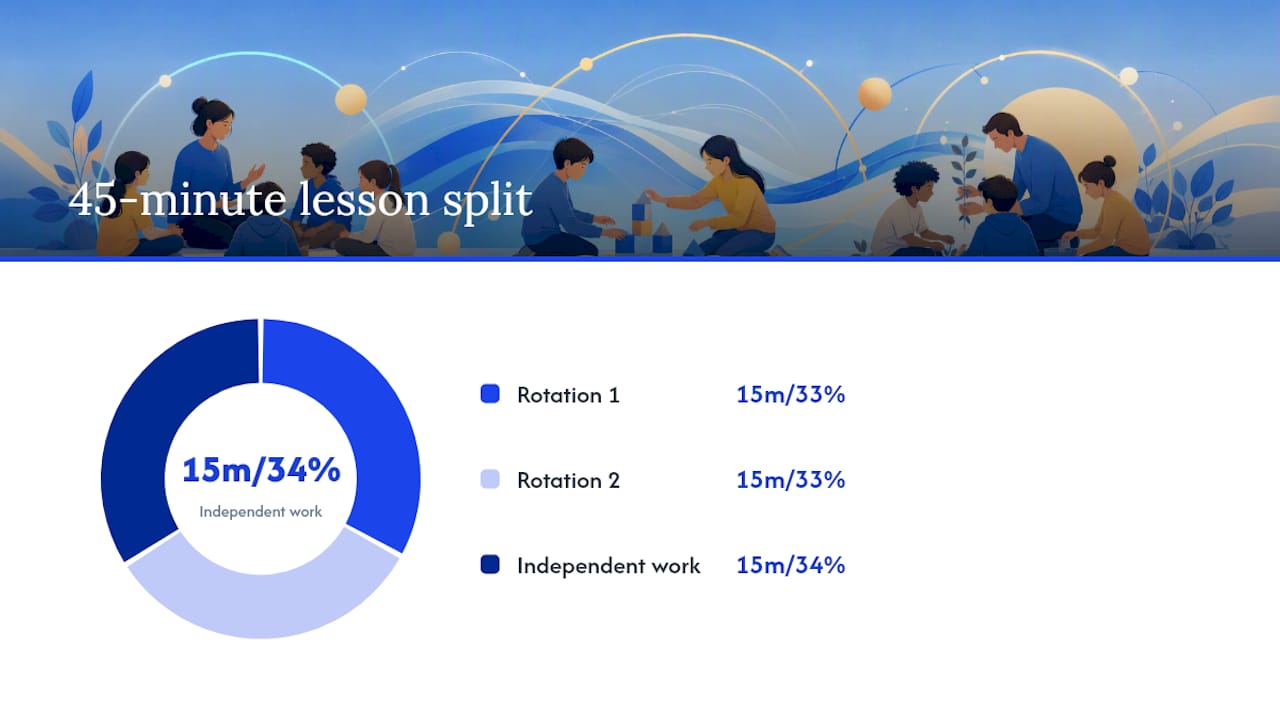
These aren’t abstract ideas. A teacher can adopt the first one tomorrow by splitting a 45-minute lesson into two 15-minute group rotations and one 15-minute independent block. The size makes it possible; the redesign makes it count.
Where the Evidence Gets Complicated
Effect sizes here are modest, not dramatic, and they vary enough by grade and subject that broad claims deserve some skepticism. That’s the honest summary of what large-scale research actually shows, and it’s worth sitting with before treating class size as a silver bullet.
A few caveats matter more than headline numbers:
- Selection and endogeneity bias many studies. Schools that can afford smaller classes often have more resources overall, which makes it hard to isolate class size from everything else that comes with a well-funded school.
- Effects vary by course type. One study using parallel sections of the same course found that smaller classes helped mandatory or low-engagement courses far more than electives, where motivated students perform similarly regardless of room size.
- Cross-country comparisons need caution. OECD data shows class-size norms and outcomes differ enough by education system that a finding from one country doesn’t automatically transfer to another.
- Cost matters as much as effect size. Hiring enough teachers to cut every class by a third is expensive, and policy analysts note that targeted class-size reductions often deliver better returns than blanket, system-wide cuts.
The practical takeaway for anyone setting policy or budget: broad, across-the-board reductions rarely justify their cost. Targeted reductions, aimed at the classes and grade levels where engagement is lowest, tend to produce a better return on a limited budget than spreading resources evenly.
What Parents and Educators Can Actually Do
Full class-size reduction isn’t always on the table, whether you’re a school leader working within budget limits or a parent with no control over class rosters. Here’s where effort pays off regardless of headcount.
School leaders get the most value by prioritizing reductions where they matter most: mandatory courses, remedial sections, and early grades, rather than trimming every class equally. Pairing any reduction with teacher coaching on small-group techniques matters just as much as the number itself.
Teachers can replicate much of the benefit without a smaller roster by borrowing the mechanics: rotating small-group instruction during independent work time, short formative checks every lesson, and deliberately tracking who has and hasn’t spoken that week.
- Run a 10-minute targeted group with the three or four students who struggled on the last assignment.
- Use a two-minute end-of-class check to catch confusion before it becomes a test-day surprise.
- Track speaking turns for a week; it often reveals which students are quietly disengaging.
Pro Tip: Parents evaluating a school or program should ask what happens inside the smaller class, not just how many students are in it. “We keep classes small” means little without a follow-up: “How does the teacher use that?”
Parents without much say over class size can pursue targeted tutoring or small-group enrichment outside school hours, which captures similar individual-attention benefits on a smaller scale.
Balancing Expectations and Practical Choices
The evidence doesn’t support treating small classes as a guarantee. It supports treating them as an opportunity that pays off only when teaching adapts to fit it. The stakeholders who benefit most are the ones who ask what’s happening inside the smaller room, not just how many desks are in it. Chase targeted, evidence-guided decisions over blanket policies, and you’ll get more for every dollar and every hour spent.
— Paul
Small-Group Adult Spanish Classes Put These Principles to Work
Everything the research says about smaller classes, more speaking time, faster feedback, stronger belonging, applies just as directly to adults learning a new language. A small lecture-style class on Spanish grammar often results in less speaking practice. Smaller groups focused on conversation encourage speaking much sooner.

The Spanish courses described are built around that principle: small-group formats where the goal is speaking time, not seat time. Group sessions keep the interaction ratio high enough that instructors can correct pronunciation and usage in real time, the same targeted-feedback mechanism the research describes for K to 12 classrooms. If you’d rather go further, private classes offer one-on-one pacing for learners who want the personalization dialed all the way up, whether that’s for conversational fluency or business Spanish used in client calls.
Not sure a small-group format is worth the switch? The Spanish Language Trial Class offers a trial group session, in person or online over Zoom, for a fee that lets you experience the format before committing to a full course. Classes run out of 10 Anson Road, Level 22, International Plaza, Singapore 079903, right above Tanjong Pagar MRT, with online options for anyone who’d rather learn from a desk instead of a commute.
Sources
- Academic and non-cognitive effects of small classes
- Systematic review on class size effects (2018/2019 summary)
- Class size: does it matter for student achievement?
- The effect of class size on grades and course evaluations: Evidence from multisection courses
- PISA data and publications
FAQ
Why is a smaller class size better?
Smaller classes give each student more instructional interaction, more individualized feedback, and a stronger sense of belonging, three mechanisms tied to measurable non-cognitive gains like better behavior and higher engagement. Academic gains follow too, though they’re more modest and depend on whether the teacher restructures lessons to use the extra attention.
What is the best size for a classroom?
There’s no single ideal number. Research shows benefits scale with how much individual interaction a size allows, which is why effects are strongest in small groups built for coaching or conversation rather than lecture, as seen in higher-education and adult-learning research on class size and engagement.
Why are shorter classes better?
Shorter, more frequent sessions paired with small groups allow for quicker formative checks and faster feedback loops, letting instructors catch confusion before it compounds across a longer block. This mirrors the rotating small-group coaching model that produces the strongest gains in the research.
Is it better to go to a large or small school?
Small learning environments tend to produce stronger participation and belonging, but the size of the whole school matters less than the size of individual classes and how teachers use that space. A large school with small, well-run classes can deliver the same benefits as a small school overall.
Does Com offer small-group classes for adults?
Yes. Com runs small-group conversational Spanish courses in Singapore designed around speaking practice and individual feedback, available online and in person, with private classes available for learners who want one-on-one pacing.
Recommended
Start Learning Spanish Today
Book a trial class and see how quickly you can progress with a professionally trained native-speaker teacher guiding the way.
Book a Trial Class