 Spanish

The safest Spanish email closings are Atentamente, Saludos cordiales, and Cordialmente, all neutral enough for first contact or formal business. The main rule is simple: start formal, then mirror the tone the recipient uses once they reply. For the punctuation that ties it together, the Real Academia Española sets clear rules on commas, periods, and signature placement.
TL;DR:
- Starting with Atentamente is safest for initial contact or official requests, but it may seem distant with long-term clients; adjust tone based on response.
- Use Saludos cordiales or Un cordial saludo for semi-formal or ongoing professional relationships, and switch to informal closings like Un abrazo only with established rapport.
- Formal email closings should follow Spanish punctuation rules: a colon after greetings, a comma after the closing phrase, with signatures on a separate line.
- Always mirror the recipient’s tone, starting formal with usted and switching to tú or warmer closings only when they do so.
- Signatures should include only essential contact details like full name, role, and company, with optional links for client-facing roles; avoid clutter.
Table of Contents
- Quick reference: formal closings and when to use them
- Informal and friendly closings and when they’re appropriate
- Closings by context: business, academic, customer support, and follow-ups
- Punctuation and layout rules for closings and signatures
- How to choose the right level of formality and mirror the recipient
- Signature block: what to include and compact examples for different roles
- Teaching evidence and practical practice
- The one habit that fixes most closing mistakes
- Practice professional email writing with structured Spanish courses
- Sources
- FAQ
Quick reference: formal closings and when to use them
Choosing a formal closing is less about memorizing a long list and more about matching the phrase to the relationship. A handful of options cover nearly every professional situation, and knowing their small differences in tone helps you avoid sounding stiff or, worse, too familiar.
- Atentamente: The safest neutral choice for first contact, job applications, or official requests. It works with strangers, clients, and institutions alike.
- Saludos cordiales or Un cordial saludo: A warmer but still professional option, common in B2B emails and ongoing client relationships.
- Cordialmente: A slightly softer alternative to Atentamente, often used once a working relationship is established.
- Respetuosamente: Reserved for senior recipients, government correspondence, or academic settings where hierarchy matters.
Here is how these look in practice, with the punctuation that follows the comma convention described later in this article:
Atentamente,
María López
Gerente de Ventas
Un cordial saludo,
Carlos Pérez
Notice the closing phrase sits alone, followed by a comma, with the signature on its own line below. This structure repeats across nearly all formal Spanish correspondence, whether it is a cover letter or a routine business update. For more layout patterns and common mistakes, see this guide on formal correspondence and templates.
The choice between these four options rarely changes the outcome of an email, but it signals attentiveness. Using Atentamente with a long-time client can read as distant, while using Un abrazo with a government office reads as careless. Matching the phrase to the relationship is the real skill, and it takes less effort than it sounds once you have three or four go-to options memorized.
Informal and friendly closings and when they’re appropriate
Informal closings exist for a reason: not every email needs the weight of Atentamente. Once a relationship is established, especially with colleagues, friends, or long-term contacts, a warmer sign-off fits the tone better and can even feel more genuine.
- Un abrazo: A common closing among colleagues and friends, roughly equivalent to “take care” with warmth.
- Besos: Reserved for close personal relationships, never appropriate in a workplace context.
- Cariños: Affectionate, used with family or close friends.
- Saludos: A flexible middle ground that works for acquaintances and semi-formal contacts.
- Nos vemos: Casual and forward-looking, common between peers who expect to meet again soon.
These closings fit naturally with close colleagues, long-standing clients you know well, or classmates and friends. They are a poor fit for first contact, senior managers, or anyone you have not built rapport with yet. The practical rule holds regardless of context: when you are unsure, pick a neutral closing like Saludos and let the recipient’s own tone guide your next message. Overcorrecting toward warmth too early is a more common mistake than staying too formal for too long.
Closings by context: business, academic, customer support, and follow-ups
The right closing depends heavily on what kind of email you are sending and who is on the other end. A few situational patterns cover most of what learners and professionals encounter.
- Business outreach and proposals: Use Atentamente or Saludos cordiales, paired with a line that restates your ask, such as “Quedo atento a sus comentarios” before the closing phrase.
- Academic emails: Students writing to professors should default to formal register, including usted and a closing like Atentamente or Respetuosamente, especially in a first message. A study examining student emails to professors found that tú and usted appeared in roughly equal proportion in first contact, but tú exceeded 70% in follow-up emails while usted dropped to 27.5%, confirming that formality tends to relax once a rapport is established. Readers supporting students in academic settings can find related guidance through ESL support resources.
- Customer-service and transactional emails: Keep it brief and action-oriented. Saludos or Atentamente work well, often shortened further when the email itself is short, such as a shipping confirmation or appointment reminder.
- Follow-ups and thread replies: Once a conversation is underway, the full closing often becomes unnecessary. A simple Saludos, or even no closing at all beyond a signature, is standard in fast-moving email threads.
The pattern across all four contexts is the same: formality decreases as familiarity and urgency increase, while the opening message in any new relationship calls for the most conservative choice available.
Punctuation and layout rules for closings and signatures
Spanish punctuation around email closings follows rules distinct from English conventions, and getting them wrong is one of the more visible signs of a non-native writer. The RAE’s guidance on salutations and closings lays out the core principles clearly.
- When the closing is a full sentence, such as “Quedo a su disposición para cualquier consulta,” it ends with a period, not a comma.
- When the closing is a single phrase like Atentamente or Saludos cordiales, a comma is the customary choice.
- If the closing and the signature form one continuous sentence, no punctuation separates them at all.
- The signature always sits in its own paragraph, never run into the closing line.
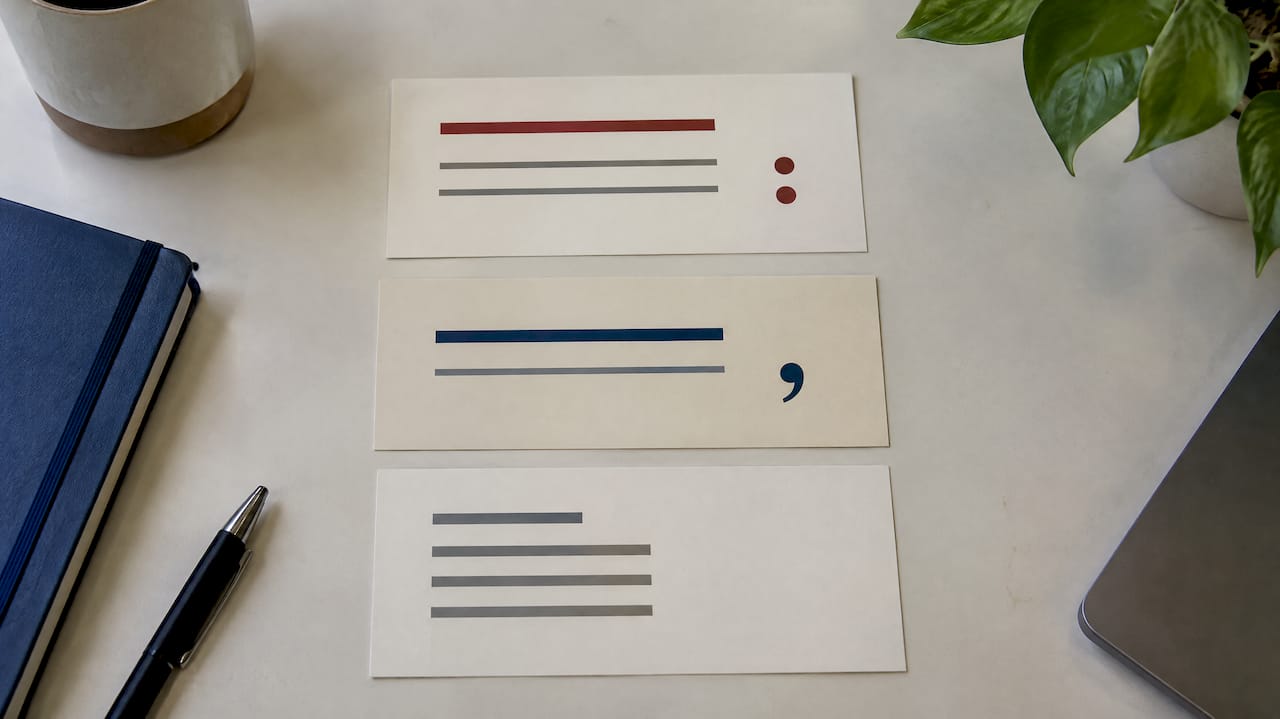
Opening salutations follow their own rule, often overlooked by learners used to English conventions. The RAE explicitly recommends a colon after a greeting like “Estimado señor Gómez:” rather than the comma common in English, calling the comma usage an anglicism to avoid.
A correct example: “Estimada profesora García: Le escribo para solicitar una reunión. Atentamente, Juan Torres.” An incorrect version would open with “Estimada profesora García,” using a comma, and might run the closing and name together without a line break. These small details matter more than they seem: a colon after the greeting and a clean break before the signature are among the fastest ways to make an email look professionally written rather than translated.
How to choose the right level of formality and mirror the recipient
Formality in Spanish email is not fixed, it shifts based on signals the recipient gives you. The safest strategy is to start formal and adjust downward only when invited to.
- First contact: Default to usted and a formal closing regardless of the recipient’s apparent seniority or age.
- Recipient’s reply: If they respond using tú or a warmer closing like Un abrazo, that is your cue to match it in your next message.
- Role and context: A request to a manager, professor, or government office calls for sustained formality even after several exchanges.
- Time elapsed: A gap of weeks or months between emails often resets the tone back toward formal, even with a familiar contact.
The student-professor email study mentioned earlier is a useful model here: students who used usted consistently in a first email shifted naturally toward tú as the exchange continued, following the professor’s own cues rather than imposing informality too early.
Pro Tip: Treat the first email in any new relationship as a formality test: match the recipient’s register in your reply rather than guessing, and you will rarely misjudge the tone twice in a row.
Signature block: what to include and compact examples for different roles
A signature block should answer three questions fast: who sent this, what do they do, and how can you reach them. Anything beyond that adds clutter.
- Essential elements: Full name, job title, company name, and a phone number or email address.
- Optional additions: A LinkedIn profile or scheduling link, useful in sales or client-facing roles but unnecessary in internal emails.
- What to leave out: Marketing banners, inspirational quotes, or oversized logos, which slow down mobile viewing and look dated.
Three compact templates cover most situations:
Formal professional: “Laura Méndez / Directora de Marketing / Grupo Alvear / +34 600 000 000”
Internal or colleague: “Laura / Marketing”
Academic: “Laura Méndez / Estudiante de Máster, Universidad de Salamanca / laura.mendez@correo.edu”
For more complete templates and common formatting mistakes, this guide to Spanish email etiquette covers signature formatting in more depth, alongside other workplace phrases worth knowing from this professional phrase guide.
Teaching evidence and practical practice
Classroom practice tends to confirm what the research on register shifts suggests: learners internalize formal and informal closings faster when they rehearse both in realistic scenarios rather than memorizing a static list. Role-play exercises that simulate a first business email followed by a reply build the instinct to mirror tone, which textbook drills alone rarely achieve.
Adult courses that cover conversational and business Spanish through both in-person and online formats build this kind of exchange practice into lessons, with instructors fluent in both Spanish and English offering direct feedback on register and tone. Writing exercises that pair a formal first draft with a warmer follow-up give learners a concrete way to feel the shift rather than just read about it.
The one habit that fixes most closing mistakes
Keep a short running bank of three formal closings and three informal ones, then practice swapping them into sample emails until the choice feels automatic rather than effortful. Most mistakes I have seen come not from ignorance of the options but from hesitation in the moment, reaching for whatever closing comes to mind first. Testing choices with a teacher or language partner, even briefly, catches tone mismatches before they reach a real inbox.
— Paul
Practice professional email writing with structured Spanish courses
Reading the rules is one thing, using them under real conditions is another, and that gap closes faster with direct feedback on your writing. Spanish Explorer’s trial class gives you a low-commitment way to test how a lesson works before committing further.
For learners who want closings and register to become second nature rather than a lookup task, a few paths fit well:
- The Conversational Spanish course, run online, includes written feedback on register and tone in regular correspondence practice.
- Private and group options on the Spanish courses page cover business Spanish specifically, including email and correspondence conventions.
- Corporate training options are available for companies looking to train staff on professional Spanish correspondence.
A trial class is the fastest way to see whether structured feedback, rather than self-study alone, closes the gap between knowing the rules and applying them naturally in your own emails.
Sources
- Puntuación de saludos y despedidas en cartas y correos electrónicos | Español al día | Real Academia Española
- Fórmulas de tratamiento y marcadores de cortesía en correos electrónicos de estudiantes españoles al profesorado (RAEL / AESLA matrix article)
- The way you close an email can significantly influence how your message is perceived (Omnisend blog)
FAQ
How to professionally end an email in Spanish?
Use a neutral formal closing like Atentamente, Saludos cordiales, or Cordialmente, followed by a comma and your signature on its own line. Atentamente is the safest default for first contact, official requests, or any email where you are unsure of the right tone.
What are good closers for emails?
Neutral, professional sign-offs are widely recommended as safe defaults when you are unsure of the recipient’s expectations, similar to how Best regards functions as a universal safe choice in English correspondence. In Spanish, Atentamente and Saludos cordiales serve that same role.
How do you say “regards” in a Spanish email?
The closest equivalents are Saludos or Saludos cordiales, both common in professional and semi-formal correspondence. Atentamente carries a slightly more formal tone, closer to “sincerely” than “regards.”
What is a good signature for an email in Spanish?
A solid signature includes your full name, job title, company, and a phone number or email address, kept on its own paragraph separate from the closing phrase. Optional additions like a LinkedIn link work well in client-facing roles but are unnecessary in internal or academic emails.
Do you need a comma or colon after a Spanish greeting?
Spanish correspondence calls for a colon after the opening greeting, such as “Estimado señor Gómez:”, rather than the comma common in English. The RAE explicitly flags the comma as an anglicism to avoid in formal Spanish writing.
Recommended
Start Learning Spanish Today
Book a trial class and see how quickly you can progress with a professionally trained native-speaker teacher guiding the way.
Book a Trial Class