 Spanish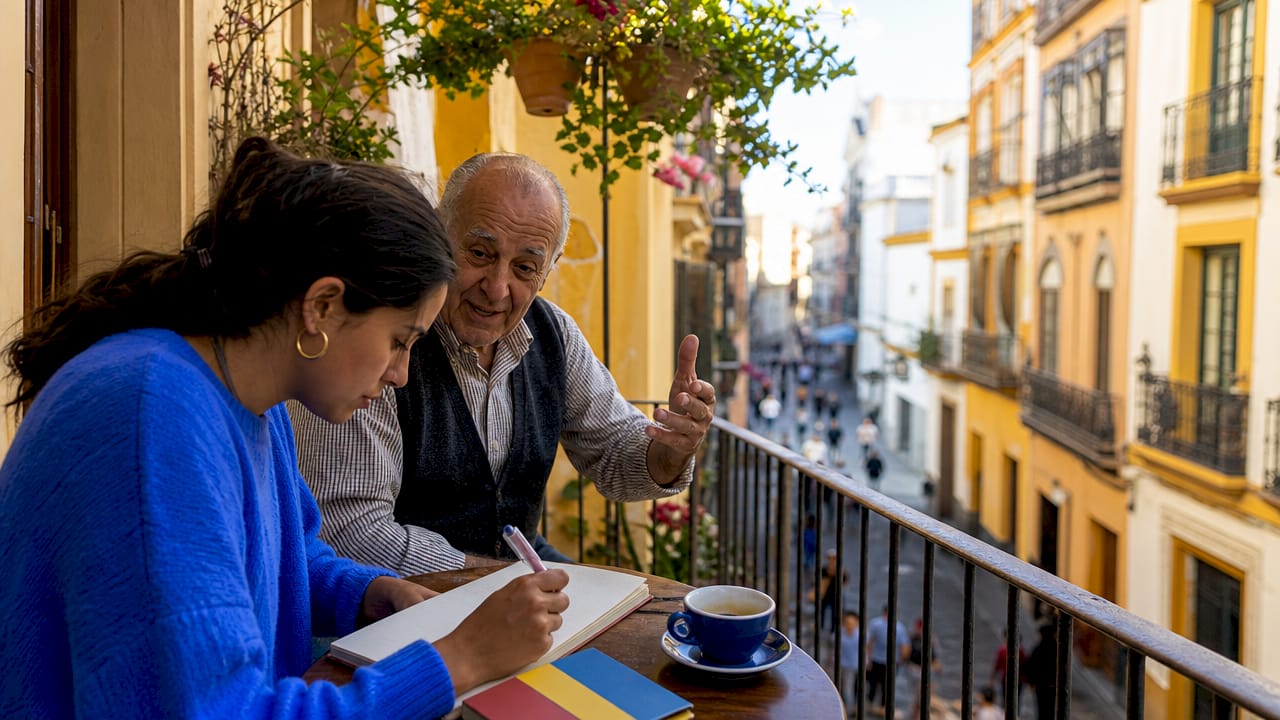
TL;DR:
- Cultural immersion deepens engagement with Spanish language and culture through meaningful interaction. Active social practice, structured activities, and personal reflection significantly accelerate learning and cultural understanding. Quality relationships and intentional strategies outperform passive exposure and unguided exploration.
Cultural immersion is defined as deep, sustained engagement with a target language and culture through meaningful interaction that goes far beyond classroom study. For Spanish learners, the importance of cultural immersion lies in its power to accelerate language acquisition, build genuine communication skills, and develop the kind of cultural understanding that textbooks simply cannot deliver. Research from Frontiers and MDPI confirms that active engagement with Spanish-speaking communities, not just geographic proximity to them, drives real linguistic and intercultural progress. Whether you are learning Spanish for career advancement, travel, or personal growth, immersion done right changes how fast and how deeply you learn.
Why cultural immersion matters for language acquisition
Cultural immersion works because it forces you to use language as a living tool, not a subject to memorize. A 2026 systematic narrative review of 37 papers published in Frontiers found that target language use and social ties are the central drivers of both language development and sociocultural adaptation during study abroad. That finding reframes the entire conversation. Location alone does not produce fluency. Active, relationship-based communication does.

The role of cultural immersion in language learning becomes clear when you compare two types of encounters. A transactional exchange, ordering coffee in Madrid or asking for directions in Mexico City, gives you minimal practice. A real conversation with a local friend, a language buddy, or a Spanish-speaking colleague challenges you to negotiate meaning, repair misunderstandings, and stretch your vocabulary in real time. Negotiating meaning in this way is what research identifies as the engine of language improvement, not the number of hours spent in a Spanish-speaking country.
Sociocultural and psychological adaptation also play a direct role. When you engage meaningfully with Spanish-speaking communities, you do not just pick up grammar. You absorb cultural norms, humor, indirect communication styles, and social expectations. These elements shape how native speakers actually use the language, and missing them produces learners who are technically correct but culturally flat.
- Meaningful interaction with native speakers accelerates vocabulary retention and grammatical accuracy.
- Relationship building creates repeated, low-stakes opportunities to practice and receive natural feedback.
- Cultural context teaches you when and how to use expressions, not just what they mean.
- Emotional engagement with the culture deepens memory formation around new language.
Pro Tip: Track the quality of your Spanish conversations, not just the quantity. One deep conversation with a native speaker about a topic you care about is worth more than ten transactional exchanges at a shop counter.
Do structured programs outperform unguided immersion?
Structured immersion programs consistently outperform unguided exploration. A Frontiers study of American learners in China found that structured out-of-class activities and buddy programs were key factors in effective language learning, far more than simply living in the country. The same principle applies directly to Spanish learners in Spain, Mexico, Colombia, or Argentina.
Unguided immersion carries a real risk. Without intentional design, learners gravitate toward comfort. They cluster with other English speakers, consume English-language media, and limit their Spanish to survival phrases. The result is weeks or months abroad with minimal language gains. Structured programs break that pattern by building in regular, purposeful contact with the target culture.
Research published in MDPI shows that pedagogical intentionality matters more than program length for intercultural competence growth. A two-week exchange with well-designed intercultural activities can outperform a three-month stay with no structured engagement. That is a counterintuitive finding with major practical implications for how you plan your Spanish learning.
The most effective structured elements include:
- Language buddy programs that pair you with a native Spanish speaker for regular, informal conversation practice.
- Collaborative academic or professional tasks completed in mixed-nationality teams where Spanish is the working language.
- Pre-departure cultural preparation that sets realistic expectations and introduces key cultural frameworks before you arrive.
- Reflective journaling to process cultural encounters, track language progress, and identify patterns in your own behavior.
- Intercultural workshops that give you frameworks for interpreting unfamiliar social situations rather than reacting with frustration or withdrawal.
Pro Tip: Before any immersion experience, ask the program organizer specifically how intercultural engagement is built into the schedule. If the answer is vague, build your own structure by committing to at least three meaningful Spanish conversations per week with people outside your immediate group.
How individual differences shape immersion outcomes
Not every learner thrives in the same immersion environment. A Frontiers case study using the Intercultural Development Inventory identified four distinct adjustment groups among STEM undergraduates in short-term study abroad: Resisters, Seekers, Adapters, and Embracers. Each group responded differently to the same immersion conditions. This finding matters because it means your mindset and personal strategies shape your results as much as the program itself.
Resisters tend to withdraw when cultural differences feel threatening. Seekers actively pursue new experiences but may lack the emotional tools to process them. Adapters adjust gradually and steadily. Embracers integrate cultural differences with confidence and curiosity. Most Spanish learners fall somewhere between Seeker and Adapter, which means proactive self-management is both possible and necessary.
Common barriers that derail immersion progress include:
- Discrimination or social exclusion, which reduces access to meaningful interaction and damages motivation.
- Expat or learner bubbles, where you spend most of your time with other non-native speakers.
- Identity anxiety, where the pressure to perform in a new language triggers avoidance rather than engagement.
- Lack of reflective practice, which leaves cultural misunderstandings unprocessed and repeated.
Pre-departure preparation and continuous reflection help learners identify their adjustment trajectory early and course-correct before habits solidify. A simple weekly journal entry asking “What did I do in Spanish this week, and what felt uncomfortable?” can surface patterns you would otherwise miss.
How to maximize the benefits of cultural immersion in Spanish
The benefits of cultural immersion compound when you apply specific, repeatable strategies rather than hoping the environment does the work for you. Living abroad alone is not sufficient for language acquisition. Active engagement and quality interaction are what drive results.
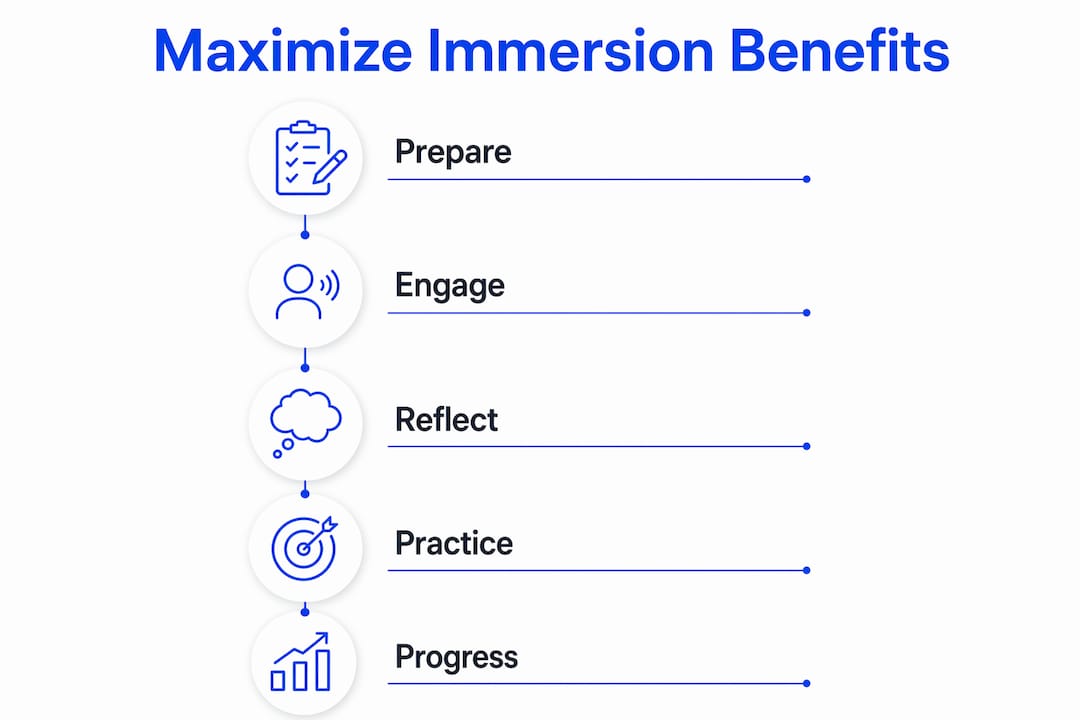
Start with structured social learning. Arrange a weekly language exchange with a native Spanish speaker, either in person or online. Commit to cultural interviews where you ask locals about their daily routines, regional traditions, or professional lives. These conversations build vocabulary in context and create the kind of relationship that generates ongoing practice opportunities. You can find practical ideas for Spanish speaking activities that work even outside a Spanish-speaking country.
Formal instruction complements immersion rather than replacing it. A certified Spanish teacher provides the grammatical scaffolding that helps you make sense of what you hear and experience in immersive settings. Native Spanish teachers bring authentic cultural knowledge that textbooks cannot replicate, including regional expressions, social norms, and the unwritten rules of conversation.
| Immersion method | Primary benefit | Best suited for |
|---|---|---|
| Language buddy program | Builds conversational fluency through regular practice | Learners at intermediate level and above |
| Cultural interview project | Expands vocabulary and cultural knowledge simultaneously | All levels with guided preparation |
| Online group Spanish class | Provides structured grammar and peer interaction | Learners without access to Spanish-speaking environments |
| Local Spanish cultural events | Creates low-pressure exposure to authentic language use | Beginners building confidence |
| Private Spanish lessons | Delivers personalized feedback aligned with immersion goals | Learners targeting specific professional or travel contexts |
Engage with Spanish-language media deliberately. Watch Spanish-language films from Mexico, Argentina, or Spain with Spanish subtitles rather than English ones. Listen to Spanish podcasts on topics you already care about. Read local news from Spanish-speaking countries. These habits extend your immersion hours without requiring travel and reinforce the cultural context that makes language stick.
Key Takeaways
Cultural immersion accelerates Spanish language acquisition when it combines meaningful social interaction, structured activities, and continuous personal reflection rather than relying on environment alone.
| Point | Details |
|---|---|
| Interaction quality drives fluency | Meaningful conversations with native speakers outperform transactional exchanges for language gains. |
| Structure beats spontaneity | Buddy programs, collaborative tasks, and reflective journaling produce stronger results than unguided immersion. |
| Individual mindset shapes outcomes | Learners who identify as Adapters or Embracers progress faster; self-awareness helps you shift toward those patterns. |
| Formal study amplifies immersion | Certified instruction gives you the grammar framework to process and retain what immersion exposes you to. |
| Reflection prevents stagnation | Weekly journaling on cultural encounters helps you course-correct before unhelpful habits take hold. |
What I have learned about immersion that most guides get wrong
Most articles on cultural immersion treat it as a destination problem. Go to Spain. Move to Mexico City. Surround yourself with Spanish. The implication is that the environment does the teaching. After years of working with adult Spanish learners in Singapore, I have seen that framing cause real frustration.
The learners who make the fastest progress are not always the ones who travel most. They are the ones who engineer quality interaction wherever they are. A learner in Singapore who joins a Spanish conversation group, takes private lessons with a native teacher, and watches Spanish-language series with intention will often outpace someone who spends three months abroad inside an expat bubble. The research backs this up. Intercultural competence develops through intentional emotional and social engagement, not through passport stamps.
The other thing most guides miss is the emotional dimension. Immersion is uncomfortable. You will misread social cues. You will say something grammatically correct that lands badly because you missed the cultural register. That discomfort is not a sign you are failing. It is the signal that real learning is happening. The learners who lean into that discomfort, who reflect on it rather than avoid it, are the ones who come out the other side with genuine fluency and cultural confidence.
My honest advice: treat immersion as a practice you design, not an experience that happens to you. Set weekly interaction goals. Build in reflection time. Pair your immersion with structured instruction so you have the tools to make sense of what you encounter. That combination is what actually works.
— Paul
Spanish Explorer: structured learning that supports your immersion goals
Spanish Explorer offers adult Spanish courses in Singapore designed to complement and deepen any cultural immersion experience you pursue.
Whether you prefer the focused progress of private Spanish classes or the dynamic interaction of online group sessions, every course is taught by certified, native-fluent instructors who bring authentic cultural knowledge into every lesson. Classes are held at 10 Anson Road, Level 22, International Plaza, Singapore 079903, right above Tanjong Pagar MRT, with flexible formats for professionals and corporate teams. Explore the full range of Spanish courses at Spanish Explorer and build the linguistic foundation that makes every immersive experience count.
FAQ
What is cultural immersion in language learning?
Cultural immersion is deep, sustained engagement with a target language and culture through meaningful social interaction. It goes beyond classroom study to include relationship-building, real-world communication, and direct participation in cultural practices.
Does living abroad guarantee you will learn Spanish faster?
Living abroad alone does not guarantee faster learning. Research shows that active engagement and interaction quality drive language gains, not geographic location.
How does structured immersion differ from unguided immersion?
Structured immersion uses intentional activities like buddy programs, collaborative tasks, and reflective journaling to create repeated, meaningful contact with the target culture. Unguided immersion risks superficial exposure without measurable language or intercultural gains.
Can short-term immersion experiences build real intercultural skills?
Yes. MDPI research confirms that even brief academic exchanges produce measurable intercultural competence growth when the program includes intentional social activities and emotional engagement support.
How can I practice Spanish immersion without traveling to a Spanish-speaking country?
Join a local Spanish conversation group, work with a native Spanish teacher, attend Spanish cultural events, and consume Spanish-language media on topics you care about. These strategies replicate the core conditions of immersion without requiring travel.
Recommended
- Why Spanish matters for your personal enrichment
- Spanish Class in Singapore | Spanish Language Centre
- What Is Language Immersion? a Clear Guide for Learners
Start Learning Spanish Today
Book a trial class and see how quickly you can progress with a professionally trained native-speaker teacher guiding the way.
Book a Trial Class