 Spanish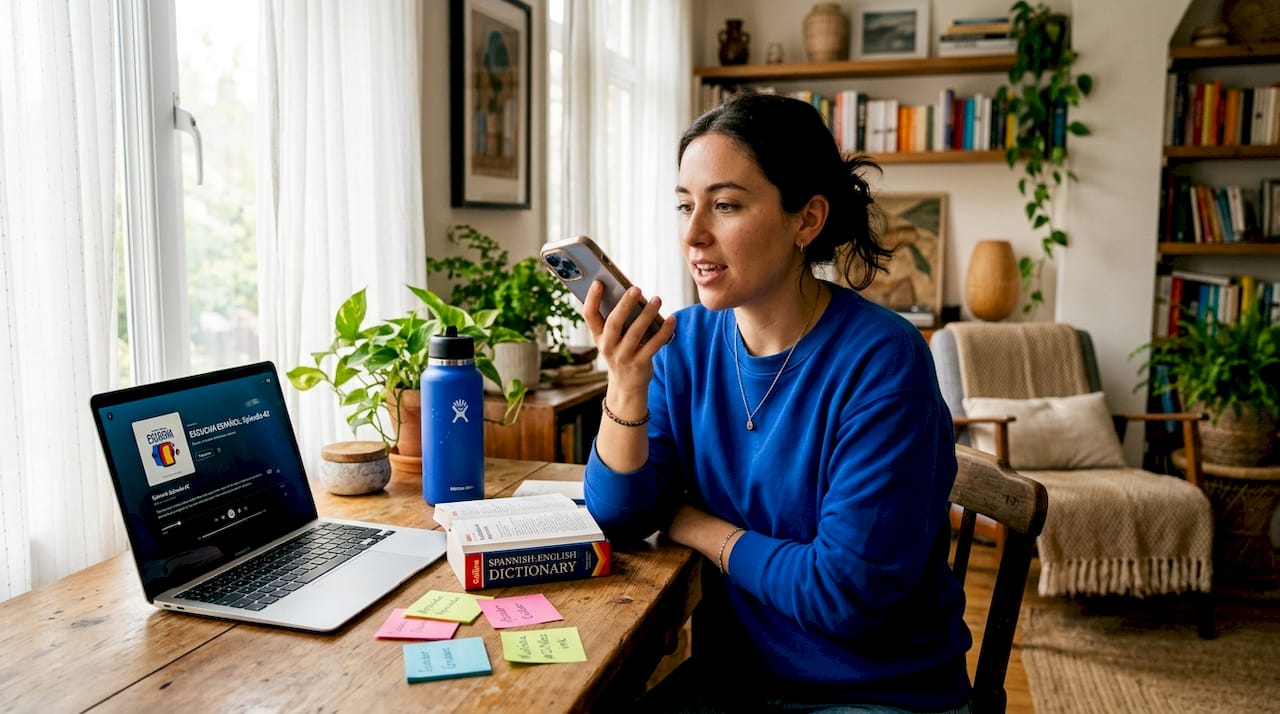
TL;DR:
- Most Spanish learners struggle to progress because they lack a structured practice workflow that integrates listening, speaking, feedback, and review systematically. Implementing a daily 20-minute cycle focused on active output, targeted shadowing, and personalized feedback accelerates fluency far more than passive input alone. Consistent use of AI tools and real conversation practice, combined with regular goal setting and progress tracking, ensures sustainable and measurable improvement.
Most Spanish learners put in the hours but never quite break through. They listen to podcasts, grind vocabulary apps, and occasionally stumble through a conversation, yet progress feels painfully slow. The problem is rarely effort. It is the absence of a structured spanish language practice workflow that connects listening, speaking, feedback, and review into a single repeatable system. What you need is not more time studying Spanish. You need a smarter architecture for the time you already have.
Table of Contents
- Key takeaways
- Building your Spanish language practice workflow
- A step-by-step daily practice routine
- Shadowing and AI dialogue for speaking gains
- Avoiding the most common workflow mistakes
- My honest take on what makes this work
- Take the next step with Spanish Explorer
- FAQ
Key takeaways
| Point | Details |
|---|---|
| Use a timed daily cycle | A 20-minute daily cycle split into review, input, output, and planning maximizes learning without burnout. |
| Prioritize speaking output | Recording short speaking samples and reviewing AI-generated transcripts makes error patterns visible and correctable. |
| Shadowing builds real fluency | Focused shadowing on word stress and rhythm produces measurable pronunciation gains after just a few sessions. |
| Feedback must be integrated | Feedback works best when it is tied directly to your actual spoken words, not generic app exercises. |
| Adapt and document progress | Keeping a simple learner profile helps you customize sessions and track what is actually working. |
Building your Spanish language practice workflow
Before you can follow a system, you need the right tools in place. Fortunately, you do not need an expensive setup. Most of what works is already on your phone or laptop.
For recording and transcription, a smartphone voice memo app or a free tool like Otter.ai does the job. You speak, it transcribes, and you immediately have a written record of exactly what you said. Pair that with an AI assistant such as Claude or ChatGPT and you have a feedback engine that can analyze grammar, flag awkward phrasing, and suggest more natural alternatives based on your specific words. This is far more targeted than anything a generic app quiz can offer.
For input materials, quality matters more than quantity. A Spanish podcast pitched at your level, a short news clip, or a graded reader gives your brain real language to absorb. For speaking practice, platforms that let you connect with native speakers or structured conversation partners add a human layer that technology alone cannot fully replace.
Here is a quick tool overview to get you oriented:
| Tool type | Example options | Best used for |
|---|---|---|
| Voice recorder | Phone memo app, Otter.ai | Capturing and transcribing speaking samples |
| AI feedback | Claude, ChatGPT | Grammar and phrasing correction from transcripts |
| Input content | Podcasts, graded readers, YouTube | Building listening and vocabulary exposure |
| Speaking practice | Conversation partners, Zoom tutors | Real-time output and interaction |
| Vocabulary app | Anki, Quizlet | Spaced repetition for high-frequency words |
Pro Tip: Start with just two or three tools and master them before adding more. A cluttered toolkit leads to decision fatigue, not better Spanish.
A step-by-step daily practice routine
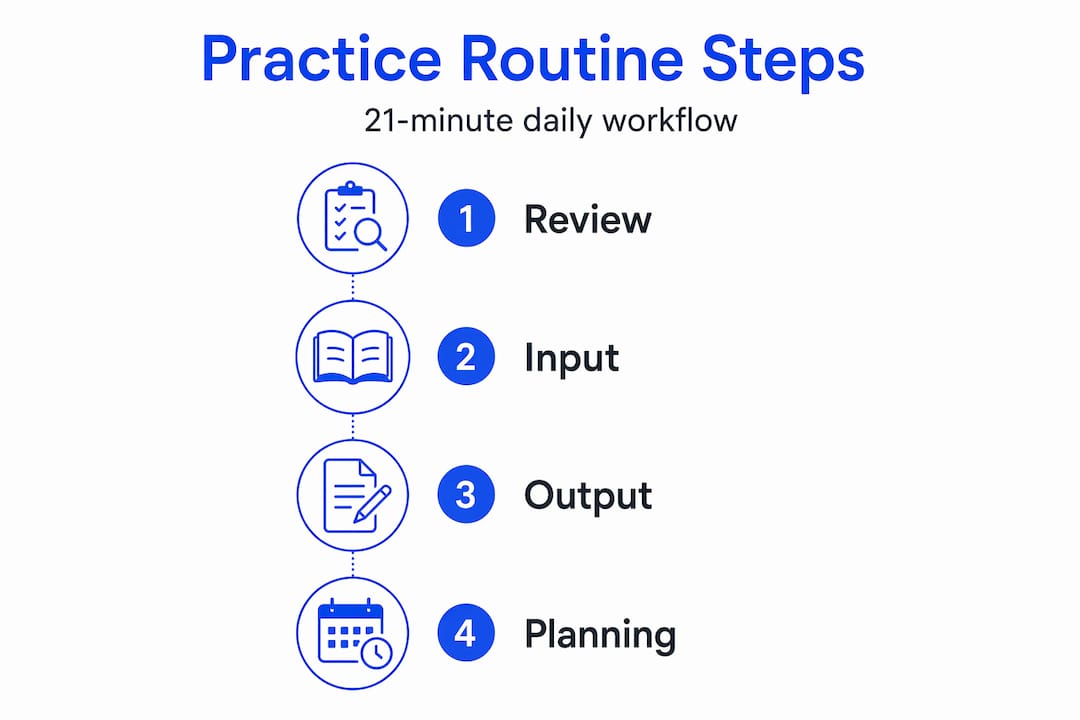
The most reliable framework for adult learners is the 20-minute daily cycle, structured into four distinct phases. Each phase has a specific job, and together they create a loop that continuously builds skill.
Here is how each session breaks down:
-
Review (5 minutes). Pull up yesterday’s AI feedback notes or vocabulary flashcards. Cover the two or three errors flagged in your last speaking session and say the corrected versions out loud. This consolidates yesterday’s gains before you add anything new.
-
Listening or reading input (5 minutes). Play a short audio clip or read one paragraph of graded content. Do not aim for perfect comprehension. Aim for grasping the main idea and noticing two or three new words or structures in context.
-
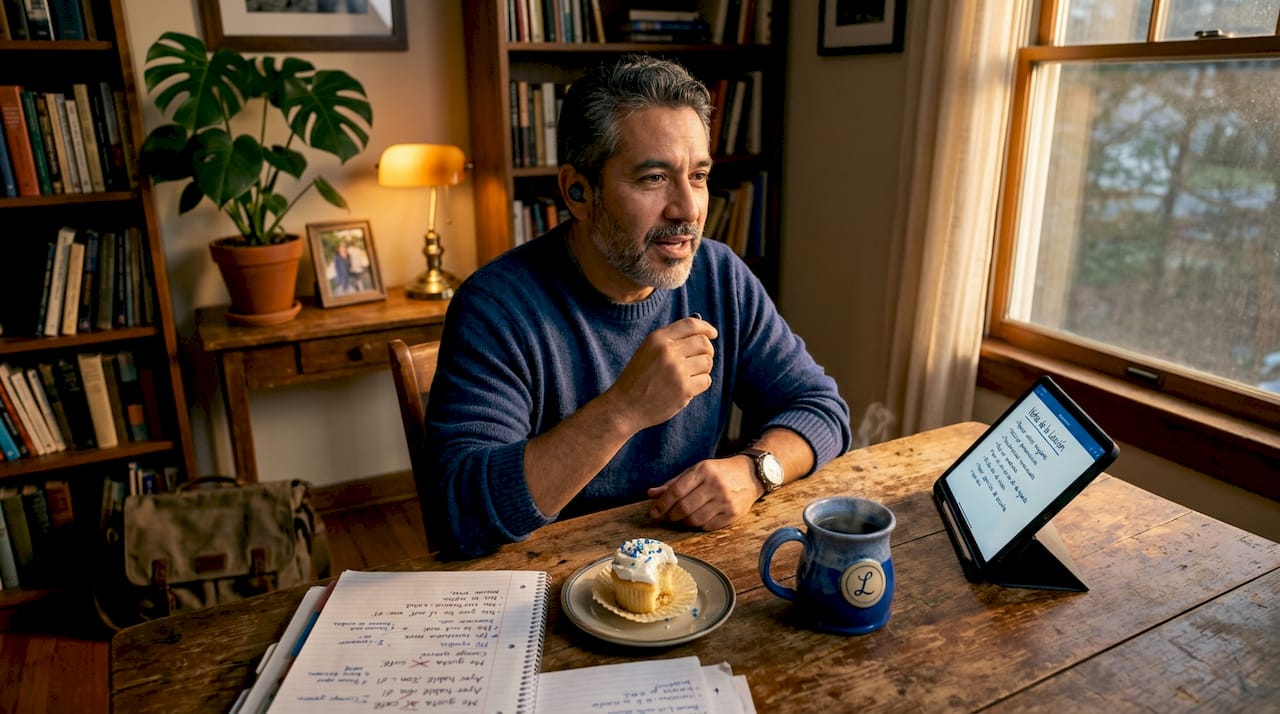
Speaking or writing output (5 minutes). Record yourself speaking for 60 to 90 seconds on the same topic you just listened to or read about. This connects input and output directly, which accelerates retention. After recording, run the audio through a transcription tool and paste the transcript into your AI assistant for feedback. The record to feedback cycle works because it targets your actual errors, not hypothetical ones.
-
Plan the next session (5 minutes). Note one vocabulary gap, one grammar issue, and one topic you want to explore next time. This prevents sessions from drifting aimlessly.
On busy days, compress to a 10-5-5 split: ten minutes of review and input combined, five minutes of output, and five minutes of planning. Even a shortened session keeps the habit alive, which matters more than any single perfect session.
An effective speaking practice workflow session typically runs about 30 minutes when you include multiple recording and feedback cycles. The goal is not length. It is the discipline of repeating the loop.
Pro Tip: Set a recurring 7-day reminder to review your learner notes from the past week. Patterns become obvious when you look across seven sessions instead of just one.
Shadowing and AI dialogue for speaking gains
Shadowing is one of the most underused Spanish learning techniques available to adult learners. The mechanics are simple: you listen to a native speaker and repeat the words in near-real time, mimicking their rhythm, stress, and intonation. The results, though, go well beyond repetition.
Research shows that pronunciation scores improve dramatically after just six scaffolded shadowing sessions, with mean scores jumping from 37.65 to 70.03 at a high level of statistical significance. What drives those gains is not rote copying. It is the focus on prosodic automaticity and vowel reduction clarity, meaning your brain starts to internalize the natural music of Spanish rather than translating word by word.
Here is how to structure a shadowing session that actually produces results:
- Choose a 30 to 60 second audio clip from a native speaker talking at natural speed.
- Listen once without doing anything. Just absorb.
- Play it again and shadow out loud, matching rhythm and stress as closely as you can.
- Record your shadowing attempt and compare it back to the original.
- Identify one specific feature to improve, such as the stress on a particular word or the flow between two phrases.
- Repeat the clip two more times with that single feature in focus.
Targeted micro-skill shadowing like this produces better results than unfocused repetition because your attention is on a specific linguistic feature rather than the whole performance at once.
AI-driven voice dialogue systems add another dimension. These tools use speech recognition and intent classification to adapt follow-up questions based on what you actually say, not a script. Adaptive AI tutoring sessions typically run 5 to 15 minutes and provide scaffolded prompts that closely mimic the way a human tutor would adjust difficulty. For learners who cannot always access a live conversation partner, this is a genuine alternative for building oral proficiency.
You can explore how AI-supported Spanish speaking practice ideas are being applied in structured learning environments to get a sense of what this looks like in practice.
Pro Tip: When shadowing, close your eyes. Removing visual distraction forces your brain to process the sound more precisely, which accelerates the transfer to your own speech.
Avoiding the most common workflow mistakes
Even a well-designed Spanish fluency practice system breaks down when certain habits creep in. Knowing the pitfalls in advance saves weeks of stalled progress.
-
Overloading on passive input. Listening to podcasts and watching shows feels productive, but if your output sessions are rare, you are building comprehension without building speech. Output is where fluency actually forms.
-
Generic feedback loops. Completing app quizzes gives you a score, not a diagnosis. Transcript-based correction from your actual spoken words reveals the specific patterns holding you back.
-
Inconsistent scheduling. Two hours on Saturday does not replace five 20-minute sessions spread across the week. Frequency beats duration for language retention.
-
No measurable micro-goals. Saying “I want to improve my Spanish” is not a session plan. Walking into each session with one grammar target and one vocabulary cluster keeps the feedback relevant.
-
Ignoring the planning phase. The final five minutes of each cycle are not optional. They are what transforms a single session into a learning workflow rather than a one-off exercise.
Tracking your sessions in a simple learner document, even a basic notes file, creates a personal record that any AI tool or tutor can use to personalize feedback. It also shows you exactly where you keep making the same mistake, which is the fastest way to stop making it. Expert tips for 2026 consistently highlight documentation and self-monitoring as among the highest-return habits in language learning.
Pro Tip: Keep a learner profile document with your current level, recurring errors, topic preferences, and goals. Share it with your AI feedback tool at the start of each session for responses that fit your actual situation.
My honest take on what makes this work
I have seen learners spend months on apps, courses, and grammar workbooks without being able to hold a two-minute conversation. And I have seen professionals with 30-minute daily cycles speaking confidently within a few months. The difference is almost never intelligence or natural ability. It is whether feedback is hitting actual spoken output.
What changed my thinking on this was realizing that most practice systems protect learners from the discomfort of hearing themselves make mistakes. Recording your voice, transcribing it, and running it through an AI that tells you exactly where you fumbled is uncomfortable. That discomfort is the signal that real learning is happening.
Consistency over intensity is the other principle I come back to constantly. A 20-minute session you do every day for three months is worth more than an intense two-hour session you do three times a week when you feel motivated. Motivation is unreliable. A short, habitual cycle is not.
The balance between technology and human interaction also matters more than most people admit. AI tools are excellent for immediate, specific feedback on grammar and pronunciation. They are not great at the unpredictable social texture of real conversation: humor, implication, cultural register. That is where a skilled instructor or conversation partner remains irreplaceable. Use technology to sharpen your tools. Use human interaction to actually use them.
Build your workflow around what you can actually sustain, not what looks best on paper.
— Paul
Take the next step with Spanish Explorer

A self-directed workflow gets you moving, but working with an experienced teacher accelerates everything. Spanish Explorer offers structured adult Spanish courses designed for conversational fluency and professional use, with options for online Zoom learning and corporate training programs tailored to business contexts. Their certified Spanish teachers provide the kind of personalized, spoken feedback that no app can replicate, and every course is built around real communication skills rather than textbook exercises. If you are ready to move faster and with more direction, explore the full range of adult Spanish courses available for individuals and corporate teams in Singapore.
FAQ
What is a Spanish language practice workflow?
A Spanish language practice workflow is a repeatable daily or weekly routine that structures listening input, speaking output, and feedback into a connected system. It replaces ad-hoc studying with a consistent cycle that builds fluency progressively.
How long should each practice session be?
A 20-minute daily session split into review, input, output, and planning is enough to build real progress. Short, frequent sessions outperform longer, irregular ones for language retention.
Does shadowing actually improve Spanish pronunciation?
Yes. Research shows pronunciation scores nearly double after just six focused shadowing sessions, with the gains driven by improvements in word stress and prosodic rhythm rather than simple repetition.
Can AI replace a human Spanish tutor?
AI tools are highly effective for immediate feedback on grammar and pronunciation based on your actual recorded speech. However, a qualified instructor provides the cultural nuance, conversational unpredictability, and motivational accountability that AI cannot replicate.
What is the biggest mistake in Spanish speaking practice?
Spending most practice time on passive input like listening and reading without balancing it with regular speaking output. Feedback tied to real spoken transcripts is far more effective than generic exercises for correcting actual speech errors.
Recommended
- Your Daily Spanish Practice Routine for Real Fluency
- Master an Efficient Workflow for Learning Spanish Online
Start Learning Spanish Today
Book a trial class and see how quickly you can progress with a professionally trained native-speaker teacher guiding the way.
Book a Trial Class